Can Andersen Fibrex Windows Be Painted?
Yes — Fibrex (a wood-fiber/polymer composite) accepts paint more readily than pure vinyl, but it still needs the same core prep as any factory-finished window: cleaning, deglossing, and a bonding primer.
Painting techniques for wood, walls, ceilings, and more.
Yes — Fibrex (a wood-fiber/polymer composite) accepts paint more readily than pure vinyl, but it still needs the same core prep as any factory-finished window: cleaning, deglossing, and a bonding primer.
Yes, but it's a genuinely demanding environment — constant moisture, cleaning chemicals, and body contact call for a durable, fully cured, moisture-resistant finish rather than standard interior paint.
Vinyl's smooth, non-porous surface and its tendency to expand and contract with temperature both work against standard paint — a flexible bonding primer and a paint genuinely formulated for vinyl are what make it hold up.
Sheen choice does more to hide (or reveal) wall flaws than color or paint quality — flat is the most forgiving finish, and texture matters too.
It's possible with the right specialized product, but a painted shower wall is a real compromise on durability and moisture resistance compared to tile — worth understanding before choosing it purely for cost.
Technically yes, but it goes against the whole point of composite decking — most manufacturers don't recommend it, since it can void the warranty and composite's smooth, engineered surface doesn't hold paint especially well long-term.
Painting intact asbestos siding is generally considered safe and is actually a recommended way to seal and protect it — the real danger is in disturbing it beforehand, not the painting itself.
Ordinary wall or trim paint doesn't bond well to bare glass over time — a glass-specific paint or an etching primer first is what actually keeps a painted window from peeling.
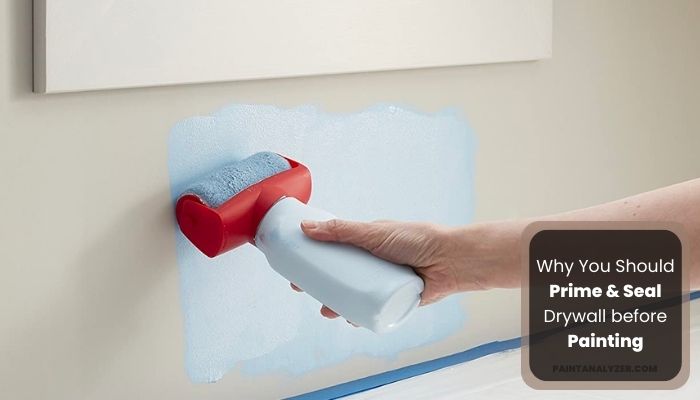
New drywall's paper facing and any joint-compound patches absorb paint at different rates than each other — skipping primer means that unevenness shows through the topcoat as visible flashing.
Heat and abrasion are the two chemical-free routes — a heat gun lifts paint in sheets fast but risks scorching, while sanding is slower and safer but generates dust that needs real containment on old paint.
A brush-free finish on a door comes down to the tool (foam or microfiber roller, not a standard bristle brush for the flat panels), the paint's leveling properties, and painting it flat.
One coat is the standard baseline for sound, bare wood — porous or absorbent wood, and any wood with staining or tannin concerns, are the real reasons to plan for two.