
Why You Should Prime and Seal Drywall Before Painting
New drywall's paper facing and any joint-compound patches absorb paint at different rates than each other — skipping primer means that unevenness shows through the topcoat as visible flashing.
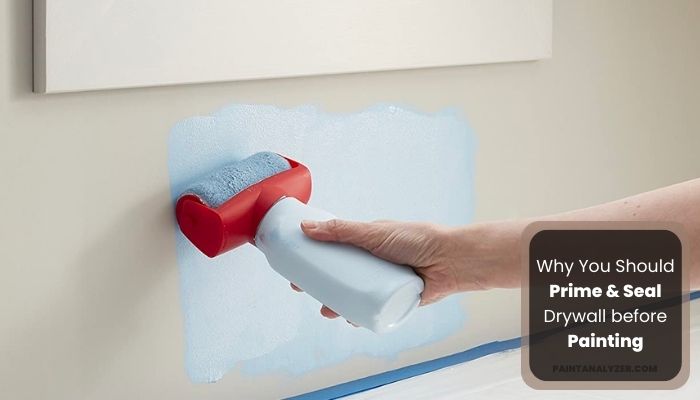
New or freshly patched drywall isn't a uniform surface, even though it looks like one — the paper facing and any joint-compound-covered seams and screw holes absorb paint differently, and priming exists specifically to even that out before color goes on.
1. The core problem primer solves: uneven absorption
Drywall's paper facing is porous and absorbs paint readily; joint compound (used to cover seams, screw holes, and any patches) is even more porous and absorbs considerably more. Painted directly with topcoat and no primer first, these areas dry to visibly different sheens — a patchy, blotchy effect commonly called "flashing," where joint compound spots look duller than the surrounding paper-faced drywall even under the exact same paint and number of coats.
2. Primer seals that porosity evenly
A drywall primer (PVA primer is the standard, inexpensive choice for new drywall specifically) seals the whole surface to a consistent level of porosity — once primed, the topcoat absorbs and dries evenly across both the paper-faced areas and any joint-compound patches, eliminating the flashing effect.
3. It also reduces how many topcoat coats are needed
Bare drywall's porosity means the first topcoat coat, applied without primer, gets partially absorbed into the material rather than sitting fully on the surface — often requiring a third coat of topcoat to achieve even, full coverage. A primer coat first (considerably cheaper per gallon than most topcoat paint) handles that absorption instead, meaning two coats of topcoat are usually enough afterward.
4. Primer improves topcoat adhesion and durability
Beyond appearance, primer creates a more consistent surface for the topcoat to bond to overall — paint applied directly to bare drywall, especially over joint compound, has a greater tendency toward early wear, burnishing, or uneven cleaning results (some areas showing more wear from washing than others) compared to a properly primed surface.
5. When primer can reasonably be skipped
Repainting an already-painted wall in reasonably good condition, with the same or a similar color and no patching involved, doesn't need a fresh primer coat — the existing paint layer is already doing primer's sealing job. Primer specifically matters for new drywall, drywall with any patching or joint-compound repair, or a major color change (especially dark to light) where full, even hide matters.
6. Tinting the primer for a big color change
For a significant color shift, many paint stores can tint the primer itself toward the new topcoat color — this gets the topcoat to full, even coverage in fewer coats than starting from a stark-white primer, since the primer is already contributing part of the way toward the final color rather than needing to be fully overridden by the topcoat alone.
Guides are researched against primary documentation and observable evidence. Archived material is rewritten, checked, and substantially improved before publication.