
Why Do Painted Walls Look Chalky and Powdery?
A powdery wall is not always paint chalking. Diagnose whether the residue is degraded paint, surface dust, masonry efflorescence, or a failing old coating before you wash, sand, prime, or repaint.
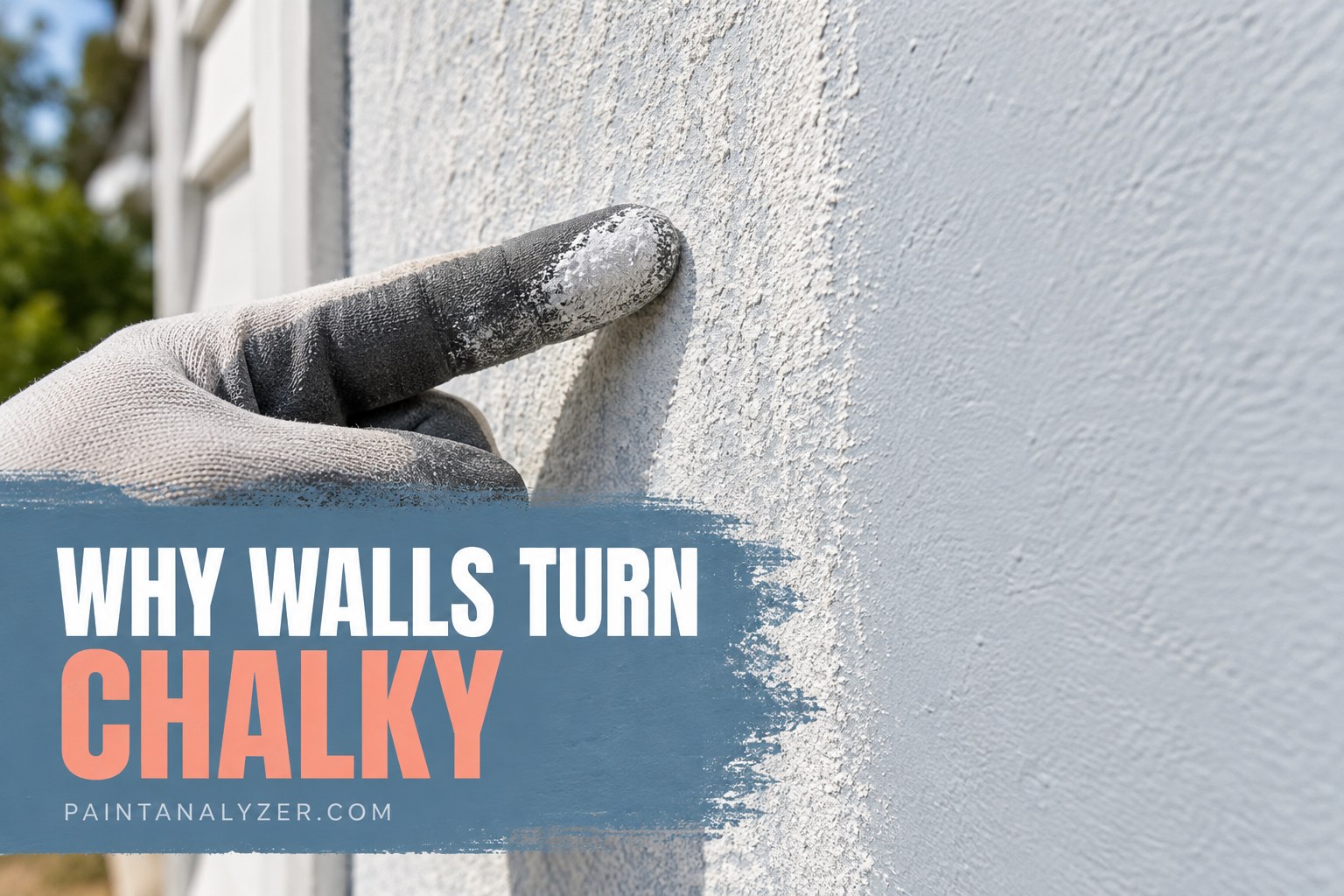
A chalky or powdery painted surface is often “chalking,” especially on weathered exterior paint, but powder alone is not enough to make that diagnosis. Chalking is the release of pigment and degraded binder particles as a coating weathers. Construction dust, sanding residue, masonry efflorescence, and poorly bonded or deteriorating paint can also leave material on your hand or cloth.
Before repainting, identify the source. Exterior chalking usually needs thorough cleaning and complete removal of loose powder before the next coating system is applied. White crystalline deposits on brick, block, stucco, or concrete may be efflorescence and point to moisture moving salts through masonry. If the coating is old enough to contain lead, do not start dry sanding simply because the surface feels chalky.
What paint chalking looks like
Sherwin-Williams describes chalking as a fine powder on the paint film caused by weathering. It is most common on exterior coatings exposed to sun and weather. Some chalking can be part of normal coating erosion; heavy chalking can indicate substantial film breakdown.
A simple diagnostic is to wipe a clean contrasting cloth across the surface. If it picks up a fine pigment-colored powder consistently from the coating itself, chalking is likely. But use the checks below before assuming that is the only cause.
Chalking vs. other powdery wall problems
| Symptom | More likely cause | What to check next |
|---|---|---|
| Fine powder matches the paint color; exterior sun exposure | Paint chalking | Age/weathering, coating type, uniformity across exposed areas |
| Loose gray/white dust after drywall work or sanding | Construction/sanding dust | Whether residue wipes away without exposing degraded paint |
| White fluffy/crystalline deposit on masonry | Efflorescence | Moisture source, mortar joints, concrete/block/stucco substrate |
| Paint itself rubs off, flakes, or peels | Adhesion/coating failure | Moisture, contamination, incompatible coating, weak substrate |
| Old deteriorated paint in a pre-1978 U.S. home | Possible lead-containing paint hazard | Lead testing/lead-safe renovation plan before disturbance |
If it is paint chalking, clean before you repaint
- Remove loose dirt and powder using a cleaning method appropriate to the substrate and coating.
- Wash or power wash only at a pressure the substrate can tolerate; fragile wood, old coatings, and damaged surfaces can be harmed by aggressive pressure.
- Rinse thoroughly when the cleaner requires it.
- Let the surface dry completely.
- Repeat the cloth/rub test. If heavy loose chalk remains, additional cleaning or a different preparation method may be necessary.
- Prime only when required by the substrate condition and the selected coating system. Some chalk-binding masonry conditioners/primers are designed for residual sound chalk, but they are not a substitute for removing heavy loose material.
If it is efflorescence, fix moisture before painting
Efflorescence is a salt deposit on cementitious masonry and depends on both soluble salts and moisture. Sherwin-Williams advises delaying painting while efflorescence continues, removing salts mechanically, repairing moisture entry, and allowing the wall to dry before priming. Simply sealing a recurring moisture-driven salt deposit under paint can lead to another failure.
If the paint is peeling or poorly bonded
Powder plus peeling, blistering, or sheets of paint releasing from the substrate is not just cosmetic chalk. Find the cause before recoating. Moisture, a contaminated surface, painting over an unstable previous coating, or poor surface preparation can all produce adhesion problems. A new topcoat cannot stabilize material that is no longer bonded underneath.
Lead-paint safety for old chalky coatings
In U.S. homes built before 1978, older paint layers may contain lead. Deteriorated lead-based paint and lead-contaminated dust are health hazards. Before sanding, grinding, or aggressively scraping an old unknown coating, use an appropriate lead-testing/lead-safe plan. EPA recommends lead-safe dust controls for DIY renovation and restricts high-dust practices for covered contractor work.
Common mistakes
- Painting directly over loose chalk because the wall “looks clean enough.”
- Calling white masonry salts chalking and ignoring the moisture source.
- Using a sealer/primer as a substitute for removing heavy loose residue.
- Pressure washing delicate siding or weak old paint too aggressively.
- Dry sanding old unknown paint without considering lead.
A cloth test is a clue, not a complete diagnosis
Powder transfer confirms that something loose is on the surface, but it does not by itself tell you whether that material is degraded pigment/binder, drywall dust, masonry salts, or contamination. Look at substrate, location, crystal structure, color, moisture history, and whether the coating itself remains bonded.
How efflorescence differs from paint chalking
Efflorescence forms when moisture transports soluble salts through cementitious materials and the salts crystallize at the surface. It is therefore a masonry/moisture problem, not simply worn paint pigment. Sherwin-Williams advises delaying painting while efflorescence continues, removing salts mechanically, correcting moisture penetration, and allowing the wall to dry before priming.
Do not pressure-wash every chalky substrate the same way
Power washing can be useful on durable exterior surfaces when performed at a pressure appropriate to the substrate, but it can damage soft wood, force water behind siding, or accelerate failure of weak old coatings. Use the least aggressive method that removes loose chalk without damaging the substrate. For lead-suspect old paint, lead-safe containment and dust/chip control take priority over ordinary prep speed.
How to decide whether a chalk-binding conditioner is appropriate
Some masonry conditioners/primers are designed to penetrate and consolidate residual sound chalk after cleaning. They are not a license to leave thick loose powder on the wall. Read the product TDS for the permitted substrate and chalk condition, perform any required rub/adhesion test, and do not use a penetrating sealer where moisture must escape unless the coating system allows it.
Interior powder should make you ask different questions
True UV-driven chalking is most strongly associated with exterior weathering. On an interior wall, first check for drywall sanding dust, old distemper/calcimine-type coatings, efflorescence on masonry, deteriorated low-quality paint, cleaning residues, or moisture-related breakdown before assuming normal exterior-style chalking.
Bottom line
“Chalky paint” is a symptom that needs a substrate check. If the powder is degraded exterior paint, remove the loose chalk and prepare the surface for the selected coating system. If it is crystalline masonry salt, solve the moisture problem. If the coating is peeling or old enough to contain lead, address those risks before routine sanding or repainting.
Related guides
Sources and further reading
Guides are researched against primary documentation and observable evidence. Archived material is rewritten, checked, and substantially improved before publication.