
How to Test for Lead Paint Before You Renovate
For pre-1978 paint, a consumer kit can be a screening tool, but EPA recommends a certified inspector or risk assessor for home lead testing. Treat positive or uncertain results as lead until resolved.
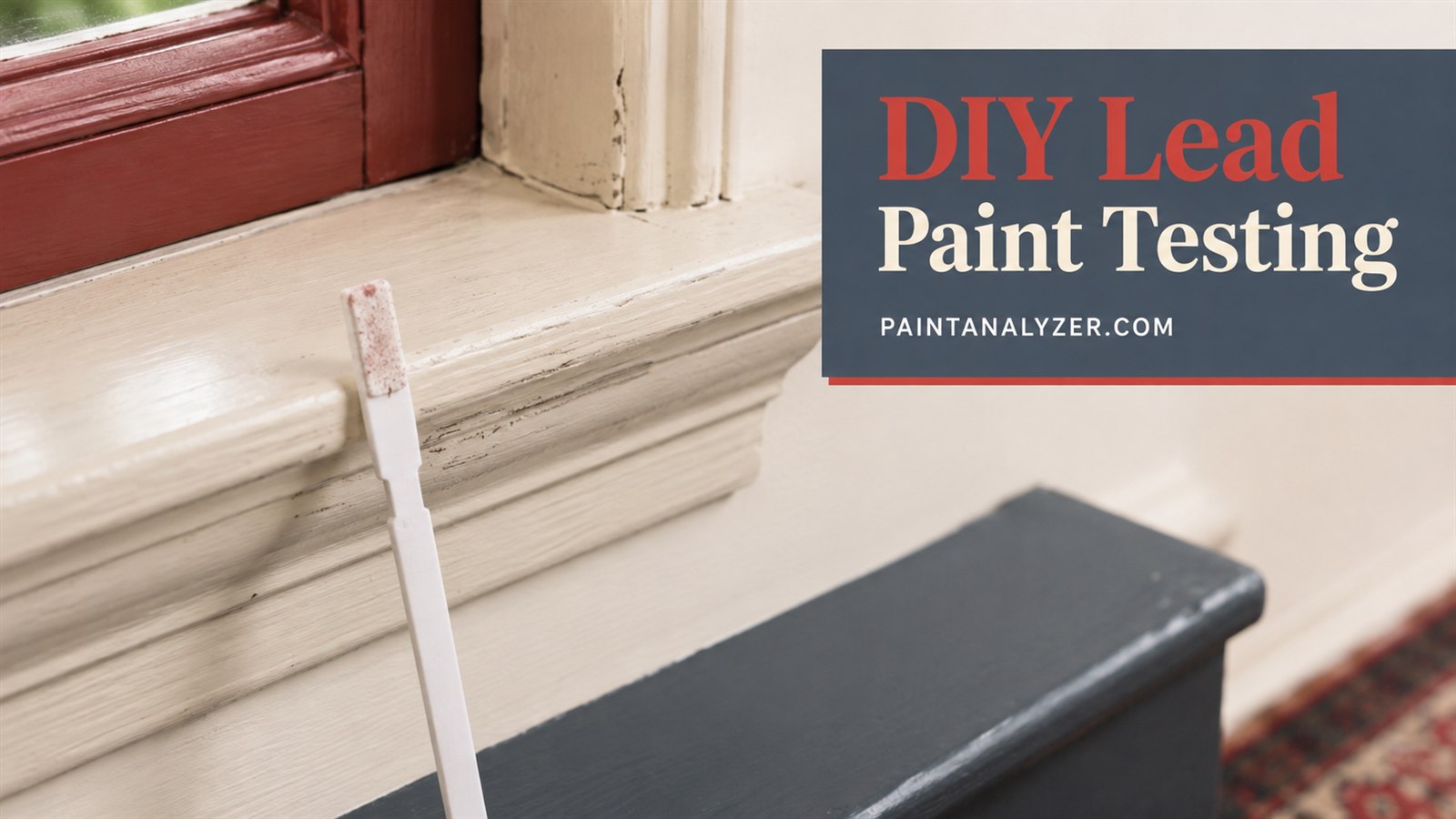
If your U.S. home was built before 1978 and you plan to sand, scrape, drill, demolish, or otherwise disturb painted surfaces, determine the lead risk before starting. A consumer lead test can provide screening information, but EPA recommends hiring a certified lead inspector or risk assessor to test for lead-based paint in a home. EPA-recognized test-kit status under the Renovation, Repair and Painting (RRP) program applies when specified kits are used by trained/certified professionals on approved substrates; it does not make every retail DIY result definitive.
If a result is positive, uncertain, or inconsistent with the age/history of the surface, stop normal dust-producing prep. You can use a certified inspector/risk assessor, an EPA-recognized NLLAP laboratory for appropriate samples, or—when renovating—assume lead is present and follow lead-safe practices.
When should you suspect lead-based paint?
Lead-based residential paint was banned for consumer use in the United States in 1978. Older housing is therefore the main concern, especially where paint is peeling, chipping, chalking, or will be disturbed during renovation. A newer topcoat does not prove that older buried layers are lead-free.
Your testing options
| Option | Best use | Important limitation |
|---|---|---|
| Certified lead inspector/risk assessor | Most reliable whole-home or project-area evaluation | Professional service; scope should match your renovation question |
| NLLAP-recognized laboratory | Laboratory analysis of appropriate paint-chip, dust, or soil samples | Sampling must be done correctly and safely |
| Consumer retail test kit | Preliminary screening when used exactly as directed | EPA does not recommend relying on homeowner use of an EPA-recognized kit as equivalent to certified testing |
| Assume lead is present | Renovation where testing is impractical and lead-safe controls will be used | Requires treating the work as lead-contaminating work |
What “EPA-recognized lead test kit” actually means
EPA currently recognizes LeadCheck, D-Lead, and the State of Massachusetts kit for specific RRP uses. Recognition is tied to trained professional use and listed substrates. EPA states that no kit has yet met both its negative- and positive-response performance criteria; the currently recognized kits meet the negative-response criterion. EPA also states that its recognition for RRP compliance applies to certified inspectors, risk assessors, and certified renovators—not simply to any homeowner using the same retail product.
That distinction matters: a DIY swab can be useful information, but it should not be described as a guaranteed clearance test for a renovation.
If you use a consumer kit as a screening step
- Read the entire kit instruction before exposing paint layers. Different kits require different cuts, sample areas, reaction times, and controls.
- Confirm the substrate is within the kit's stated use. EPA-recognized kits have substrate limitations for RRP purposes.
- Choose the actual work area. Paint history can differ by room, component, and layer; one result should not automatically be generalized to the whole house.
- Expose layers only as the kit directs. Avoid creating unnecessary chips or dust.
- Use the kit's controls and interpretation rules. Do not reinterpret a weak or ambiguous reaction to get the answer you prefer.
- Stop if the result is positive or uncertain. Move to professional/laboratory confirmation or proceed as if lead is present.
What to do with a negative DIY result
A negative consumer screening result is not the same thing as a certified determination for every layer and surface in the project. If the renovation is substantial, the home is pre-1978, children or pregnant people live in or regularly visit the home, or the test result is critical to deciding whether you will sand or demolish painted material, professional testing provides a stronger basis for the decision.
What to do if lead is positive or suspected
Do not use ordinary uncontrolled sanding, grinding, or demolition methods. EPA's lead-safe DIY guidance emphasizes containing the work area, keeping children, pregnant women, and pets out, minimizing dust, using HEPA-equipped controls where appropriate, and cleaning with HEPA vacuuming and wet methods.
For contractors working in covered pre-1978 homes and child-occupied facilities, the RRP rule imposes certification and work-practice requirements. Homeowners doing work in their own homes are generally not subject to the federal RRP contractor requirements, but EPA recommends that DIYers follow lead-safe practices because the exposure hazard is the same.
Dangerous paint-removal practices to avoid
- Open-flame burning or torching of lead-based paint.
- High-speed sanding, grinding, planing, or blasting without the required shroud/containment and HEPA vacuum control.
- Heat guns operated above 1,100°F (593°C) on lead-based paint.
- Allowing children, pregnant people, or pets into a lead-dust work area.
When to hire a certified professional instead of DIY testing
- A child or pregnant person lives in or frequently visits the home.
- You are planning major demolition, window replacement, floor/wall disturbance, or extensive paint removal.
- The surface is deteriorated and sampling itself would create chips or dust.
- DIY results are positive, ambiguous, or inconsistent across layers.
- You need documentation for a regulated renovation, property transaction, risk assessment, or abatement decision.
DIY screening is not a clearance test
A retail color-change kit cannot tell you that an entire room, house, or renovation is “safe” unless the test method and sampling scope actually support that conclusion. EPA notes that, for RRP purposes, certified renovators using recognized kits must address the components that will be disturbed; one convenient swab on one wall is not a blanket determination for doors, trim, windows, railings, or buried paint layers elsewhere.
Do not create a paint-chip sample casually
A laboratory can provide quantitative analysis, but collecting the sample can itself create lead chips and dust. If you are not trained in safe sample collection, hiring a certified inspector/risk assessor is the safer route. EPA maintains the National Lead Laboratory Accreditation Program (NLLAP) for recognized laboratories and recognized sample types.
Children and pregnancy change the risk tolerance
Lead exposure is especially concerning for young children, and EPA specifically tells DIY renovators to keep children and pregnant women out of the work area while lead-dust-generating work is underway. If either group lives in or regularly visits the home, use a lower threshold for professional testing and professional lead-safe renovation rather than relying on an ambiguous DIY result.
Testing vs. inspection vs. risk assessment vs. abatement
| Service | Question it answers |
|---|---|
| Paint testing | Does this tested component contain lead-based paint? |
| Lead inspection | Where is lead-based paint present in the building? |
| Risk assessment | Are lead hazards present now, and what should be done about them? |
| Abatement | How will lead hazards be permanently eliminated or controlled under the applicable rules? |
Do not treat these terms as interchangeable when hiring a professional.
After lead-safe renovation, cleanup verification matters
Lead-safe work is not finished when sanding or demolition stops. Containment, HEPA cleanup, wet wiping/mopping, and the applicable verification or clearance process are critical because the principal exposure pathway from renovation is often settled dust. Follow EPA/state requirements for the type of project and who is performing it.
Bottom line
For lead paint testing, the safest useful question is not “Can I get a swab to change color?” but “What level of evidence do I need before I disturb this surface?” Use consumer kits only as screening tools within their instructions. For a reliable determination—especially before significant work—use a certified lead professional or an appropriate accredited laboratory, and treat uncertain old paint as potentially lead-containing until resolved.
Related guides
Sources and further reading
Guides are researched against primary documentation and observable evidence. Archived material is rewritten, checked, and substantially improved before publication.