
Where and How to Store New and Leftover Paint
A cool, dry, temperature-stable location and a properly sealed can are what actually extend paint's usable shelf life — a garage that swings from freezing to hot is one of the worst places to store it.
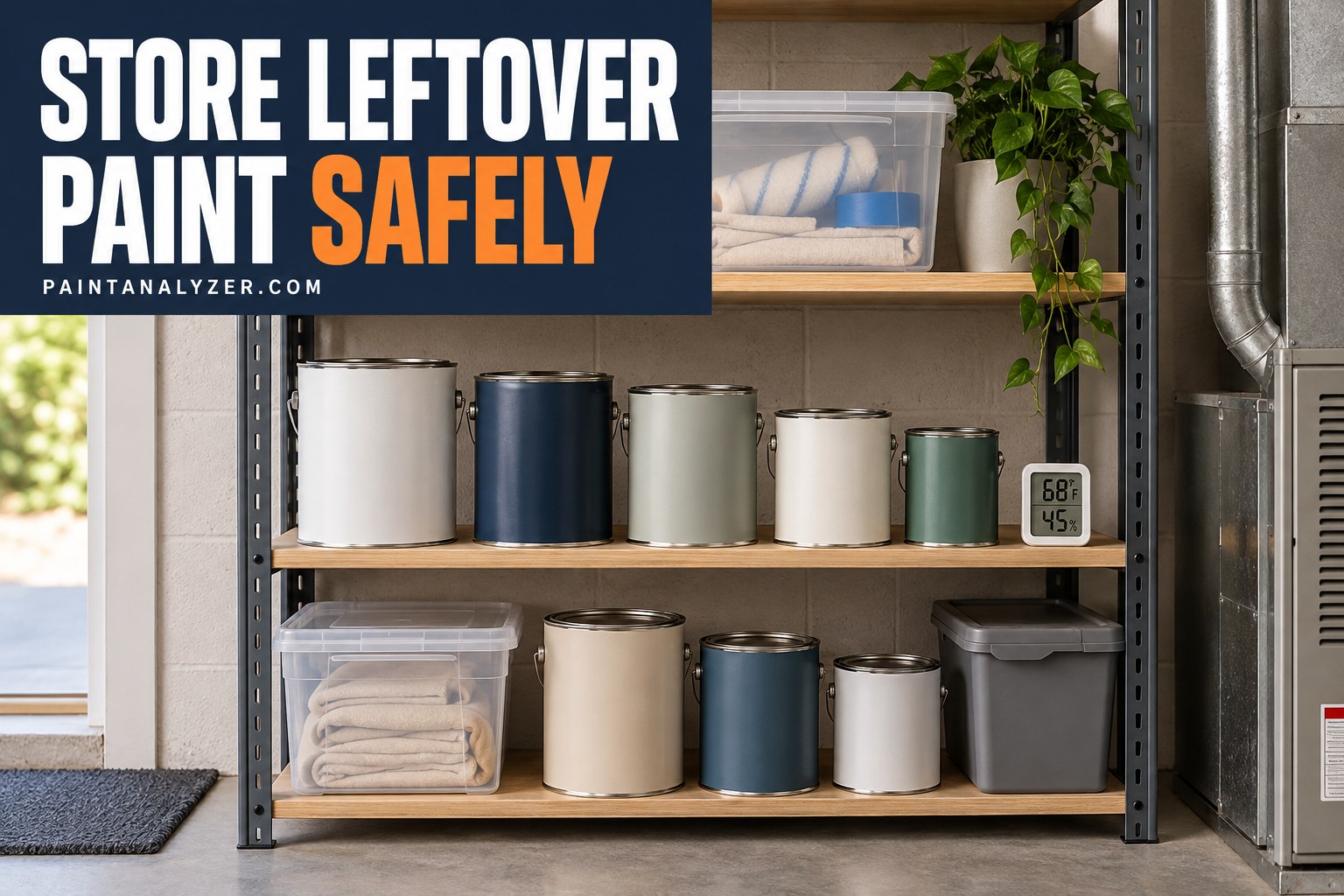
Proper paint storage genuinely extends how long leftover (or even unopened) paint stays usable, and getting the storage location and sealing right matters more than most people realize — a garage subject to extreme seasonal temperature swings is actually one of the worst common storage choices, despite being where paint often ends up by default.
1. Choose a temperature-stable location
A consistent, moderate temperature (a basement, interior closet, or climate-controlled storage area) preserves paint considerably better than a location with significant temperature swings — repeated freeze-thaw cycles or extreme summer heat both degrade paint's chemistry and shorten its usable life.
2. Avoid a garage or shed for long-term storage in most climates
An unconditioned garage or shed often swings between freezing winter temperatures and very hot summer temperatures — this repeated extreme cycling is genuinely harder on stored paint than a stable indoor environment, even though the garage is where leftover paint most commonly ends up out of convenience.
3. Seal the can properly after each use
1. Wipe the rim clean of any paint before closing (buildup in the rim
   groove prevents a fully airtight seal)
2. Place the lid squarely and tap it down evenly around the edge with
   a rubber mallet or the flat side of a hammer, not just pressed by hand
3. Store the can upright
4. Consider transferring leftover paint to a smaller container
For a can with only a small amount of paint remaining, transferring it to a smaller, appropriately-sized airtight container reduces the amount of air space in contact with the paint, which can slow the skinning and degradation that occurs faster in a mostly-empty large can.
5. Label cans clearly with color, sheen, room, and date
Labeling stored paint with the color name/code, sheen, the room or project it was used for, and the date helps with future touch-ups and makes it easy to identify what's still usable versus what should be discarded, without needing to open every can to check.
6. Check paint periodically for signs it's no longer usable
Following the general paint shelf-life guidance, periodically checking stored paint (looking for separation that won't remix, an off odor, or a skin that indicates significant degradation) helps identify when a can should be discarded rather than assuming indefinite shelf life.
7. The bottom line on paint storage
A stable, moderate temperature and a properly resealed can are the two biggest factors in how long stored paint remains usable — small habits like wiping the rim clean and choosing an appropriate storage location pay off considerably in reduced waste and available touch-up paint down the line.
Guides are researched against primary documentation and observable evidence. Archived material is rewritten, checked, and substantially improved before publication.