
How Long Does Acrylic Paint Last? (Shelf Life)
Unopened, properly stored acrylic paint can remain usable for several years — once opened, exposure to air and repeated temperature swings shortens that considerably, and a few clear signs indicate when it's actually gone bad.
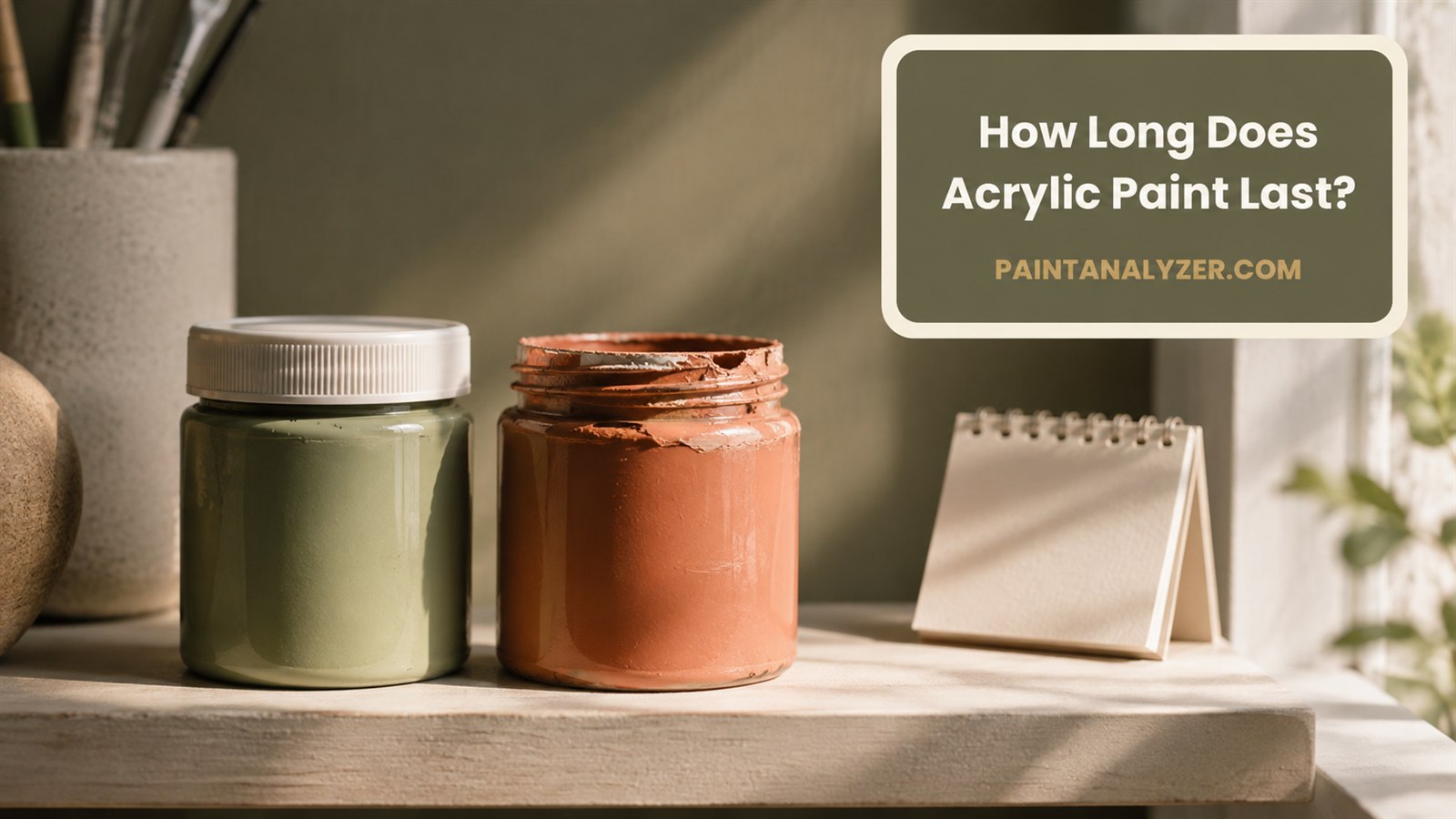
This is a genuinely different question from how long acrylic paint takes to dry or cure once applied — this is about shelf life, how long the paint remains usable while sitting in its container before it's ever put on a project.
1. Unopened acrylic paint
Generally 2-5+ years, depending on the specific product and storage conditionsAn unopened container, kept sealed and stored at a moderate, stable temperature, typically remains usable for several years — the binder and pigment stay properly suspended without air exposure or repeated temperature cycling working against the paint's stability.
2. Opened acrylic paint
Generally 6 months to 2 years once opened, depending on how well it's
resealed and stored between uses
Once opened, air exposure begins the same slow degradation process covered for paint drying and skinning generally — how well the container is resealed between uses (wiping the rim clean, pressing out excess air where practical) meaningfully affects how long an opened container stays fully usable.
3. Signs acrylic paint has actually gone bad
- A strong, sour, or otherwise off odor — fresh acrylic paint has a mild, not unpleasant smell; a sour or rancid odor indicates the paint has genuinely spoiled.
- Separation that doesn't remix with stirring — some minor separation is normal and fixable by stirring; paint that won't recombine into a smooth, uniform consistency even after thorough mixing has likely degraded.
- A lumpy, curdled texture — as covered for freeze-damaged paint, this texture (whether from freezing or from age) generally isn't recoverable.
- Mold growth — visible mold on the paint's surface means it should be discarded, not scraped off and used.
4. Proper storage to maximize shelf life
1. Store at a stable, moderate temperature — avoid extreme heat, cold,
   or repeated freeze-thaw cycling
2. Keep containers sealed tightly, wiping the rim clean before closing
3. Store away from direct sunlight
5. Craft/hobby acrylic vs. professional artist acrylic — similar general shelf life principles
Both categories follow the same basic degradation pattern (opened vs. unopened, storage conditions) — professional-grade paints don't have a meaningfully different shelf life just from being higher quality; the storage and exposure factors matter more than the price tier for how long any given acrylic paint actually remains usable.
6. Testing paint of uncertain age before a project
For paint that's been stored for an uncertain length of time, checking for the warning signs above, and doing a small test application on scrap material to confirm it still dries and behaves normally, is a reasonable check before committing it to an actual project.
Guides are researched against primary documentation and observable evidence. Archived material is rewritten, checked, and substantially improved before publication.