
What Is Pigment Volume Concentration (PVC) in Paint?
PVC is the ratio of pigment to binder in a paint's dried film — it drives sheen, hiding power, and durability more directly than most people realize.
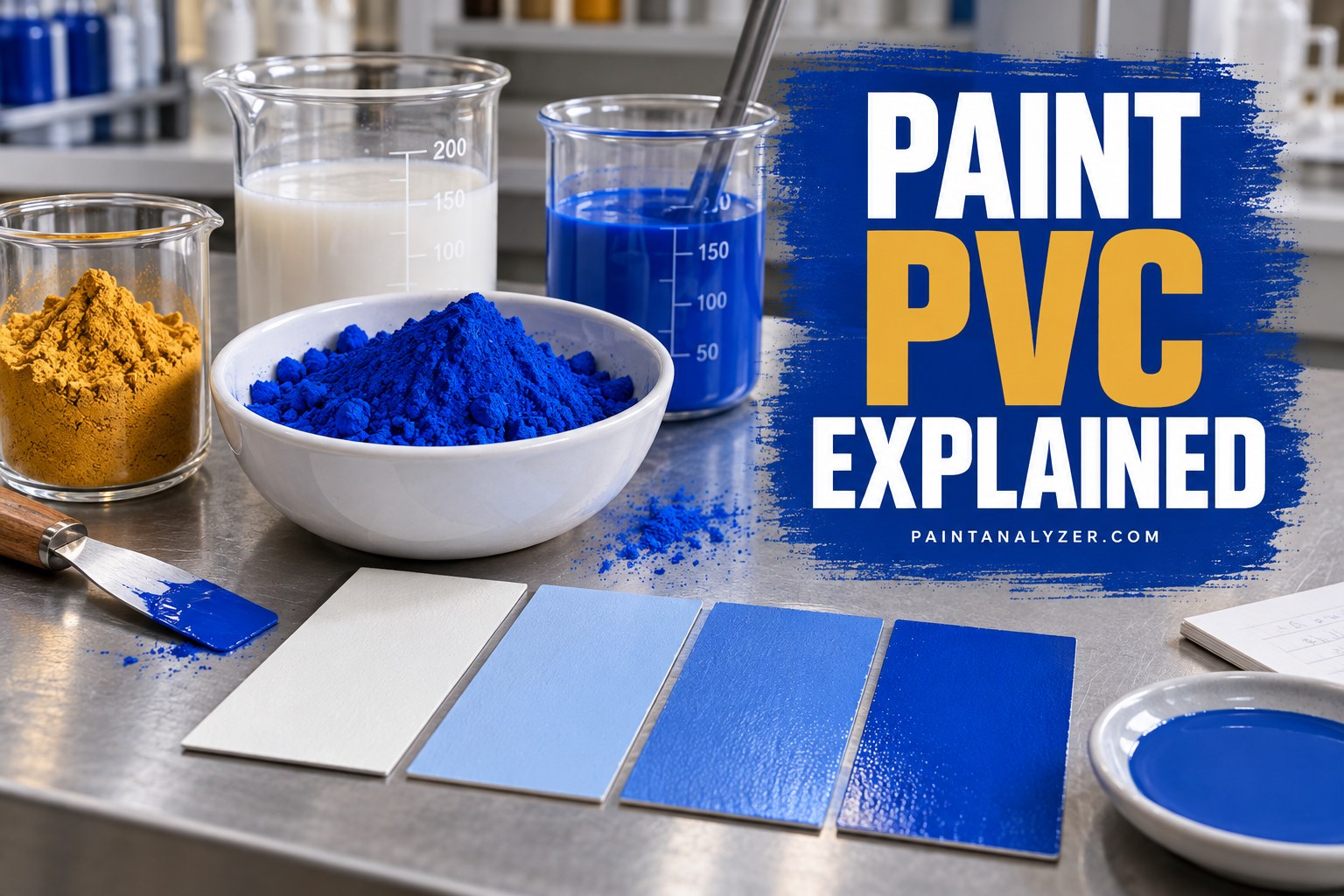
Pigment Volume Concentration (PVC) is the ratio of pigment to the total solid volume (pigment plus binder resin) in a paint's dried film, expressed as a percentage. It's a formulation detail most buyers never see directly, but it's a major driver of how a paint actually performs.
What PVC actually determines
- Hiding power / opacity — generally, higher PVC paints hide the surface underneath more effectively per coat.
- Sheen — lower-PVC paints (more binder relative to pigment) tend to produce higher sheen; higher-PVC formulations tend toward flatter finishes. This is part of why flat paints and gloss paints are fundamentally different formulations, not just the same paint with a shine additive.
- Durability and washability — more binder (lower PVC) generally means a tougher, more washable film, which is part of why higher-sheen paints tend to hold up to cleaning better than flat ones.
The Critical PVC Concept (CPVC)
Above a certain pigment concentration — the Critical PVC — there isn't enough binder to fully surround every pigment particle, and the paint film becomes more porous, less durable, and more prone to dirt pickup and moisture absorption. Formulations are generally kept below their CPVC specifically to avoid this.
Why this matters even if you never see the number
PVC isn't usually printed on a paint can, but it's the underlying reason sheen and durability move together the way our flat vs satin and satin vs gloss guides describe — understanding PVC explains *why* that tradeoff exists structurally, rather than just observing that it does.
The practical takeaway
You don't need the exact PVC number to make a good paint choice — but knowing that sheen and durability are linked by the paint's actual formulation (not just marketing) is useful context when a paint seems to defy the usual sheen/durability pattern, since that usually means an unusually formulated product worth reading reviews on before relying on it.
Guides are researched against primary documentation and observable evidence. Archived material is rewritten, checked, and substantially improved before publication.