
Should You Paint Your Brick House?
It's a real, largely irreversible commitment — painted brick needs ongoing maintenance forever after, and brick's natural ability to breathe and manage moisture changes once it's sealed under paint.
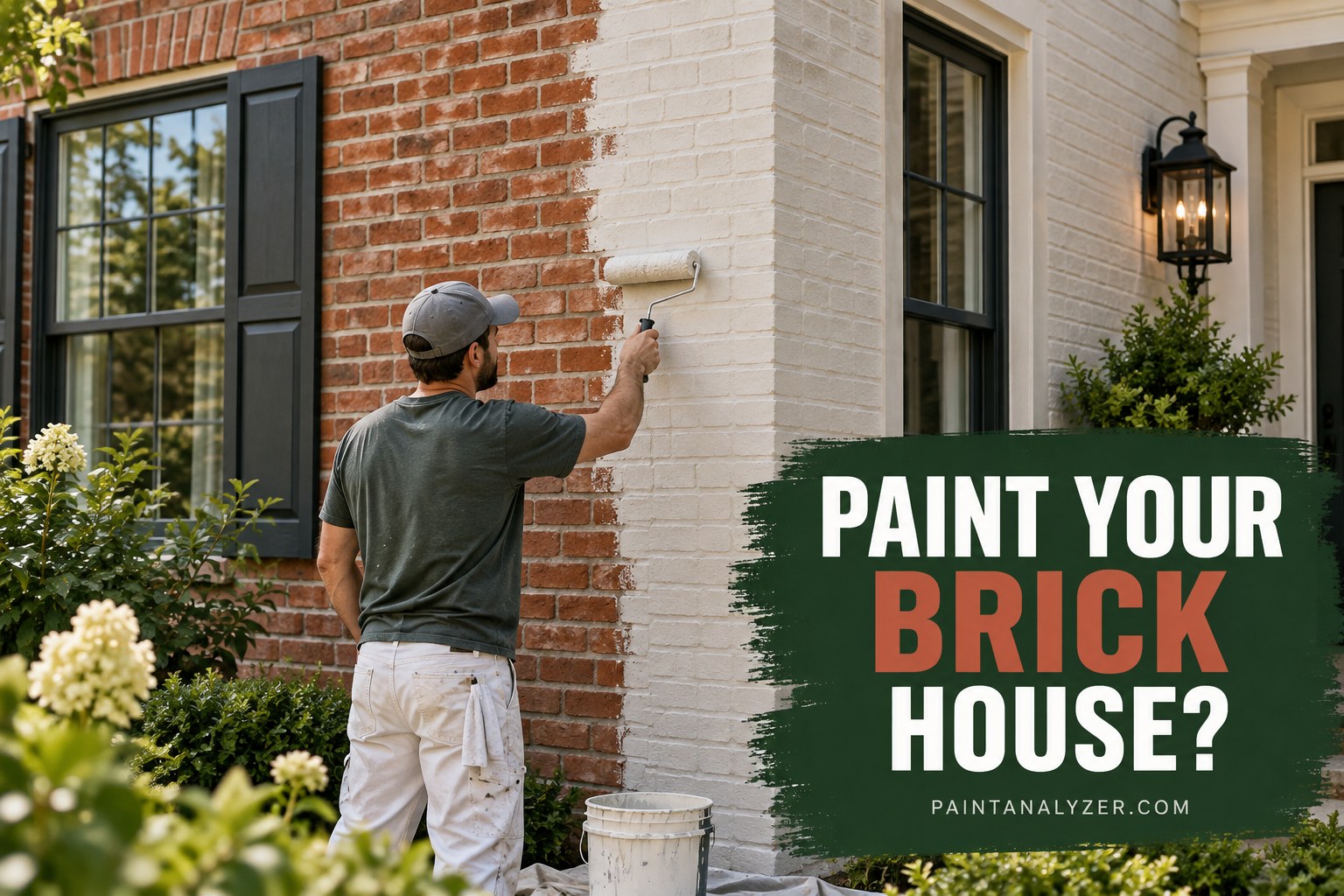
Painting a brick house is one of the more consequential exterior decisions a homeowner can make — not because the paint job itself is unusually difficult (the technique is covered in detail separately for painting a rough brick wall), but because it's a largely one-way decision with real ongoing maintenance implications that unpainted brick doesn't have.
1. It's genuinely difficult and expensive to reverse
Removing paint from brick, once applied, is a difficult, labor-intensive, and often only partially successful process — brick's porous surface absorbs paint into its texture in a way that complete removal, restoring the brick to its original bare appearance, is often impractical or prohibitively expensive to fully achieve. This is worth treating as effectively a permanent decision, not a trial that can be easily undone if the look doesn't work out.
2. Brick needs to breathe — and paint changes that
Unpainted brick and mortar are naturally somewhat vapor-permeable, allowing moisture that gets into the material to migrate back out and evaporate. A non-breathable paint film can trap that moisture instead, which — particularly in climates with freeze-thaw cycles — can contribute to spalling (the brick surface flaking and breaking down) as trapped moisture expands when it freezes. This is exactly why choosing a genuinely vapor-permeable masonry paint (as covered for painting brick generally) isn't optional if the house is going to be painted at all.
3. Painted brick requires ongoing maintenance unpainted brick doesn't
Unpainted brick is essentially maintenance-free for decades under normal conditions — once painted, that brick now needs the same ongoing upkeep as any other painted exterior surface: periodic repainting as the paint ages, chalks, or fails, which unpainted brick was never subject to in the first place. This is a genuine, permanent shift in the home's maintenance requirements, not a one-time cost.
4. Real reasons people choose to paint brick anyway
- Aesthetic preference — a specific desired look (a popular white or light-colored brick exterior trend) that unpainted brick's natural color doesn't achieve.
- Covering mismatched or patched brick — brick that's been repaired with a visibly different brick color or type over time.
- Hiding brick in poor cosmetic condition — though this doesn't address any underlying structural or moisture issues the brick might have, which should be resolved before painting regardless.
5. Alternatives worth considering first
Limewash and mineral-based washes are a genuinely different, more historically appropriate alternative to standard paint for brick — they allow considerably more breathability than a standard paint film while still substantially altering the brick's color, and are worth researching specifically as a middle ground between fully unpainted brick and a standard, less-breathable paint film.
6. The decision framework
Painting brick is a reasonable choice when the aesthetic goal genuinely matters enough to accept permanent, ongoing maintenance and a difficult-to-reverse commitment — it's a poor choice made purely to avoid addressing an underlying brick or moisture problem, which painting doesn't actually fix and can, if done with the wrong paint type, make meaningfully worse over time.
Guides are researched against primary documentation and observable evidence. Archived material is rewritten, checked, and substantially improved before publication.