
Why Isn't Paint Sticking to My Wall?
Wall paint adhesion failure usually points to moisture, contamination, or a compatibility mismatch between the new paint and whatever's already on the wall.
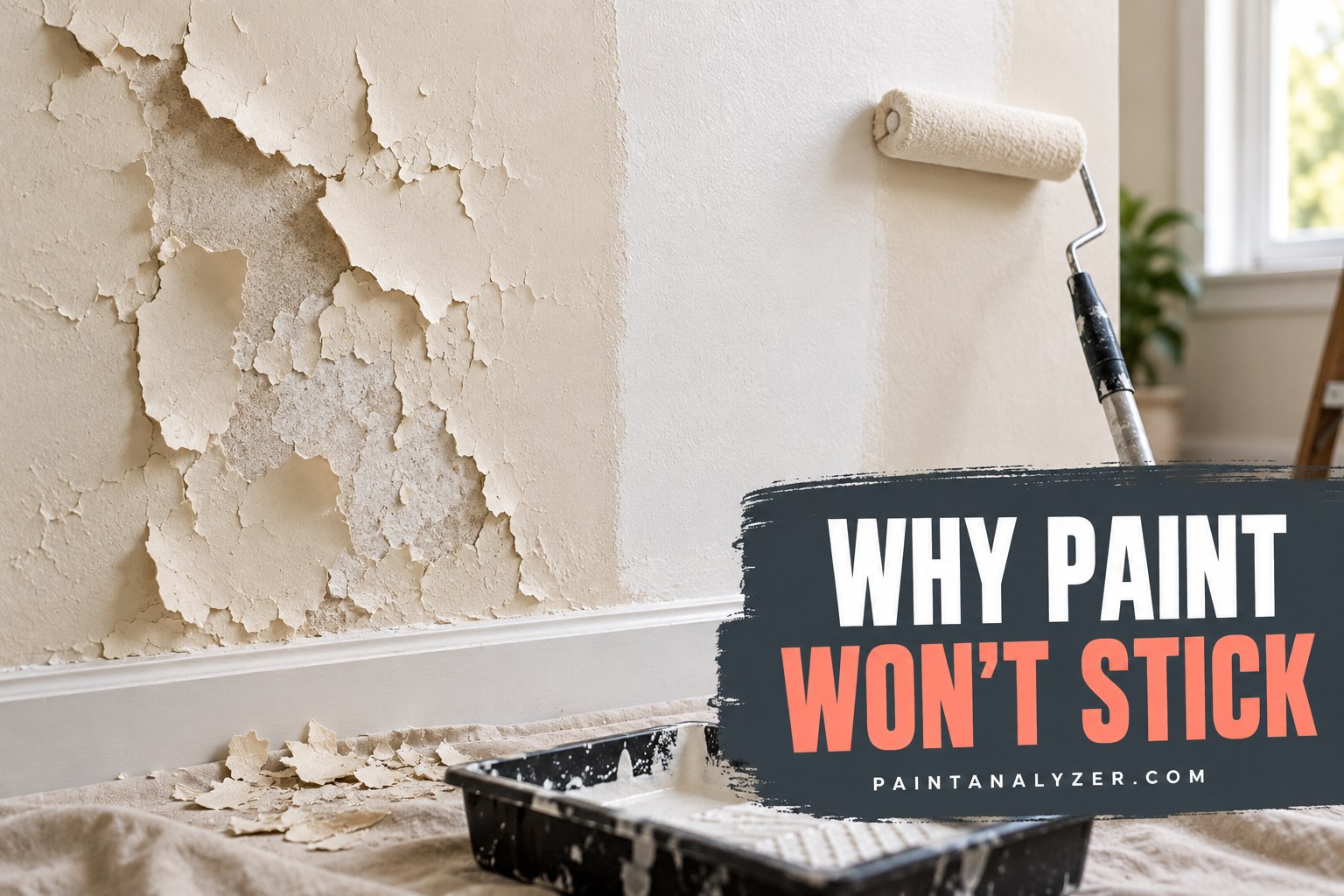
Paint that won't adhere properly to a wall — peeling, bubbling, or flaking soon after application — usually points to one of a handful of underlying causes, most commonly moisture, surface contamination, or an incompatibility between the new paint and the wall's existing finish.
1. Moisture behind or within the wall
An underlying moisture problem (a leak, high humidity, condensation) is one of the most common causes of paint adhesion failure on walls, since paint simply can't bond reliably to a consistently damp surface — identifying and resolving the actual moisture source is essential before repainting, since painting over an unresolved moisture problem just repeats the same failure.
2. Surface contamination
Dust, grease (common in kitchens), or cleaning product residue left on the wall before painting prevents proper paint adhesion — a thorough cleaning appropriate to the specific contamination (a degreasing cleaner for kitchen walls, for instance) before painting addresses this.
3. Painting over glossy or previously glazed surfaces without deglossing
Following the standard deglossing principle covered throughout this site, painting directly over a glossy existing wall finish without sanding first often results in poor adhesion — light sanding to break the gloss gives new paint a surface it can actually grip.
4. Incompatible paint types layered on top of each other
Applying a water-based paint directly over an oil-based finish (or vice versa) without an appropriate bonding primer in between can cause adhesion problems, since these paint chemistries don't always bond well to each other directly — a bonding primer designed to bridge this compatibility gap resolves the issue.
5. Painting over unprimed new drywall or patched areas
New drywall and patched joint compound areas are more porous and absorbent than painted wall surfaces — painting directly over these without a primer first often results in uneven absorption and, in some cases, poor topcoat adhesion in those specific unprimed spots.
6. Painting in conditions outside the paint's recommended range
Painting in excessive humidity, too-low temperatures, or direct hot sun (for exterior work) can all affect how well paint cures and adheres — checking the paint's specific recommended application conditions and working within that range avoids adhesion problems caused by problematic environmental conditions during application.
7. Fixing an already-failing wall paint job
For a wall already showing adhesion failure, scraping back to a sound surface, addressing the actual root cause identified above, and properly priming before repainting is necessary — repainting over failing paint without identifying and fixing the underlying cause simply repeats the same failure.
Guides are researched against primary documentation and observable evidence. Archived material is rewritten, checked, and substantially improved before publication.