
Why Isn't Paint Sticking to My Cabinets?
Cabinet paint adhesion failure almost always comes down to skipped deglossing, no bonding primer, or not allowing proper cure time before normal use.
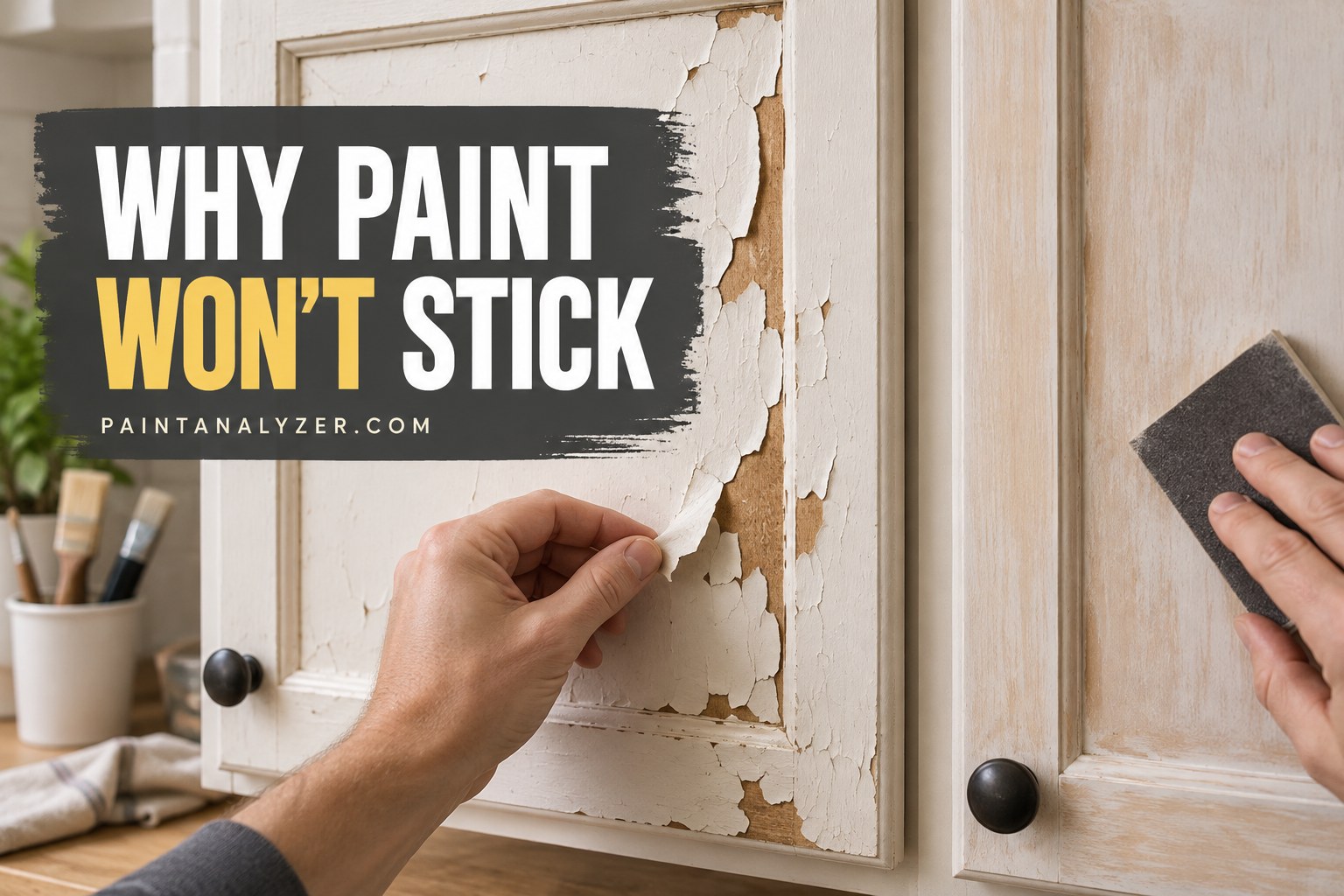
Paint failing to adhere to cabinets is a common and frustrating problem, but it's almost always traceable to one of a few specific, identifiable causes rather than bad luck — cabinets get more handling and impact than most surfaces, which is exactly why adhesion problems here show up faster and more visibly than on lower-traffic surfaces.
1. Skipped or inadequate deglossing
Most existing cabinet finishes are glossy, and painting directly over that gloss without properly sanding first — following the same deglossing principle covered throughout this site for any glossy surface — is one of the most common causes of cabinet paint peeling or chipping shortly after application.
2. No bonding primer, or the wrong type of primer
Cabinets, especially laminate or previously glossy ones, need a genuine bonding primer formulated for adhesion challenges — using a standard wall primer, or skipping primer altogether, leaves the topcoat without the adhesion foundation it needs on this specific type of surface.
3. Contamination from grease, wax, or cleaning product residue
Kitchen cabinets accumulate cooking grease and sometimes furniture polish or wax residue that isn't always visible but genuinely interferes with paint adhesion — a thorough degreasing clean (following the standard cabinet painting prep covered elsewhere) before sanding and priming addresses this contamination directly.
4. Insufficient cure time before normal use
Using cabinets normally (closing doors firmly, regular handling) before the paint has fully cured, rather than just surface-dried, is a common cause of otherwise properly applied paint chipping or peeling prematurely — following the specific paint product's full cure time before resuming normal cabinet use protects a paint job that was otherwise done correctly.
5. Using a paint not suited to cabinets
Standard wall paint, even in a higher sheen, isn't formulated for cabinets' handling demands — a cabinet-rated paint (following the durability guidance covered for cabinet painting elsewhere) is genuinely more likely to adhere and hold up than a general-purpose interior paint not designed for this level of use.
6. Fixing cabinets where paint has already failed
For cabinets already showing adhesion failure, the affected areas (or the whole piece, if failure is widespread) need to be stripped or sanded back, and the process restarted with proper degreasing, deglossing, bonding primer, and a cabinet-appropriate topcoat — simply repainting over already-failing paint without addressing the root cause just repeats the same failure.
7. The bottom line
Cabinet paint adhesion problems are almost always a prep issue rather than a paint quality issue — addressing degreasing, deglossing, proper primer, and adequate cure time resolves the vast majority of cases, and it's worth working through this checklist systematically rather than assuming a different paint brand alone will solve an underlying prep problem.
Guides are researched against primary documentation and observable evidence. Archived material is rewritten, checked, and substantially improved before publication.