
Why Are Porch Ceilings Painted Blue? (Haint Blue Explained)
The tradition, called "haint blue," has real Southern folk-belief roots about warding off spirits — the popular modern claim that it repels wasps and other insects doesn't hold up to close scrutiny.
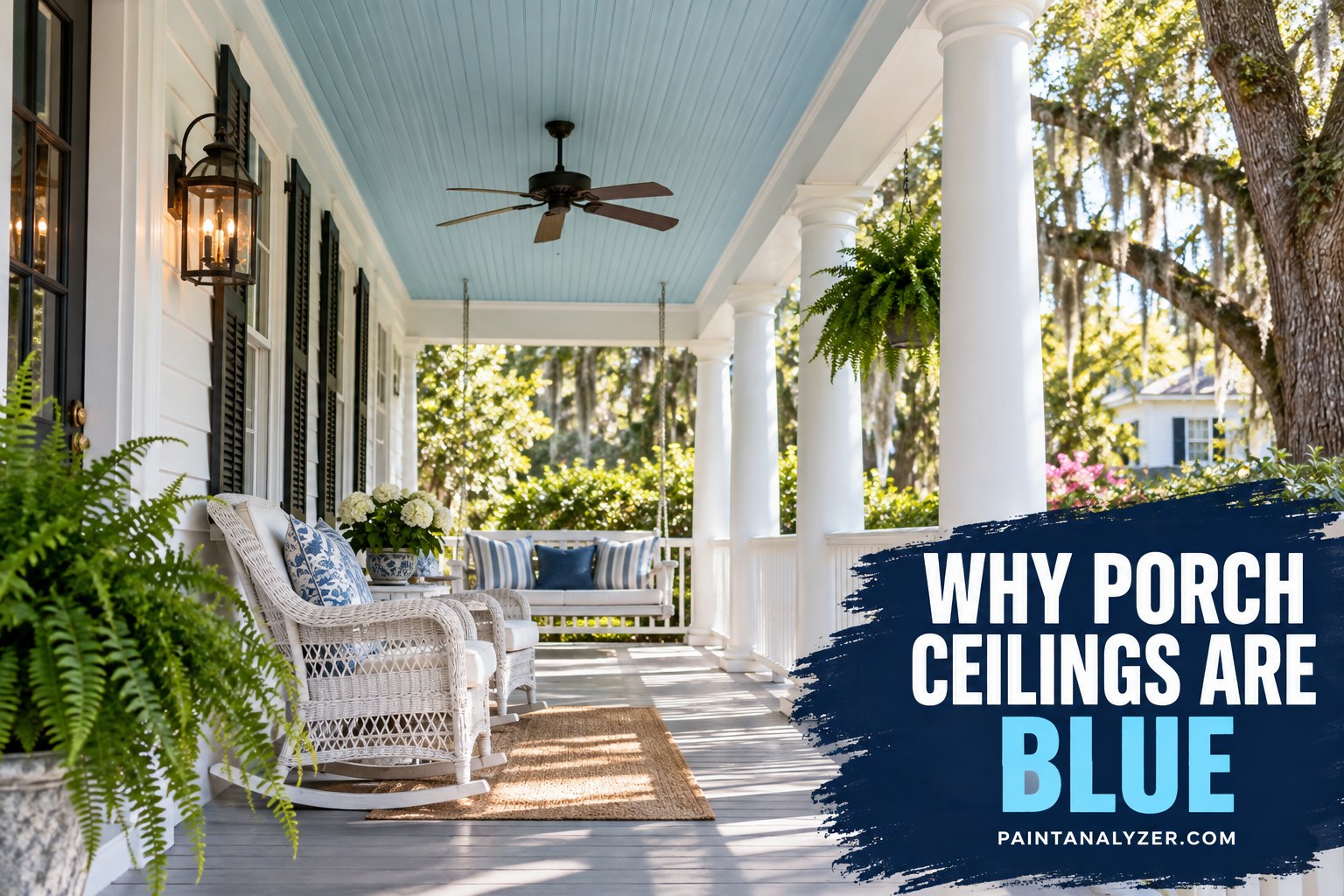
Painting a porch ceiling a pale blue-green color — commonly called "haint blue" — is a genuine Southern architectural tradition with real folk-belief origins, distinct from the popular modern claim (worth examining critically) that it specifically repels wasps and other insects.
1. The tradition's actual origin
Haint blue originates from Gullah Geechee culture in the American Southeast, where the color was traditionally believed to ward off "haints" (a regional term for restless spirits or ghosts) — the belief held that spirits couldn't cross water, and the pale blue-green color was meant to visually resemble water or sky, discouraging them from entering the home through the porch.
2. Why the color spread beyond its original cultural context
Over time, the practice spread into broader Southern architectural tradition, particularly in coastal and historic areas, becoming a recognizable regional aesthetic even among homeowners with no connection to its original folk-belief context — much like many traditions, the visual style persisted well beyond the specific spiritual belief that originally motivated it.
3. The popular modern claim: does it actually repel wasps?
A widely repeated modern explanation claims the blue color mimics the sky, tricking wasps and other insects into not building nests there because they perceive it as open air — this explanation doesn't hold up well to scrutiny; there's little solid evidence that wasps or other insects are meaningfully deterred by ceiling color specifically, and this claim appears to be a modern, retrofitted rationalization rather than the tradition's actual documented origin or a demonstrated entomological effect.
4. What might create a partial, coincidental effect
Some lighter-colored, glossier ceiling paints may be somewhat less appealing to certain insects for reasons unrelated to the specific blue hue — smoother, glossier surfaces can be harder for some insects to build nests on regardless of color, which could produce a modest, coincidental reduction in nesting that gets attributed to the color itself rather than the surface texture or sheen.
5. Practical painting considerations if choosing this look today
Regardless of the folklore, a light blue or blue-green porch ceiling is a legitimate, attractive design choice — following standard exterior/porch ceiling painting practice (a flat or matte finish typically, similar to interior ceiling logic, appropriate exterior-rated paint given the porch's semi-outdoor exposure) achieves the look without needing to rely on any insect-deterrent property to justify the choice.
6. The honest bottom line
Haint blue is a real, culturally significant tradition worth understanding and respecting in its actual historical context — its popular modern reframing as a practical wasp deterrent is an interesting but unsubstantiated add-on to that history, and choosing the color for its genuine aesthetic and cultural appeal is a more honest reason than an insect-control claim that doesn't hold up well under examination.
Guides are researched against primary documentation and observable evidence. Archived material is rewritten, checked, and substantially improved before publication.