
What's the Difference Between Paint and Glaze?
Paint is opaque and covers what's beneath it; glaze is translucent and is applied specifically to be manipulated — wiped, dragged, or textured — to reveal some of the layer underneath through it.
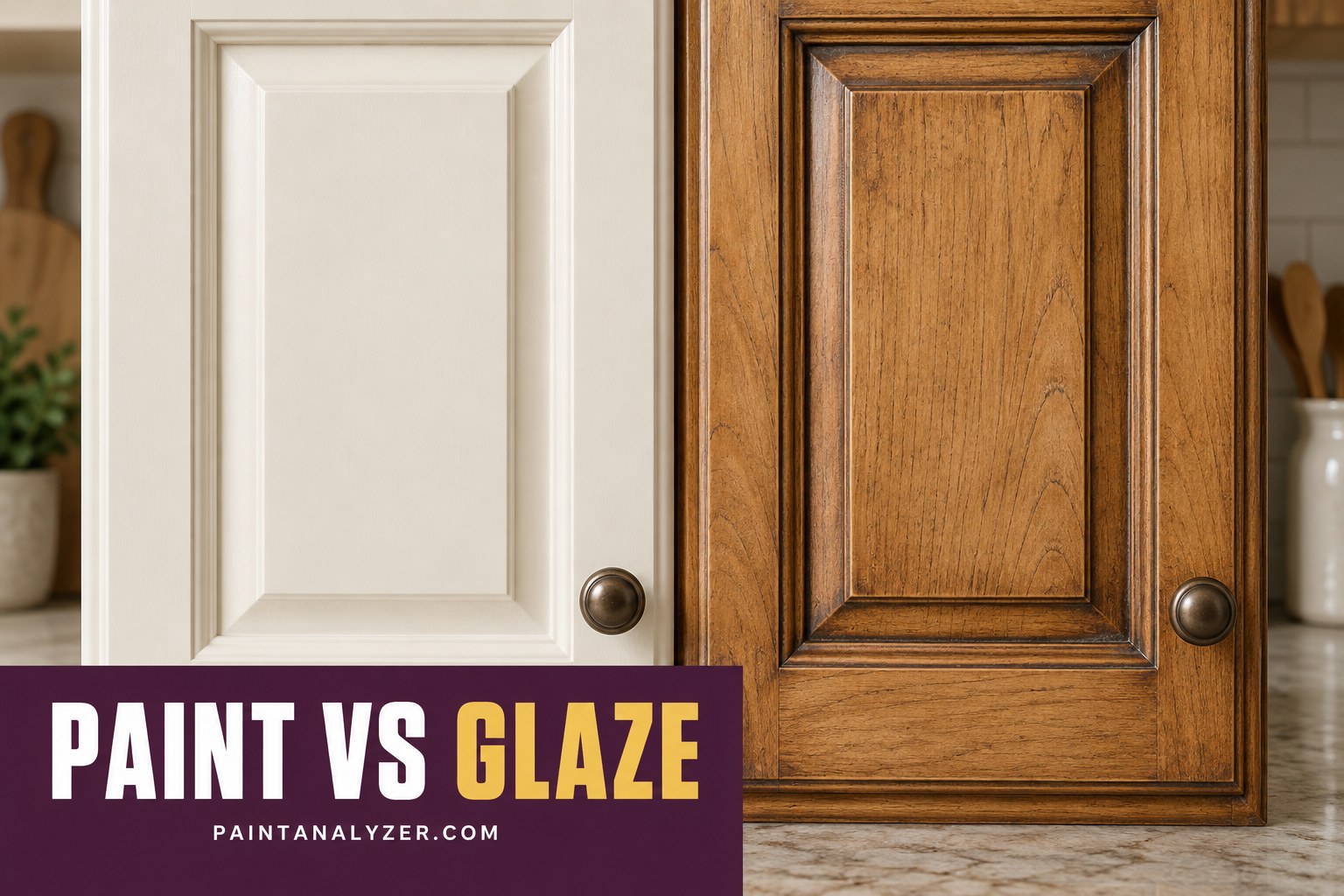
Paint and glaze share similar base chemistry (both commonly acrylic or oil-based) but serve fundamentally different visual purposes — paint is meant to fully and evenly cover a surface, while glaze is a translucent medium specifically applied to be manipulated afterward, letting some of what's underneath show through in a controlled, decorative way.
1. Opacity is the core distinction
Standard paint contains enough pigment to fully hide the surface underneath once dry and cured — that's essentially its whole job. Glaze contains considerably less pigment relative to its binder and carrier, making it translucent by design; it's not meant to fully hide anything on its own.
2. What glaze is actually used for
Glaze is applied over a base coat of paint and then manipulated with a brush, rag, sponge, or specialty tool while still wet — dragging, stippling, ragging, or combing through it creates texture and depth effects (faux finishes, an aged or antiqued look, decorative wall techniques) that reveal the base coat color through the translucent glaze layer in a controlled pattern.
3. A basic glazing technique, as an example
1. Apply and fully cure a base coat of paint
2. Mix glazing liquid with a small amount of paint (or use a pre-tinted glaze)
3. Apply the tinted glaze over the cured base coat
4. While still wet, manipulate it with a rag, brush, or tool to create the
   desired texture/pattern before it sets
5. Allow to dry and cure fully
The window for manipulating glaze before it sets is a real practical constraint — working in manageable sections, similar in spirit to maintaining a wet edge with standard paint, matters here too, since glaze that's begun to set no longer manipulates cleanly.
4. Extended open time is part of what makes glaze workable this way
Glazing liquid/medium is formulated with a longer open (workable) time than standard paint specifically to give more time for these manipulation techniques before it starts to set — this extended working window is a deliberate formulation choice, not an incidental property, since the whole technique depends on having enough time to create the texture before the glaze locks in place.
5. Where glaze fits relative to varnish or a clear topcoat
Glaze is distinct from a clear varnish or protective topcoat, even though both can be translucent — glaze is a decorative, often tinted medium applied specifically for its visual manipulation effect, while a clear varnish or polyurethane topcoat is applied primarily for protection, without the deliberate texturing step glaze techniques rely on.
6. When to reach for glaze vs. just using paint
For a flat, even, single-color result, standard paint alone is the right, simpler tool — glaze is specifically for achieving textured, layered, or antiqued decorative effects that a flat coat of paint alone can't produce, and it adds genuine technique and time investment that's only worth it when that specific decorative effect is actually the goal.
Guides are researched against primary documentation and observable evidence. Archived material is rewritten, checked, and substantially improved before publication.