
What Type of Paint Should You Use on Masonite Siding?
Masonite (hardboard) siding is particularly moisture-sensitive, making proper sealing and a quality 100% acrylic exterior paint especially important to prevent swelling and premature failure.
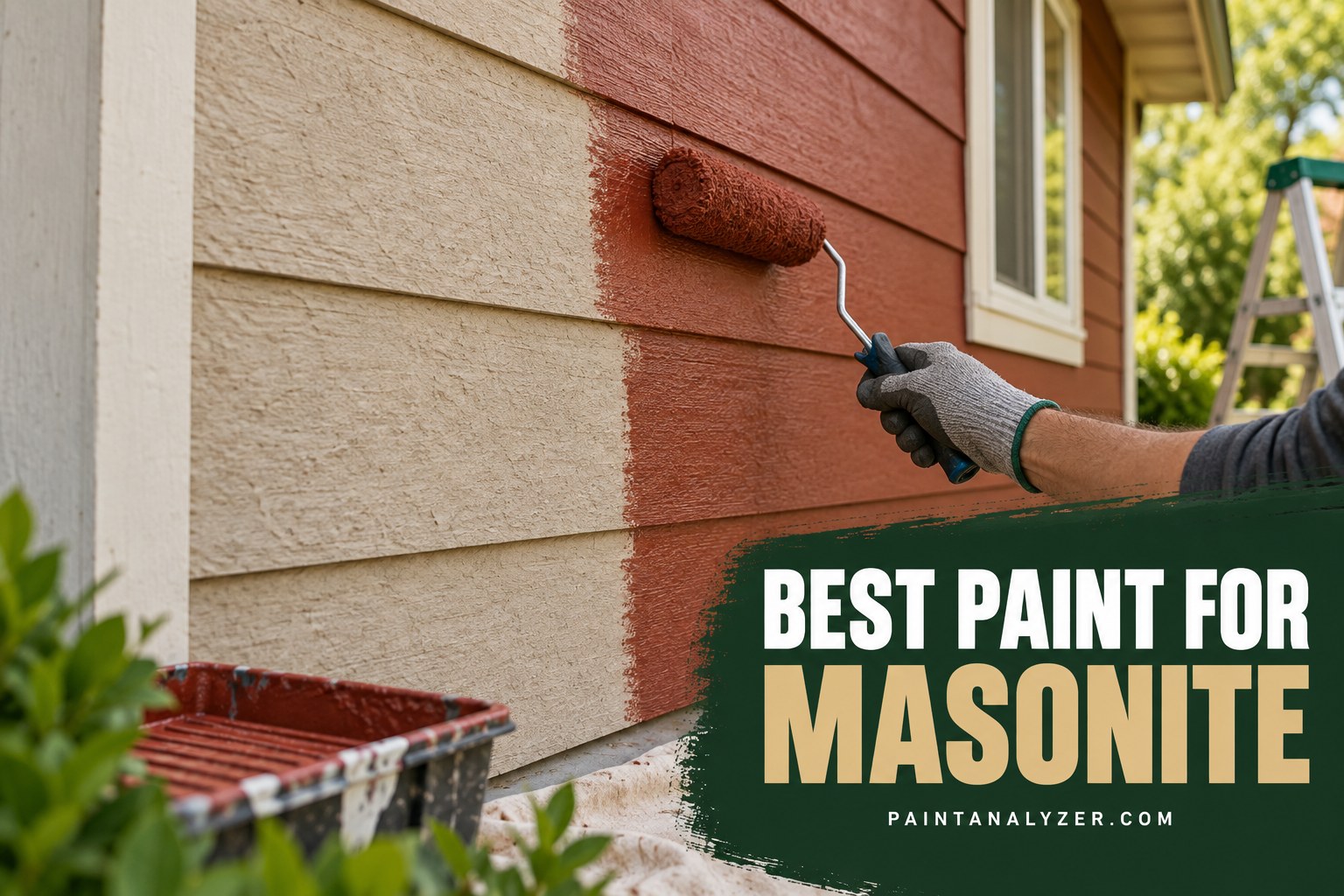
Masonite siding, a type of engineered hardboard siding common on homes built from the 1960s through the 1990s, has a well-documented moisture sensitivity that makes proper paint choice and application genuinely more consequential than for solid wood or vinyl siding.
1. Why Masonite's moisture sensitivity matters so much for paint choice
Masonite siding is prone to swelling, delaminating, and deteriorating when exposed to sustained moisture, and once this damage begins, no paint product can fully reverse it — this makes proper sealing and prevention, more than any single "best" paint product, the most important factor in this siding's paint performance.
2. Address any existing moisture damage before painting
Checking thoroughly for swelling, soft spots, or delamination before painting is essential — painting over already-damaged Masonite doesn't address the underlying problem and will likely fail again relatively quickly as the damage continues progressing underneath.
3. Use a quality 100% acrylic exterior paint
A high-quality 100% acrylic exterior paint, rather than a lower-quality or vinyl-acrylic blend, provides the best available moisture resistance and flexibility for this particularly moisture-sensitive substrate — this isn't a surface where cutting costs on paint quality is a reasonable trade-off.
4. Seal all edges and cut ends thoroughly
Masonite siding's cut edges and joints are especially vulnerable to moisture intrusion — ensuring these edges are fully primed and sealed, not just the flat face surfaces, addresses one of the most common points where moisture actually gets in and causes damage.
5. Prime with a quality exterior primer before the topcoat
A dedicated exterior primer, applied to all surfaces including edges, gives the acrylic topcoat a properly sealed base and adds an extra layer of moisture resistance beyond what the topcoat alone provides.
6. Maintain caulking at joints and seams
Checking and refreshing caulking at siding joints, around windows, and at other seams as part of the painting project (or as separate regular maintenance) prevents water intrusion at these vulnerable points, which is particularly important given Masonite's sensitivity.
7. Recognize when repainting isn't enough and replacement is the more honest answer
For Masonite siding showing significant swelling, soft spots, or delamination across a large area, repainting is a temporary cosmetic measure rather than a real fix — replacing genuinely damaged sections (or the whole siding, for extensive damage) is the more honest long-term solution once damage has progressed this far.
Guides are researched against primary documentation and observable evidence. Archived material is rewritten, checked, and substantially improved before publication.