
What Kind of Paint Should You Use on These Surfaces? A Quick-Reference Guide
From a cement planter to the inside of a fireplace, each of these surfaces needs a paint genuinely rated for its specific conditions — heat, moisture, food contact, or constant weathering.
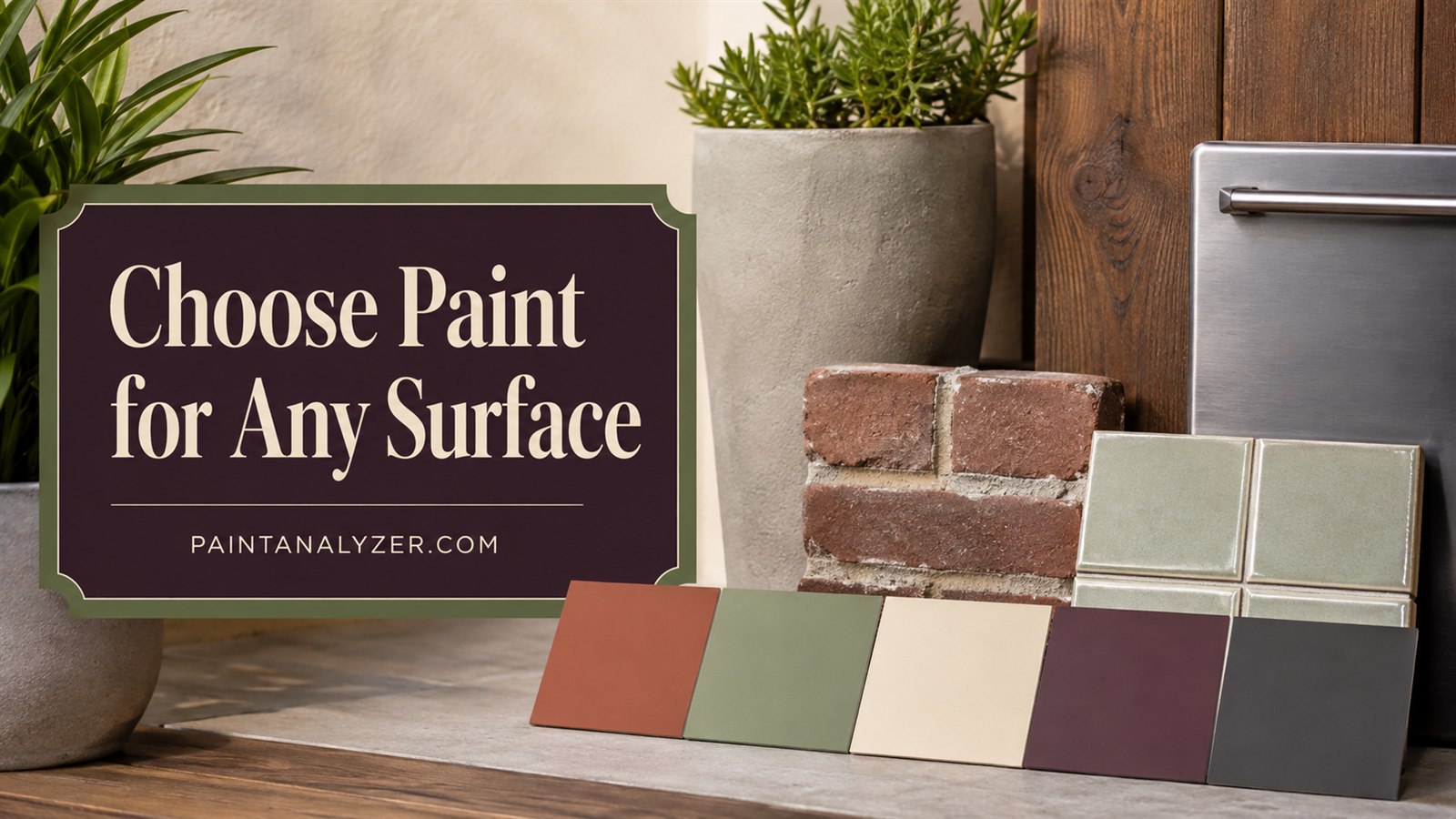
Several specific household surfaces come up again and again with the same basic question — what paint actually works here — and each one has a genuine answer based on that surface's particular conditions: heat, moisture, weathering, or food contact.
1. Cement pots and planters
A concrete or masonry-specific paint, following the same concrete painting prep (cleaning, addressing any efflorescence, priming), works well on cement planters — for planters that will hold moist soil constantly, choosing a paint with good water resistance specifically matters more here than for a purely decorative concrete surface.
2. Inside a fireplace
The inside of a wood-burning fireplace needs a high-heat-rated paint specifically formulated for direct flame and extreme heat exposure (often rated for 1000+ degrees Fahrenheit) — standard high-heat paint rated for something like a barbecue grill exterior isn't necessarily rated for this level of direct, sustained heat, so checking the specific temperature rating against a fireplace's actual conditions matters.
3. Inside a deep freezer
A paint rated for both cold temperature tolerance and food-safe use (checking the label specifically for food contact safety, given the freezer's role storing food) is necessary here — a standard appliance touch-up paint not rated for direct food-adjacent use isn't appropriate for this specific application.
4. Asphalt and tarmac
A paint specifically formulated for asphalt (line-striping paint or a dedicated asphalt coating, depending on the project) is needed, since asphalt's oily, flexible surface is a different substrate than concrete and needs a paint chemistry compatible with it rather than standard masonry paint.
5. A fiberglass door
Following the same fiberglass painting approach (light sanding to deglossy the gel coat, a bonding primer, a durable exterior-rated topcoat), a fiberglass door takes standard exterior door paint once properly prepped, without needing anything more exotic than good adhesion prep.
6. A lamp shade
A lamp shade's material (fabric, paper, or plastic) determines the right paint — a fabric medium or spray paint formulated for fabric works for cloth shades, while a paint appropriate for plastic (following the plastic-adhesion principles covered elsewhere) suits a plastic shade; checking the shade's actual material before choosing a product avoids a mismatch.
7. A clay chiminea
A high-heat-rated paint, similar to what's used for the inside of a fireplace, is necessary given a chiminea's role containing an open fire — a standard exterior paint not rated for this heat level will fail quickly on a chiminea's fire-facing interior surfaces.
8. Wood pallet furniture or projects
Pallet wood is often rough and may have unknown prior chemical treatment (some pallets are chemically treated for pest control during shipping) — cleaning thoroughly and, for anything used indoors or for food-adjacent purposes, checking the pallet's markings for its treatment type is a reasonable precaution before choosing a standard exterior or furniture paint for the project.
9. The common thread: match the paint to the surface's real conditions
In every one of these cases, the right paint choice comes down to genuinely matching the product's rating (heat tolerance, food safety, flexibility, weathering) to what the surface will actually experience — a general-purpose paint that seems like it should work often falls short of one of these specific, real requirements.
Guides are researched against primary documentation and observable evidence. Archived material is rewritten, checked, and substantially improved before publication.