
What Is Solar Reflective Paint? Pros and Cons
Solar reflective paint reduces heat absorption through specially formulated pigments, offering genuine energy benefits with some real trade-offs in color range and cost.
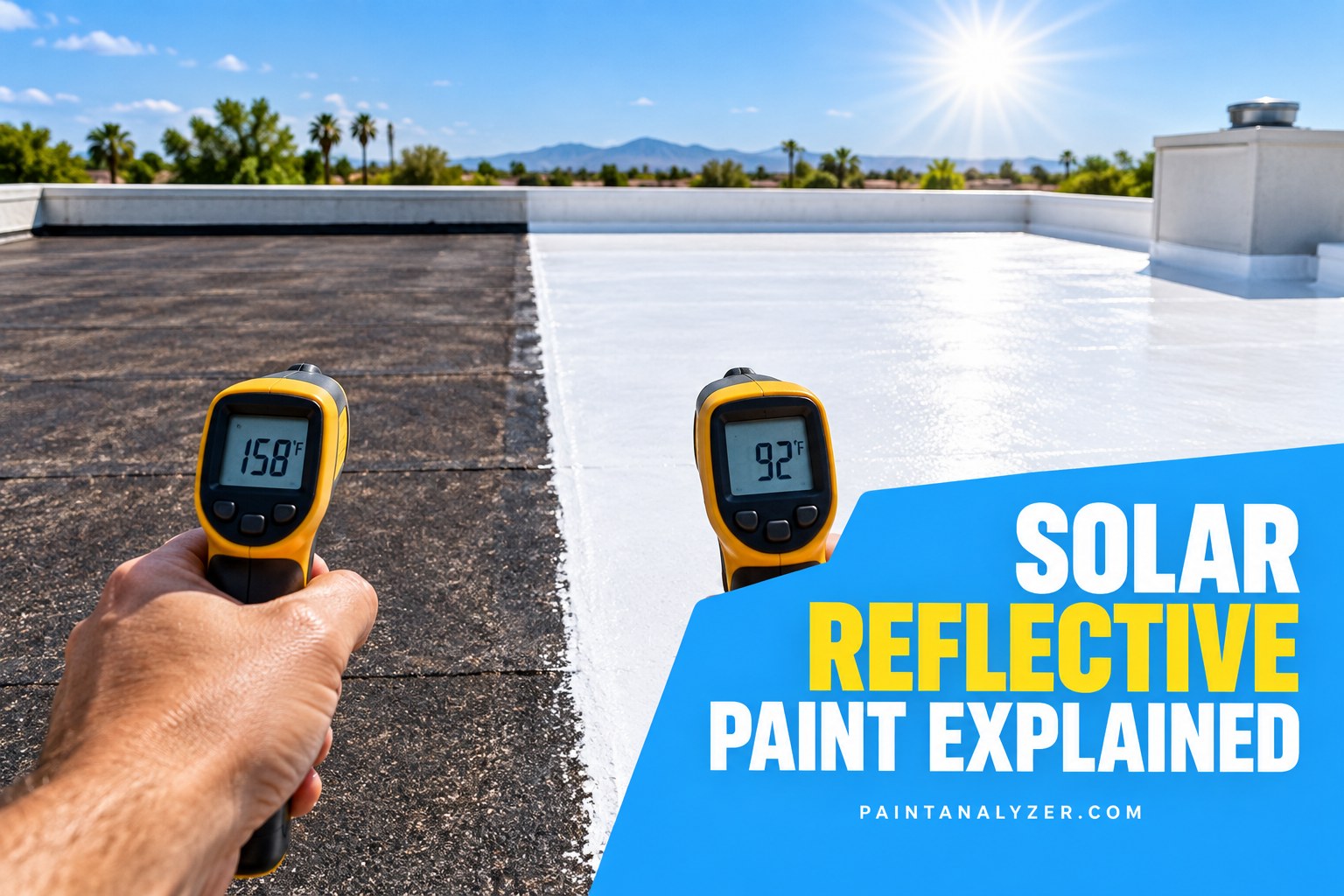
Solar reflective paint is formulated with special pigments and additives designed to reflect a greater proportion of solar radiation (particularly infrared) than standard paint, reducing how much heat the painted surface absorbs — a technology with genuine energy benefits, alongside some real practical trade-offs to weigh.
1. How solar reflective paint actually works
These paints use specialized pigments (sometimes ceramic or ceramic-infused) engineered to reflect infrared radiation more effectively than standard pigments, reducing the amount of solar heat absorbed into the painted surface and, by extension, the structure underneath.
2. The main advantage: reduced heat absorption
On a roof or exterior wall, reduced heat absorption can translate into a genuinely cooler building interior and, in some cases, measurably lower cooling energy costs — this benefit is most pronounced in hot, sunny climates where cooling costs represent a significant portion of energy use.
3. Color limitations
Solar reflective technology works most effectively with lighter colors, since dark pigments inherently absorb more light regardless of the reflective additive technology — while some reflective formulations exist for darker colors, the reflective benefit is generally less pronounced than with lighter colors, which is a real limitation for anyone wanting a specific darker exterior color with maximum solar reflectivity.
4. Cost considerations
Solar reflective paint typically costs more than standard exterior paint, given its specialized formulation — weighing this higher upfront cost against the potential energy savings over time, which vary by climate and building specifics, is a reasonable way to evaluate whether the investment makes sense for a specific situation.
5. Application considerations
Solar reflective paint is generally applied similarly to standard exterior paint of the same type, following standard exterior prep and application practices covered throughout this site — checking the specific product's application instructions ensures the reflective properties are achieved as intended.
6. Durability compared to standard exterior paint
Quality solar reflective paints are generally formulated to offer comparable durability to standard exterior paint, though checking a specific product's warranty and durability claims, rather than assuming all reflective paints perform identically, gives a more accurate picture for a specific product choice.
7. Who benefits most from solar reflective paint
Buildings in hot, sunny climates with significant cooling costs, particularly those with light-colored or white roof options already being considered, are the situations where solar reflective paint's energy benefits are most likely to be worth its higher cost — for a home in a cooler climate with modest cooling needs, the investment is less likely to pay off as clearly.
Guides are researched against primary documentation and observable evidence. Archived material is rewritten, checked, and substantially improved before publication.