
What Is Light Reflective Value (LRV) in Paint?
LRV measures how much light a paint color reflects versus absorbs, on a scale from 0 to 100 — a genuinely useful number for predicting how a color will actually feel in a room.
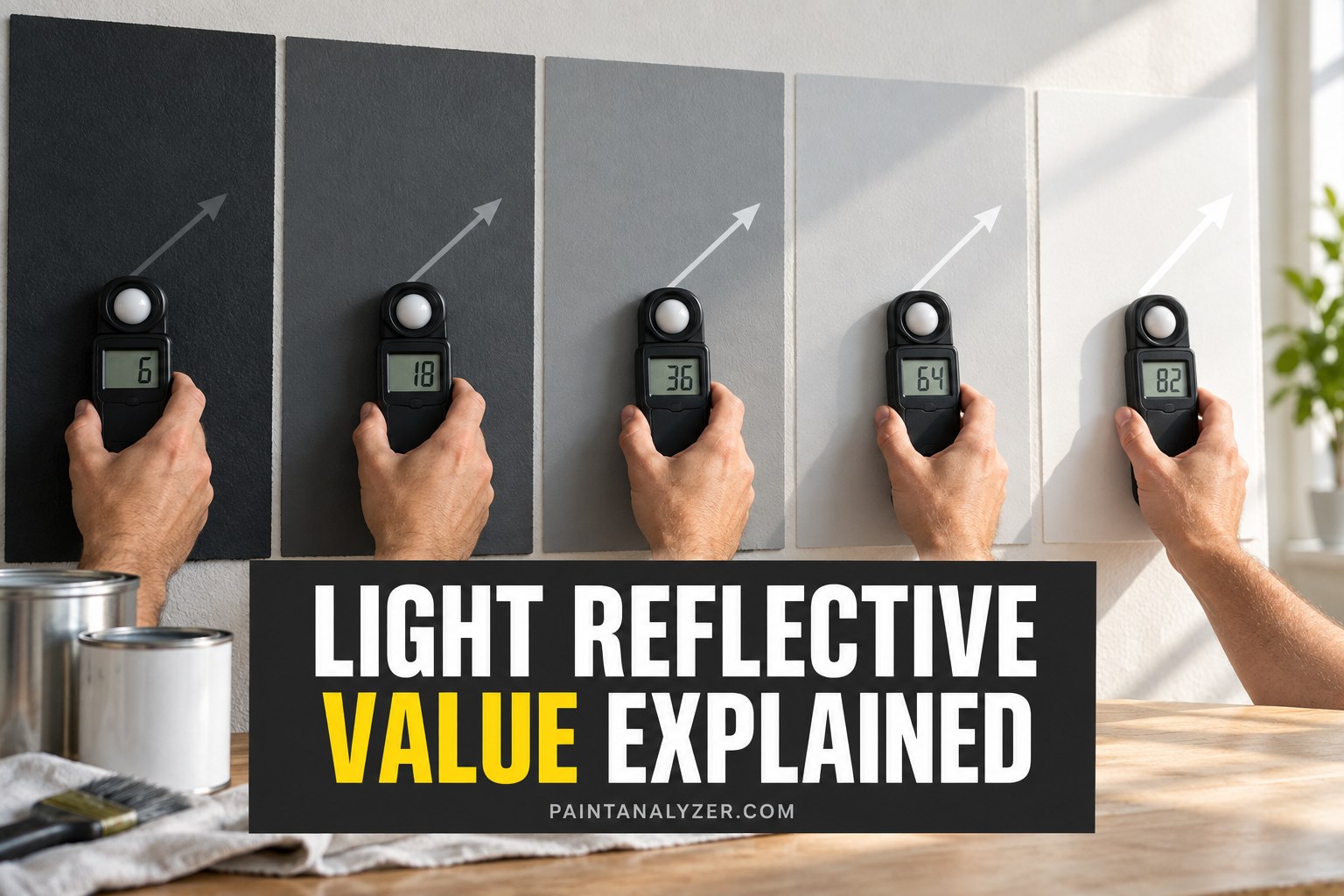
Light Reflective Value (LRV) is a measurement of how much visible light a paint color reflects versus absorbs, expressed on a scale from 0 (theoretical absolute black, absorbing all light) to 100 (theoretical absolute white, reflecting all light) — it's a genuinely useful, objective number for predicting how a color will actually feel and perform in a specific room.
1. Why LRV matters beyond just the color name or swatch
Two colors with similar-sounding names (different "grays," for instance) can have meaningfully different LRVs, affecting how light or dark they actually read on a wall — checking a paint's specific LRV number, usually available from the manufacturer, gives a more objective comparison point than color names or a small swatch alone.
2. How LRV relates to room brightness
A higher LRV color reflects more light back into a room, making the space feel brighter and can help a smaller or darker room feel more open — a lower LRV color absorbs more light, creating a cozier, more intimate feeling but making a room feel smaller or darker, particularly with limited natural light.
3. Using LRV to predict how paint will look under different lighting
A room with limited natural light benefits from a higher LRV color to help maximize the light that is available, while a room with abundant natural light has more flexibility to use a lower LRV color without the space feeling dark — checking a room's actual light levels against a paint's LRV number, rather than choosing purely on appearance in a store, gives more predictable real-world results.
4. LRV and paint sheen are related but different considerations
LRV measures how much light a color reflects based on its pigment, while sheen relates to how a paint's surface reflects light — a high-gloss paint in a low-LRV dark color still reflects light differently (more directional shine) than a flat paint in the same dark color, so both factors matter together rather than either alone fully predicting how a paint will actually look.
5. Where to find a paint's LRV number
Most major paint manufacturers list LRV values for their color swatches, either on the physical swatch itself or in their online color tools — checking this number before committing to a color, particularly for a room where light levels are a specific concern, is a straightforward extra step worth taking.
6. Using LRV alongside, not instead of, testing actual paint samples
LRV is a useful predictive tool, but it doesn't fully replace testing actual paint samples on the wall in the room's real lighting — using LRV to narrow down color choices, then confirming with a physical sample in the actual space, combines the objective data with the real visual confirmation that matters most for the final decision.
Guides are researched against primary documentation and observable evidence. Archived material is rewritten, checked, and substantially improved before publication.