
What Is Light Reflectance Value (LRV)?
A single number, from 0 to 100, describing how much light a paint color reflects versus absorbs — genuinely useful for predicting how a color will actually read in a room, and a real technical constraint on some materials, like PVC trim.
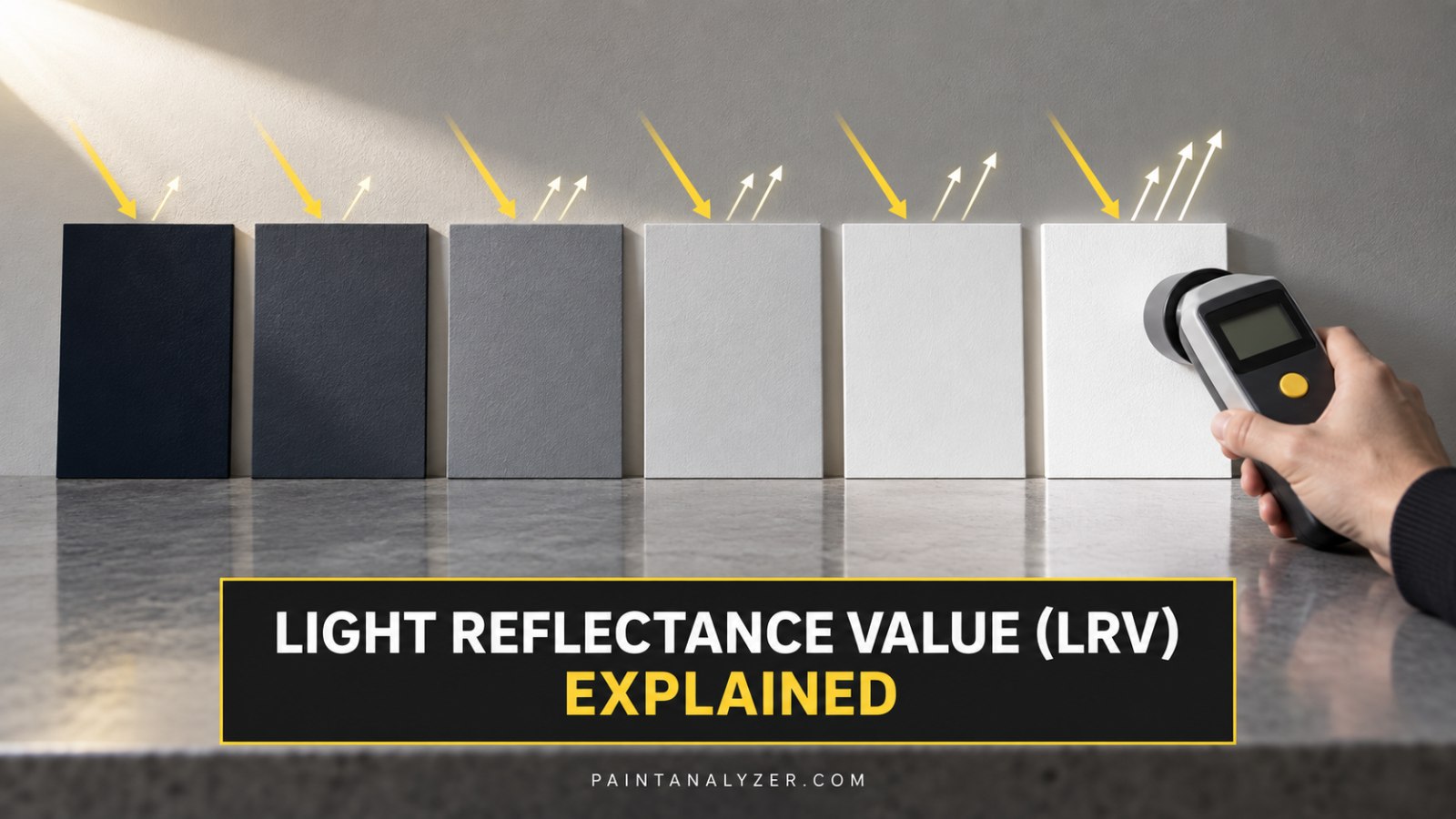
Light Reflectance Value (LRV) is a standardized number, on a scale of 0 (theoretical absolute black, absorbing all light) to 100 (theoretical pure white, reflecting all light), describing how much visible light a paint color reflects versus absorbs — most real paint colors fall somewhere in the range of about 5 to 90.
1. Where to find a color's LRV
Most major paint manufacturers publish the LRV for each color, typically on the back of a paint chip swatch or in their online color tools — checking this number directly is more reliable than guessing based on how a color looks on a small swatch or screen, since perceived "lightness" and actual measured LRV don't always align intuitively.
2. Why LRV matters for how a room actually feels
A higher-LRV color reflects more light around a room, which generally makes a space feel brighter and can make it feel larger — a lower-LRV color absorbs more light, generally reading as cozier or more dramatic but also making a room feel smaller and, in a space with limited natural light, potentially darker than expected. Comparing LRV numbers between color options under consideration is a more objective way to predict this effect than comparing small swatches alone.
3. LRV and room size/lighting — a practical guideline
- Small or low-light rooms — a higher LRV (roughly 50+) generally helps the space feel more open and bright.
- Large, well-lit rooms — more flexibility to use a lower-LRV, more saturated or dramatic color without the room feeling closed-in.
- Ceilings — commonly kept at a high LRV (often 80+, frequently a bright white) to reflect light back down into the room rather than absorbing it overhead.
4. The specific technical use case: PVC and vinyl trim color restrictions
As covered in more detail for painting PVC trim, this is one of the few places LRV is a hard technical constraint rather than just a design consideration — PVC and vinyl products absorb more heat at lower LRVs (darker colors), and manufacturers publish a minimum LRV threshold for their products specifically to prevent heat-related warping. Checking this number before choosing a dark color for PVC trim, vinyl siding, or vinyl fencing is a genuine functional requirement, not just an aesthetic preference.
5. LRV isn't the same as "sheen" or perceived color intensity
LRV measures how much light a color reflects overall — it's a separate property from sheen (how glossy or matte a finish is) and from how saturated or "loud" a color appears. Two colors can have similar LRVs while looking quite different in hue and saturation, so LRV is one useful data point among several when choosing a color, not the only thing worth checking.
6. Practical takeaway
Checking the LRV of colors under serious consideration — especially for a room with lighting challenges, or a material with a published heat-related LRV restriction — adds a genuinely useful, objective data point beyond how a small swatch looks under one particular showroom or store lighting condition.
Guides are researched against primary documentation and observable evidence. Archived material is rewritten, checked, and substantially improved before publication.