
What Are Paint Swatches and How to Get the Most Out of Them
Paint swatches are a useful first screening tool, but relying on them alone, without a real sample tested in the actual room, is one of the most common causes of paint color disappointment.
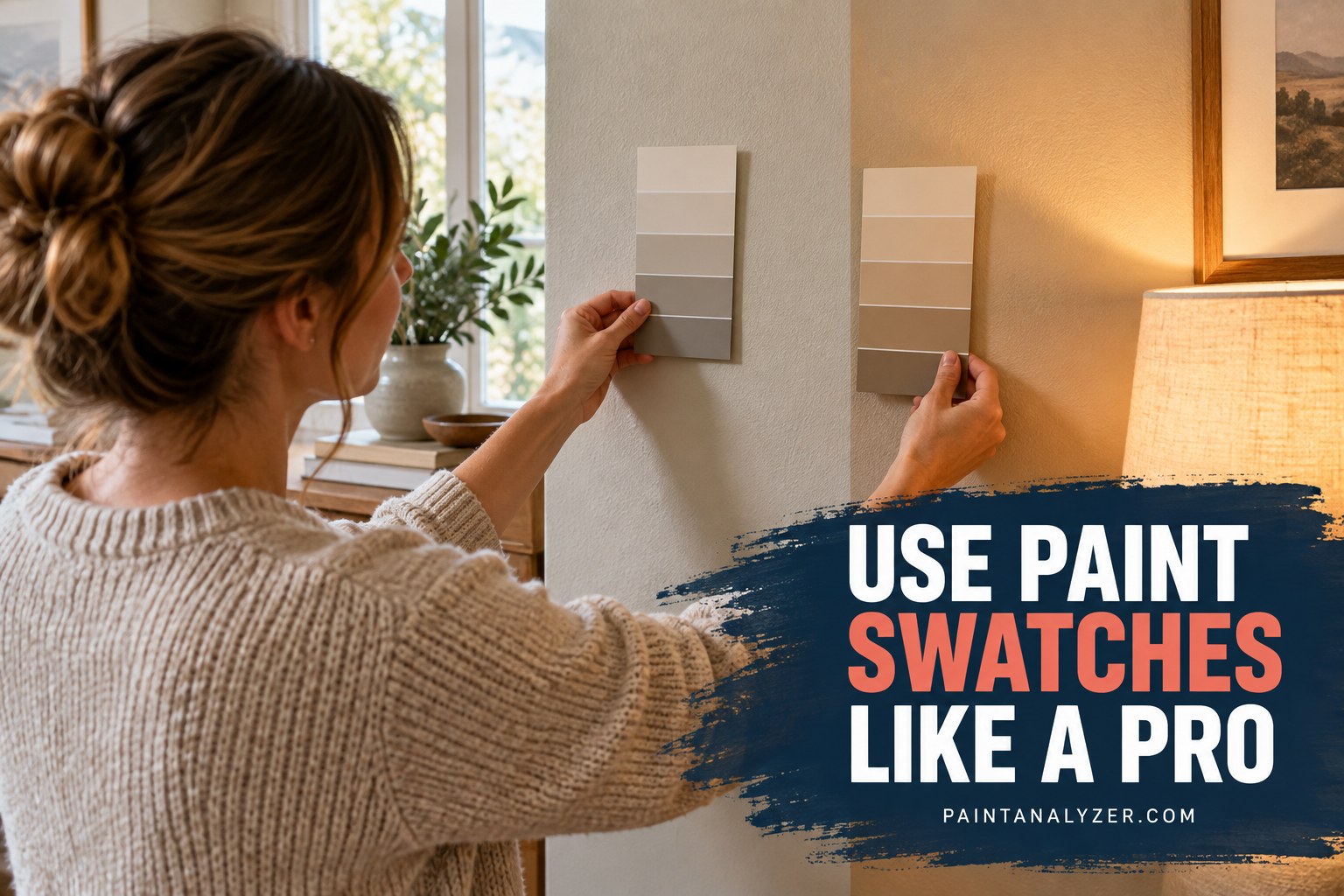
Paint swatches — the small printed color cards available at paint stores — are a genuinely useful first step in narrowing down color choices, but understanding both their value and their real limitations helps avoid one of the most common sources of paint color disappointment.
1. What swatches are useful for
Swatches let you browse a wide range of colors quickly, compare several options side by side, and get an initial general sense of a color's tone and family — this initial screening step is a genuinely efficient way to narrow a huge range of possible colors down to a manageable shortlist.
2. Why a small printed swatch doesn't perfectly represent the final paint color
A small swatch is viewed under store lighting, at a small size, and without the surface texture or sheen of the actual final paint — all of these factors mean a swatch's appearance can differ meaningfully from how that same color looks as a full coat of paint on an actual wall in your home's specific lighting.
3. Taking swatches home to view in your actual lighting
Bringing swatches home and viewing them in the actual room, at different times of day (natural light shifts significantly from morning to evening, and artificial lighting adds another variable), gives a considerably more accurate preview than judging color under a store's lighting alone.
4. Why an actual paint sample is still worth the extra step
Following the standard practice covered throughout this site, painting an actual sample patch (or using a peel-and-stick sample product) on the real wall gives a far more accurate final preview than even a well-considered swatch, since it reflects genuine paint sheen, thickness, and the wall's own texture.
5. Using swatches to build a coordinated palette
Swatches are also useful for testing how multiple colors work together — trim, walls, an accent wall — by physically arranging swatches together to preview a coordinated scheme before committing to actual paint purchases for the whole project.
6. Digital color tools as a supplement, not a replacement
Many paint manufacturers offer digital color visualization tools that let you preview a color on a photo of your own room — these are a useful supplementary tool for narrowing options further, though they still don't fully replace the accuracy of a physical sample tested in person.
7. The practical process that avoids disappointment
Use swatches to narrow down a broad color search efficiently, then confirm the top contenders with actual paint samples tested directly on the real wall in the real room's lighting before committing to the full purchase — skipping this final physical-sample step is one of the most common, and most avoidable, causes of "the paint doesn't look like I expected" after a full room is already painted.
Guides are researched against primary documentation and observable evidence. Archived material is rewritten, checked, and substantially improved before publication.