
What Are Anti-Slip Paints? Different Types and Uses
Anti-slip paint adds genuine traction through embedded texture or additives, making it a real safety upgrade for stairs, ramps, decks, and other slip-prone surfaces.
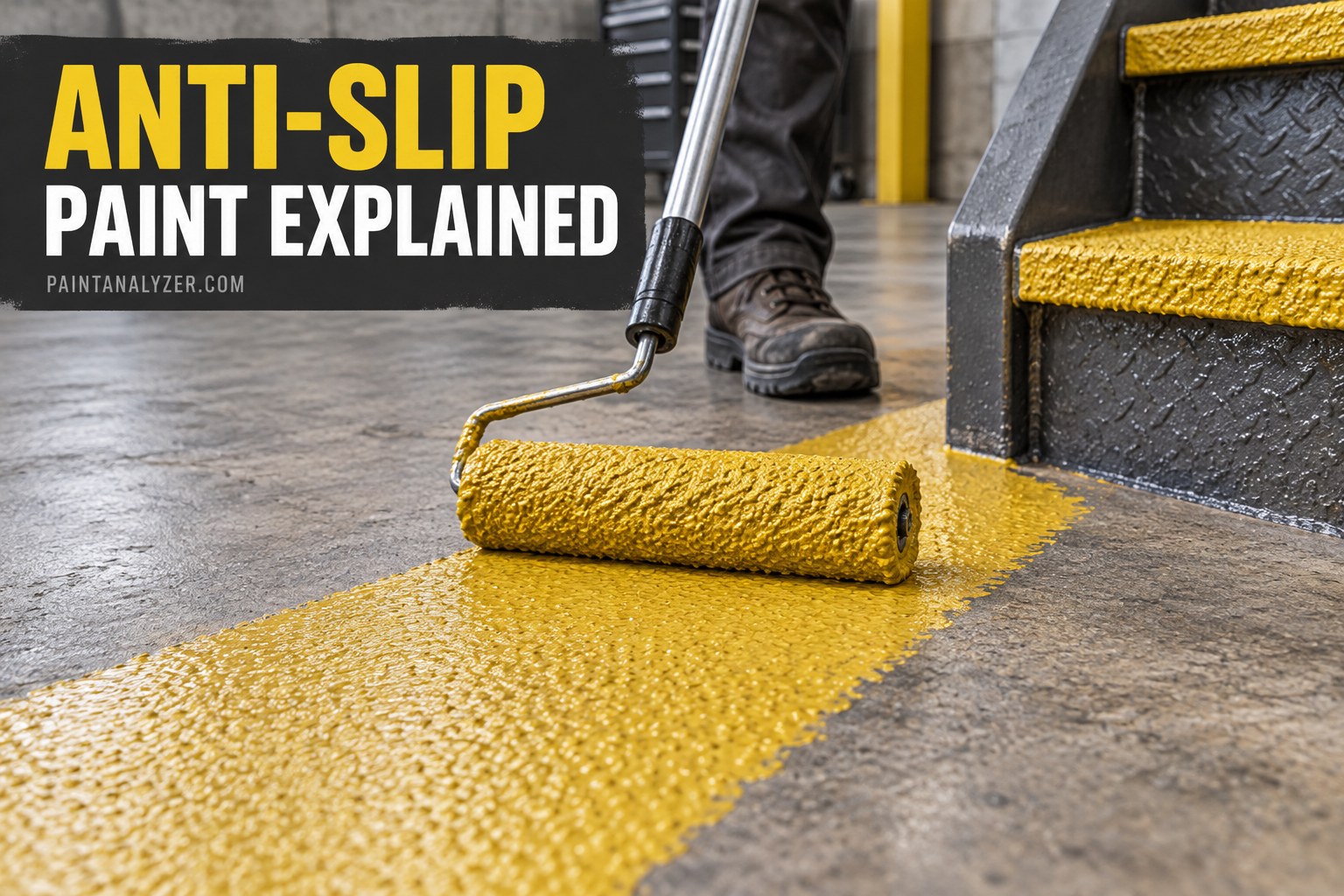
Anti-slip paint incorporates texture-creating additives directly into the paint formulation, providing genuine, measurable traction improvement over standard paint — a real safety upgrade for stairs, ramps, decks, and other surfaces prone to becoming slippery when wet.
1. How anti-slip paint actually creates traction
Most anti-slip paints incorporate fine aggregate (sand, rubber particles, or specialized grit additives) either pre-mixed into the paint or applied as a separate layer while the base coat is still wet, creating a textured surface that provides mechanical grip rather than relying on the paint's smooth surface alone.
2. Pre-mixed anti-slip paint
Some anti-slip paint products come with the traction additive already blended in, ready to apply directly — this offers convenience and more consistent texture distribution than manually adding aggregate, though it may offer less control over exactly how coarse the final texture turns out.
3. Adding aggregate to standard paint separately
Alternatively, a traction additive can be mixed into standard paint just before application, or broadcast onto a wet coat of paint and then sealed with a topcoat — this gives more direct control over texture coarseness but requires more careful, hands-on application technique than a pre-mixed product.
4. Common applications for anti-slip paint
Exterior stairs and steps, wheelchair ramps, pool decks, boat decks, and garage or workshop floors are all common applications where the genuine safety benefit of improved traction justifies anti-slip paint's somewhat more involved application compared to standard paint.
5. Application technique considerations
Anti-slip paint or additives generally need a slightly different application approach than smooth paint, given the added texture — following the specific product's instructions for achieving even texture distribution avoids an inconsistent result with some areas more slippery than others.
6. Maintenance and cleaning of anti-slip surfaces
The textured surface that provides traction can also trap dirt and debris more than a smooth surface — anti-slip surfaces generally need slightly more attentive cleaning to maintain both their appearance and their full traction benefit over time.
7. When anti-slip paint is worth the extra effort and cost
For any surface where slip risk is a genuine safety concern — exterior steps in a wet climate, a pool deck, a ramp used by anyone with mobility concerns — the real safety benefit anti-slip paint provides justifies its extra cost and application effort compared to standard paint on these specific higher-risk surfaces.
Guides are researched against primary documentation and observable evidence. Archived material is rewritten, checked, and substantially improved before publication.