
Tips for Repainting Drywall and Fixing Peeling Paint
Peeling paint on drywall almost always points to a moisture or adhesion problem that needs addressing before repainting, not just scraping and covering it back up.
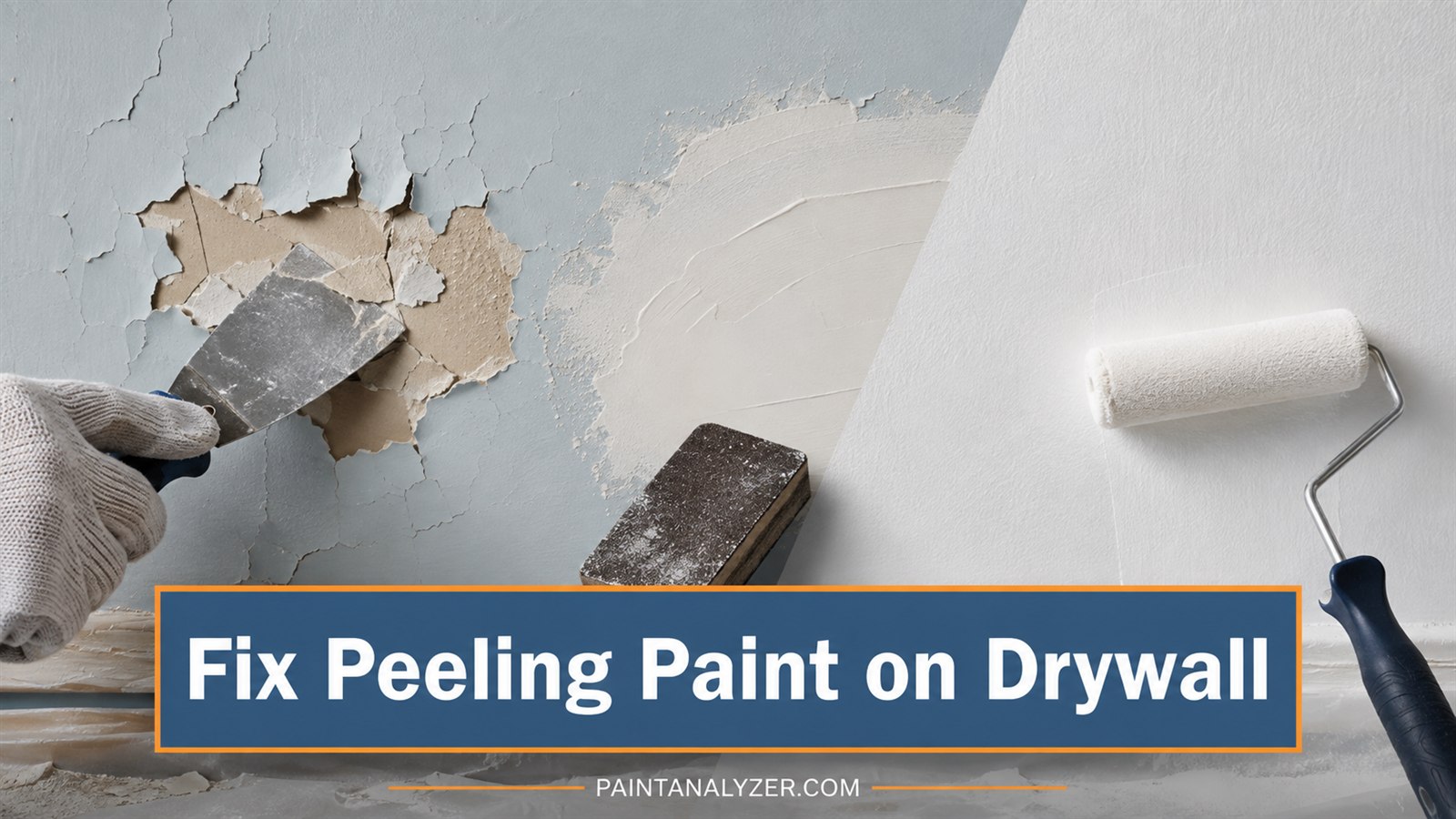
Peeling paint on drywall is a common repair project, but getting a lasting result means identifying and addressing why the paint peeled in the first place, not just scraping it off and repainting over the same underlying problem.
1. Identify why the paint actually peeled
Peeling most commonly traces back to moisture (a leak, high humidity, condensation), poor original adhesion (painting over dust, grease, or an unprimed surface), or incompatible paint layers — following the same root-cause troubleshooting covered for paint adhesion failure generally on this site, addressing the actual cause matters more than the repainting technique itself.
2. Scrape back to sound, well-adhered paint or bare drywall
Using a scraper to remove all loose and peeling paint, working back to an edge where the remaining paint is genuinely well-adhered, ensures the repair has a stable foundation — stopping short and leaving any loose paint at the repair's edge risks the new paint peeling again from that same weak point.
3. Repair any drywall paper damage
Peeling paint sometimes takes a layer of the drywall's paper facing with it — a thin layer of joint compound over any exposed or damaged paper, sanded smooth once dry, restores an even surface for priming and painting.
4. Feather-sand the transition between old paint and the repaired area
Lightly sanding the edge where old paint meets the repaired area smooths the transition, avoiding a visible ridge or edge line once repainted — this feathering step matters for the repair to blend in seamlessly rather than remaining visible as an obvious patch.
5. Prime the repaired area, and consider priming the whole wall
The repaired area needs its own primer coat, since bare drywall and joint compound absorb paint differently than the surrounding painted surface — for a wall with peeling in multiple areas or an unclear moisture history, priming the entire wall gives more even, reliable results than just spot-priming.
6. Address any moisture source before considering the repair complete
If moisture caused the original peeling, fixing that source (a leak, inadequate ventilation, condensation from a cold surface) is essential — repainting without resolving an underlying moisture problem means the new paint will very likely fail the same way again within a similar timeframe.
7. Apply the topcoat once prep is fully complete
With the loose paint removed, damage repaired, transitions feathered, and the area properly primed, the topcoat paint applies the same as any standard wall painting project — the repair-specific prep work above is what determines whether the result holds up, not the final coat of paint itself.
Guides are researched against primary documentation and observable evidence. Archived material is rewritten, checked, and substantially improved before publication.