
Staining Poplar Wood Dark: What to Know First
Poplar's uneven grain and green or purple mineral streaks can make dark staining look blotchy without a pre-stain conditioner — a common frustration with an established fix.
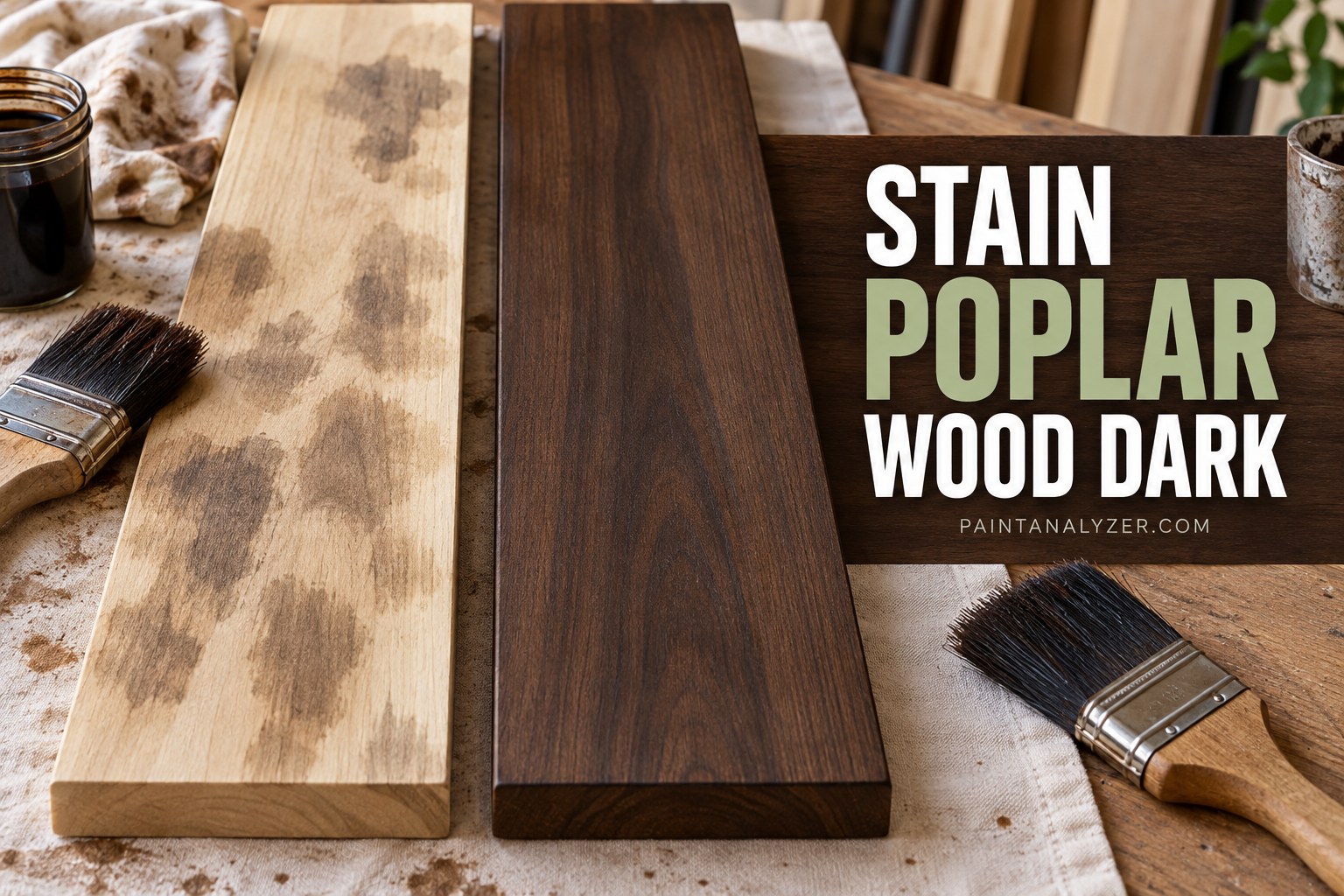
Poplar is an affordable, widely available wood, but its natural characteristics — a somewhat uneven grain and, notably, natural green or purple mineral streaking — make it more prone to blotchy, uneven dark staining results than a more uniformly grained hardwood, a well-known frustration with an established solution.
1. Understanding why poplar stains unevenly
Poplar's grain absorbs stain inconsistently, and its natural mineral streaking (green or purplish discoloration that occurs naturally in the wood) can show through or react differently to stain than the surrounding wood — this uneven absorption is exactly what causes the blotchy appearance dark stain often produces on poplar without proper preparation.
2. Using a pre-stain wood conditioner
A pre-stain conditioner, applied before staining and following the product's specific instructions, partially seals the wood's more absorbent areas, promoting more even stain absorption across the whole surface — this is the standard, most effective solution to poplar's blotching tendency and shouldn't be skipped for a dark stain project on this wood.
3. Testing on a scrap piece or hidden area first
Given poplar's variability, testing the specific stain color and application approach on a scrap piece of the same poplar batch (since mineral streaking can vary piece to piece) before committing to the actual project gives a realistic preview of how the wood will actually take that specific dark stain.
4. Applying stain evenly and wiping consistently
Applying stain in thin, even coats and wiping off excess with consistent timing and pressure across the whole surface (following standard staining technique) helps minimize unevenness that inconsistent application technique can add on top of poplar's own natural grain variability.
5. Considering a gel stain for more control
Gel stain, being thicker and less prone to soaking in unevenly compared to standard penetrating stain, can give more consistent results on a blotch-prone wood like poplar — this is a reasonable alternative to try, particularly after a pre-stain conditioner still hasn't given fully satisfactory even coverage.
6. Addressing visible mineral streaking specifically
Poplar's natural green or purple streaking may still show through even with proper conditioning, particularly with a lighter stain color — for a project where this natural characteristic isn't wanted, choosing a darker stain (which tends to mask streaking better than a lighter one) or opting for paint instead of stain avoids the issue entirely.
7. Sealing the finished stain
Once satisfied with the stain's appearance, a clear topcoat (following standard wood finishing practice covered elsewhere) protects the finished color and adds durability, completing the process for a piece that's taken the extra prep steps poplar specifically benefits from.
Guides are researched against primary documentation and observable evidence. Archived material is rewritten, checked, and substantially improved before publication.