
Should You Take Baseboard Trim Off to Paint It?
Removing baseboards gives the most thorough paint job, but painting in place with a carpet shield and careful masking is faster and works well for most routine refreshes.
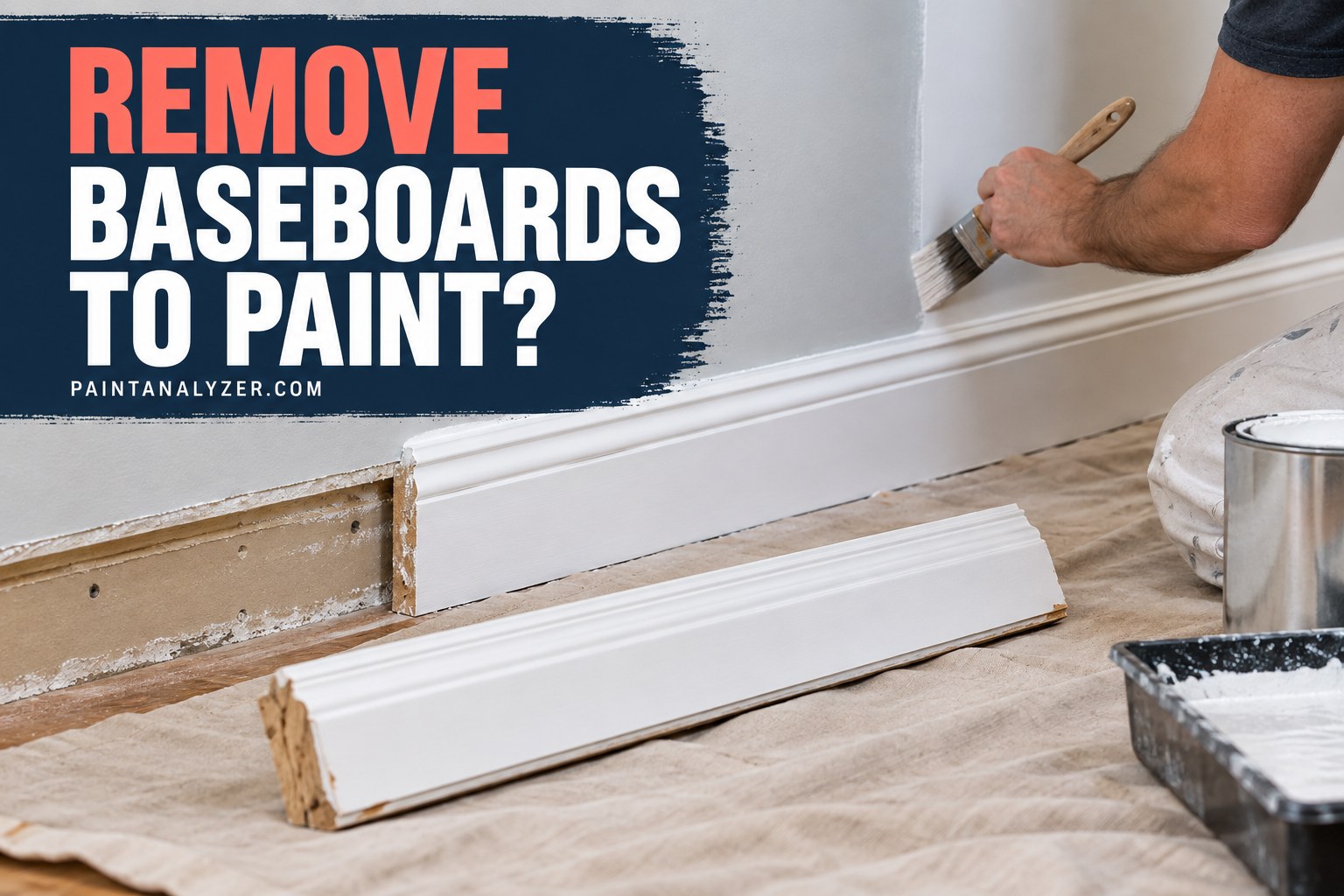
Whether to remove baseboard trim before painting or paint it in place comes down to weighing thoroughness against time and effort — both are legitimate approaches, and the right choice depends on the specific project's goals and the baseboard's current condition.
1. What removing baseboards actually gains
Taking baseboards off gives full access to every surface, including the bottom edge and back, allowing complete, even coverage and making it easier to address any damage or gaps behind the trim — this is the more thorough approach, particularly valuable if the baseboards need repair or replacement anyway.
2. What removing baseboards costs in time and effort
Removing trim without damaging it (or the wall) takes care and the right tools (a pry bar and putty knife, working slowly to avoid cracking the trim or gouging the wall), and reinstalling it afterward, including refilling nail holes and caulking, adds meaningful time to the overall project compared to painting in place.
3. Painting in place: faster, with good results for most routine refreshes
Using a carpet shield tool at the floor line (following the technique covered for painting baseboards with carpet installed elsewhere on this site) and careful masking at the wall line lets baseboards be painted in place efficiently, with results that are entirely adequate for most standard refresh projects.
4. When removal is the better choice
- The baseboard needs repair, replacement, or caulking behind it — removal gives the access needed to actually address these issues properly.
- A completely uniform, professional-grade finish matters — removal allows spray application and full, even coverage on every surface.
- Flooring is being replaced at the same time — removing baseboards is often necessary anyway as part of flooring work, making combined timing efficient.
5. When painting in place is the more practical choice
- The baseboards are in good condition — no repair or replacement is needed, so the extra access removal provides isn't necessary.
- Time and labor efficiency matter more than absolute perfection — for a routine refresh, in-place painting delivers a good result with considerably less effort.
- The existing caulk seal at the wall and floor lines is still sound — removal isn't needed to access or redo something that's already working fine.
6. The practical takeaway
For most standard baseboard repainting projects, painting in place with proper masking and a carpet shield delivers a genuinely good result efficiently — removal is worth the extra time specifically when repair, replacement, or truly flawless full-surface coverage is the actual goal.
Guides are researched against primary documentation and observable evidence. Archived material is rewritten, checked, and substantially improved before publication.