
Should You Shake or Stir Paint?
Stirring is the standard method for most paint — shaking can introduce air bubbles into thicker paint, though it's the only practical option for a sealed can that hasn't been opened yet, like at a paint store's mixing machine.
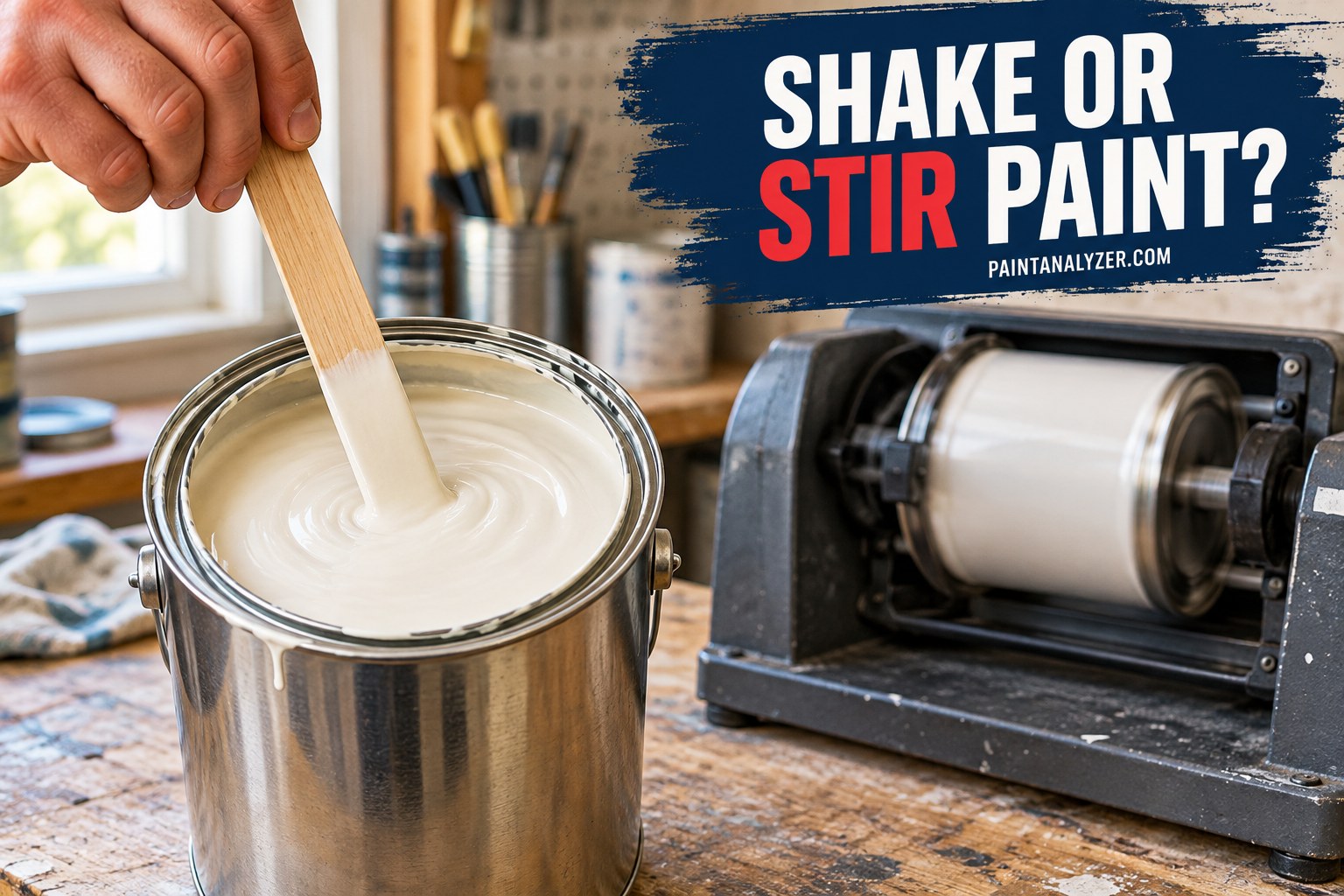
Stirring is generally the better method for mixing paint that's already open, while shaking is really the practical method for a sealed can (like a paint store's tinting machine, which shakes a closed can to distribute colorant) — using the wrong method on an open can of paint can introduce air bubbles that show up as small surface flaws once applied.
1. Why shaking an open can risks introducing air bubbles
Vigorously shaking paint that's already open (or shaking a can right after opening it) can whip air into the paint, particularly for a thicker paint — those trapped air bubbles can show up in the finished paint film as small surface imperfections once applied and dried, similar in spirit to any application flaw that shows more clearly on certain sheens.
2. Stirring — the standard method for paint you're about to apply
1. Use a wide stir stick, reaching to the bottom of the can
2. Stir in a folding, lifting motion (bringing settled pigment up from
   the bottom) rather than just a fast circular motion
3. Continue until the paint is fully uniform in color and consistency
Stirring redistributes any settled pigment and binder evenly without introducing the air bubbles a vigorous shake might — this is the standard, recommended method once a can has been opened and is about to be used.
3. Why paint stores shake sealed cans on a mixing machine
A paint store's tinting machine shakes a sealed, unopened can specifically to distribute newly added colorant throughout the base paint — the can being fully sealed prevents air from being introduced during this process, which is exactly why shaking works fine in that specific sealed context but isn't recommended once the can has actually been opened.
4. If a can has been sitting for a long time before use
Paint that's settled significantly during storage (some separation, pigment settled toward the bottom) may need a longer, more thorough stir than a can just recently opened — following the same principle covered for checking and remixing paint that's been stored for a while before assuming it's ready to use.
5. What to do if air bubbles do show up despite stirring instead of shaking
Letting the paint sit for a few minutes after stirring, before applying, gives any trapped air a chance to rise and dissipate on its own — for paint that's been shaken and shows persistent bubbles, this brief rest period before application is a reasonable first troubleshooting step.
6. The practical rule
Stir an open can that's about to be used; leave shaking to a sealed can (like at the point of purchase or tinting) — this simple distinction avoids the air-bubble risk while still ensuring the paint is properly, evenly mixed before it goes on the project.
Guides are researched against primary documentation and observable evidence. Archived material is rewritten, checked, and substantially improved before publication.