
Should You Sand Between Coats of Paint or Stain?
Light sanding between coats removes raised grain and dust nibs, giving a smoother final result — it's a small extra step that makes a genuine, visible difference in finish quality.
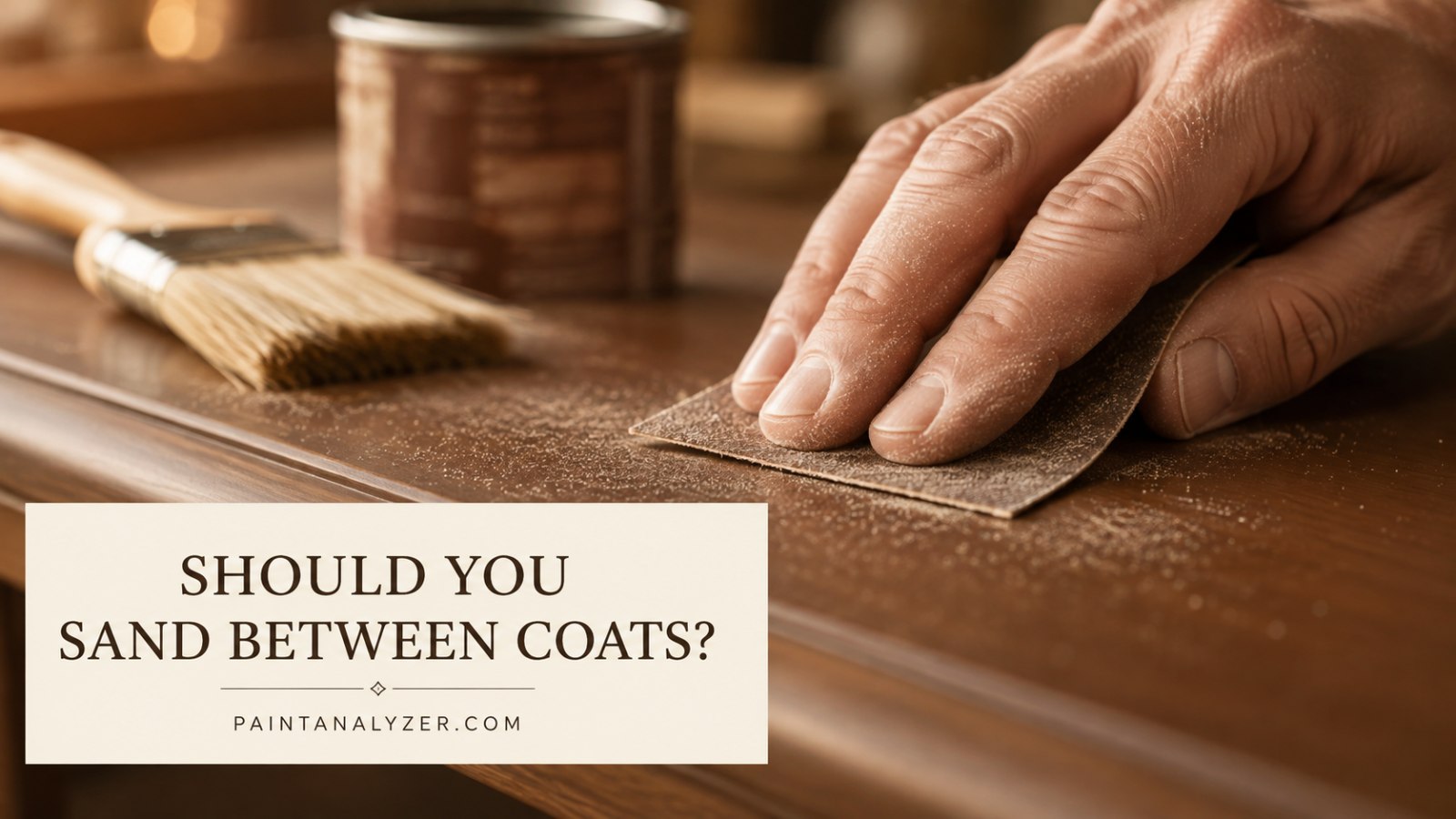
Sanding lightly between coats of paint or stain is a genuinely worthwhile step for most projects, particularly on wood, where each wet coat can raise the grain slightly or trap small dust particles — addressing this between coats, rather than only at the very end, produces a noticeably smoother final result.
1. Why wood grain raises between coats
Water-based paint and stain, in particular, can cause wood fibers to swell and stand up slightly as they absorb moisture from the wet coat — once dry, these raised fibers create a slightly rough, fuzzy texture that the next coat would otherwise be applied over unevenly.
2. What light sanding between coats actually accomplishes
A light pass with fine-grit sandpaper (often 220 grit or finer) knocks down this raised grain and any small dust nibs that settled into the wet finish, giving the next coat a smoother surface to bond to and build upon — this cumulative smoothing across multiple coats is what produces a genuinely glass-smooth final result.
3. How to sand between coats without damaging the finish
1. Allow the coat to dry fully per the product's recoat window
2. Lightly sand with fine-grit sandpaper, using light pressure
3. Remove all sanding dust with a tack cloth or slightly damp cloth
4. Apply the next coat once the surface is clean and dry
4. When sanding between coats matters most
This step matters most for a project where surface smoothness is a priority — furniture, cabinets, trim — and matters somewhat less for a standard wall paint job, where wall texture expectations are generally lower and the effort-to-benefit ratio of sanding between every coat is less favorable.
5. Checking the specific product's recoat and sanding guidance
Different paint and stain products have different recommendations about whether and when to sand between coats — checking the specific product's label or technical data sheet gives more precise guidance than a universal rule, since some modern self-leveling formulations need less intermediate sanding than others.
6. What happens if this step is skipped
Skipping sanding between coats doesn't ruin a project, but it generally results in a slightly rougher, less refined final texture than one that included this step — for a project where appearance quality matters, this small extra effort produces a genuinely noticeable improvement in the final result.
7. The practical takeaway
For furniture, cabinets, and any project where a smooth, professional-looking finish is the goal, sanding lightly between coats is a small extra step well worth the time — for a quick, lower-stakes wall touch-up, it's a reasonable step to skip without meaningfully compromising the result.
Guides are researched against primary documentation and observable evidence. Archived material is rewritten, checked, and substantially improved before publication.