
Should You Paint or Stain Your Old Deck?
An older deck's actual wood condition, more than personal preference alone, often determines whether paint or stain is the more practical choice for a lasting refresh.
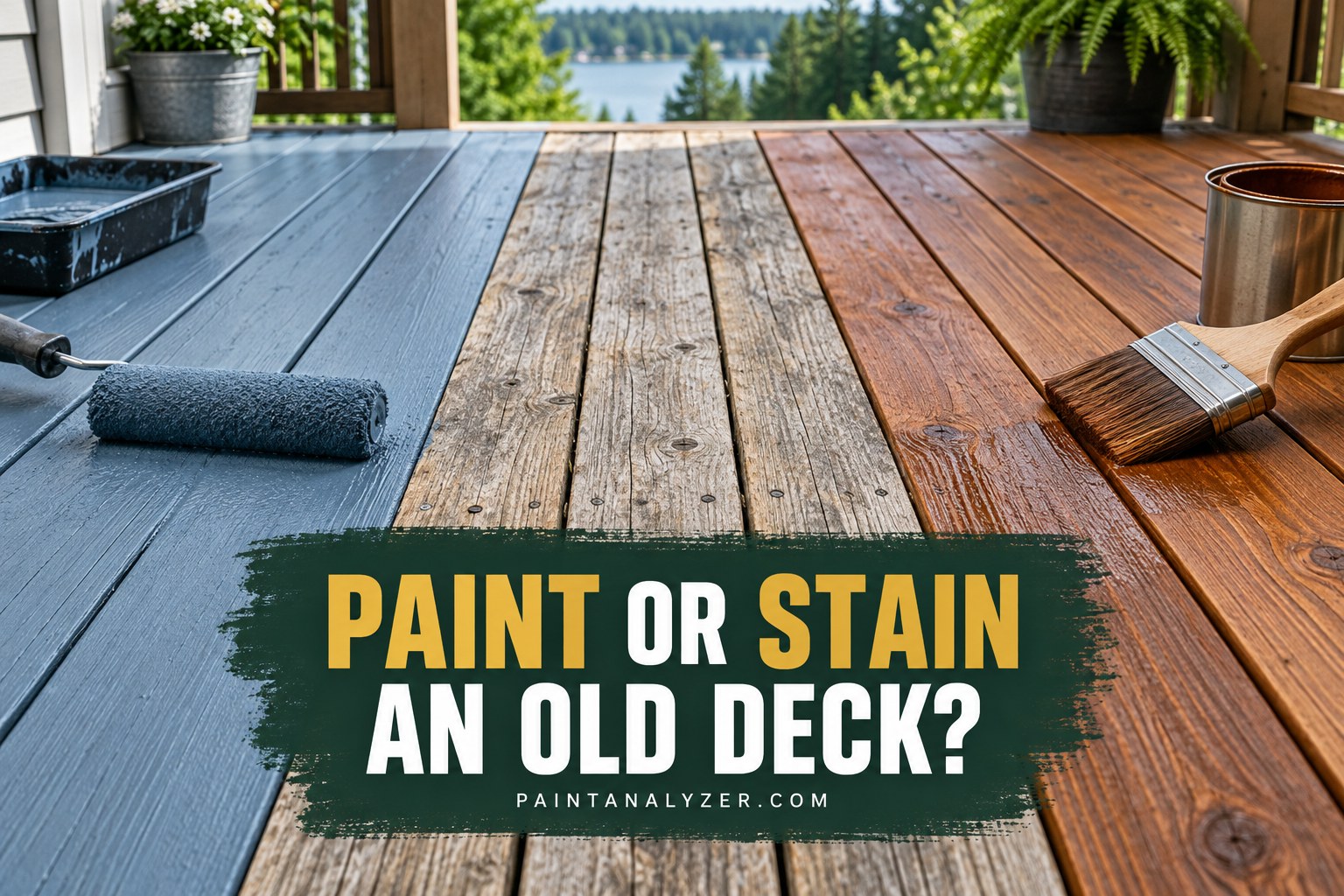
For an older deck specifically, the choice between paint and stain depends heavily on the wood's actual current condition, not just aesthetic preference — an aging deck's wear pattern and any accumulated damage genuinely affect which option will actually hold up and look good.
1. Assess the wood's actual condition first
Checking for rot, significant splintering, deep checking (cracks), or wood that's structurally compromised in spots determines the realistic options — solid, sound wood that's just faded or worn has more flexibility in the paint-vs-stain decision than wood with significant surface damage.
2. Why paint can be the better choice for a deck with more surface flaws
Paint's opacity hides surface imperfections, weathering, and minor inconsistencies more effectively than a transparent or semi-transparent stain would — for an older deck with more visible wear and flaws, paint's ability to create a fresh, uniform appearance over an imperfect surface is a genuine practical advantage.
3. Why stain often makes more sense for wood still in reasonably good condition
For deck wood that's still structurally sound and doesn't have extensive surface damage to hide, a stain preserves the wood's natural texture while adding color and protection, generally with less demanding prep than a full paint job (as covered in the paint-vs-stain deck comparison covered elsewhere) — this is the more common choice when the deck's condition allows it.
4. Maintenance differences matter more on an aging deck
Paint on an older deck, once it eventually starts to chip or peel, needs full scraping and repainting to address — stain typically wears more gradually and can often be refreshed with a simpler recoat, an ongoing maintenance consideration worth factoring in for a deck that will likely need attention again down the line.
5. Considering the deck's remaining useful life
For a deck that's genuinely nearing the end of its structural life, a lower-cost, less labor-intensive approach (whichever of paint or stain requires less prep given the wood's condition) may be the more practical choice than investing heavily in a treatment meant to last many more years on a deck that may need replacement relatively soon anyway.
6. Testing the wood's readiness before committing either way
A simple water-bead test (following the same test covered for deck restaining elsewhere on this site) — water beading up versus absorbing — indicates whether the wood can currently accept a stain, which is a useful practical check regardless of which option is ultimately chosen.
7. The practical decision framework
Choose paint for an older deck with more significant surface flaws to hide and a preference for a uniform, opaque look; choose stain for a deck still in reasonably good structural condition where preserving some natural wood character and simpler future maintenance matter more.
Guides are researched against primary documentation and observable evidence. Archived material is rewritten, checked, and substantially improved before publication.