
Should You Paint It? Quick Answers for Common Household Questions
From wood trim color to whether cabinet interiors need paint, these are quick, practical answers to some of the most common "should I paint this?" questions homeowners ask.
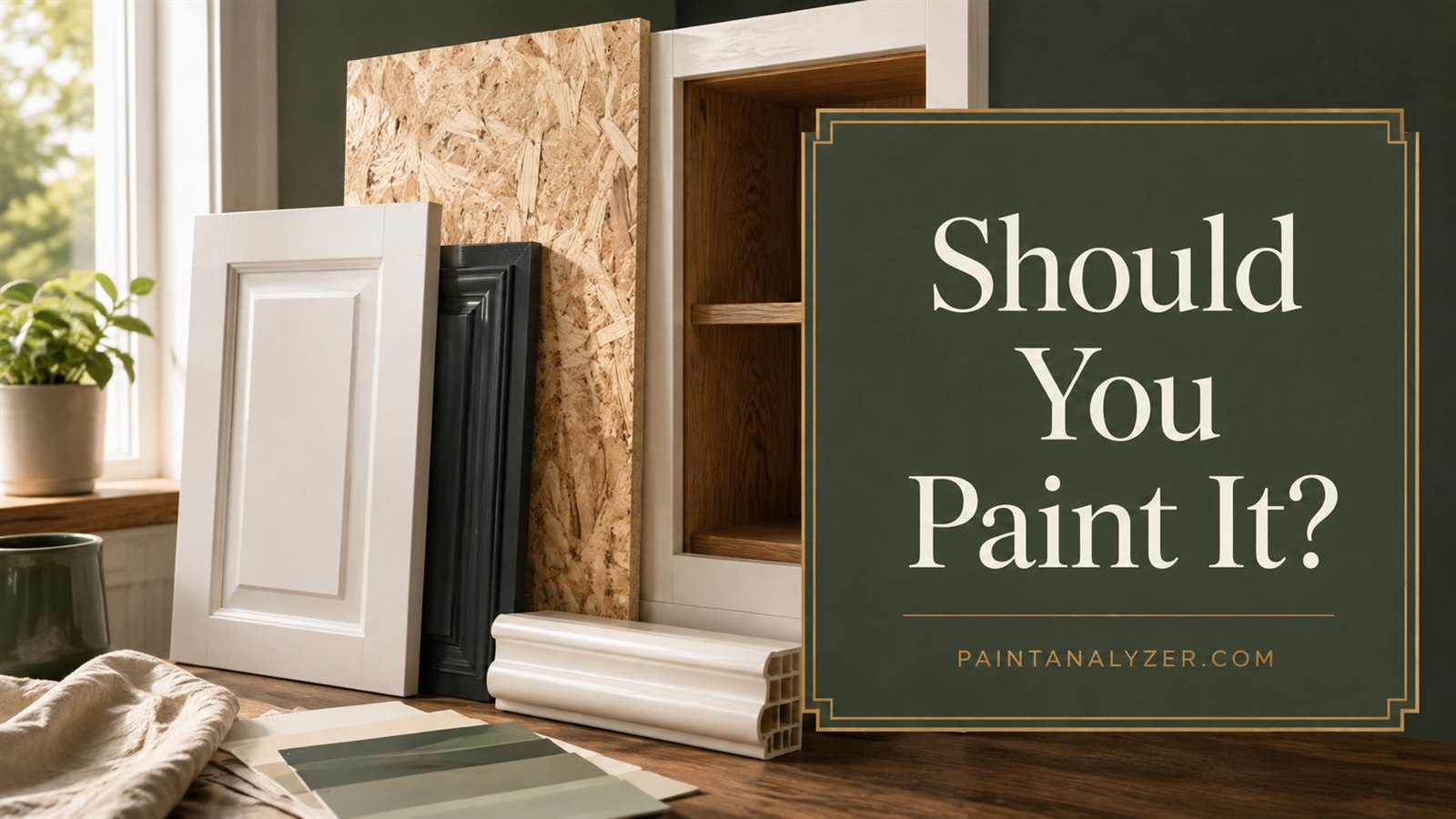
Some painting decisions come down less to technique and more to a straightforward "should I even do this?" — these are quick, practical answers to several of the most common versions of that question.
1. Should you paint wood trim white?
White trim remains a broadly popular, versatile choice that works with most wall colors and design styles, offering good contrast that highlights architectural detail — it's a safe, classic option, though as covered for trim color choices generally, darker or color-matched trim is also a legitimate, more design-forward alternative depending on personal taste and the room's style.
2. Should OSB (oriented strand board) be painted?
OSB can be painted, but its rough, highly porous surface (more so than plywood) needs a stain-blocking or OSB-specific primer and often more than one coat to achieve smooth, even coverage — OSB used in visible interior applications (like some modern industrial-style designs) is commonly painted, while OSB used purely structurally often doesn't need painting at all.
3. Should you paint PVC/composite trim (like Azek) or leave it unpainted?
Cellular PVC trim products are manufactured pre-colored (typically white) and are often left unpainted specifically because that factory finish is durable and low-maintenance — painting is possible if a different color is wanted, but requires a paint and primer system specifically compatible with PVC, since standard wood paint doesn't always adhere well to this material without the right product match.
4. Should you paint exterior chimneys?
A masonry chimney can be painted, following standard exterior masonry painting practice, but breathable masonry paint (rather than a fully sealing, non-breathable product) is important here specifically, since trapping moisture inside a chimney's masonry can lead to more significant problems than on a typical wall, given the chimney's flue and moisture exposure.
5. Should the master bedroom and bathroom be painted the same color?
This is purely a design preference rather than a technical requirement — a matching color can create a cohesive, connected feel between an ensuite bathroom and bedroom, while different colors let each room have its own distinct character; both are equally valid design choices.
6. Should you paint inside kitchen cabinets, or leave them unpainted?
Painting cabinet interiors gives a more finished, cohesive look and can brighten a dark cabinet interior, but it's genuinely optional — cabinet interiors see less visible wear than exteriors, and many people choose to leave them unpainted (or just cleaned and left as bare or factory-finished material) without any real downside.
7. Should you paint your house foundation?
A visible concrete foundation can be painted with an appropriate masonry paint, following standard concrete painting prep covered elsewhere — this is often done for cosmetic reasons where the foundation is visibly exposed above grade, and isn't a maintenance requirement so much as an appearance choice.
8. Should you prime a canvas before painting on it?
Yes — most canvases benefit from a gesso primer coat before painting, which seals the canvas fibers, provides better tooth for the paint to grip, and prevents the paint's binder from being absorbed unevenly into raw canvas — many pre-stretched canvases sold for painting already come pre-primed with gesso, which is worth checking before assuming an additional coat is needed.
Guides are researched against primary documentation and observable evidence. Archived material is rewritten, checked, and substantially improved before publication.