
Should Trim Be Darker or Lighter Than the Wall?
The traditional default (lighter or white trim against a wall color) remains the safer, more broadly flattering choice — darker trim is a real, striking design option, but it's a bolder choice with different room-proportion effects.
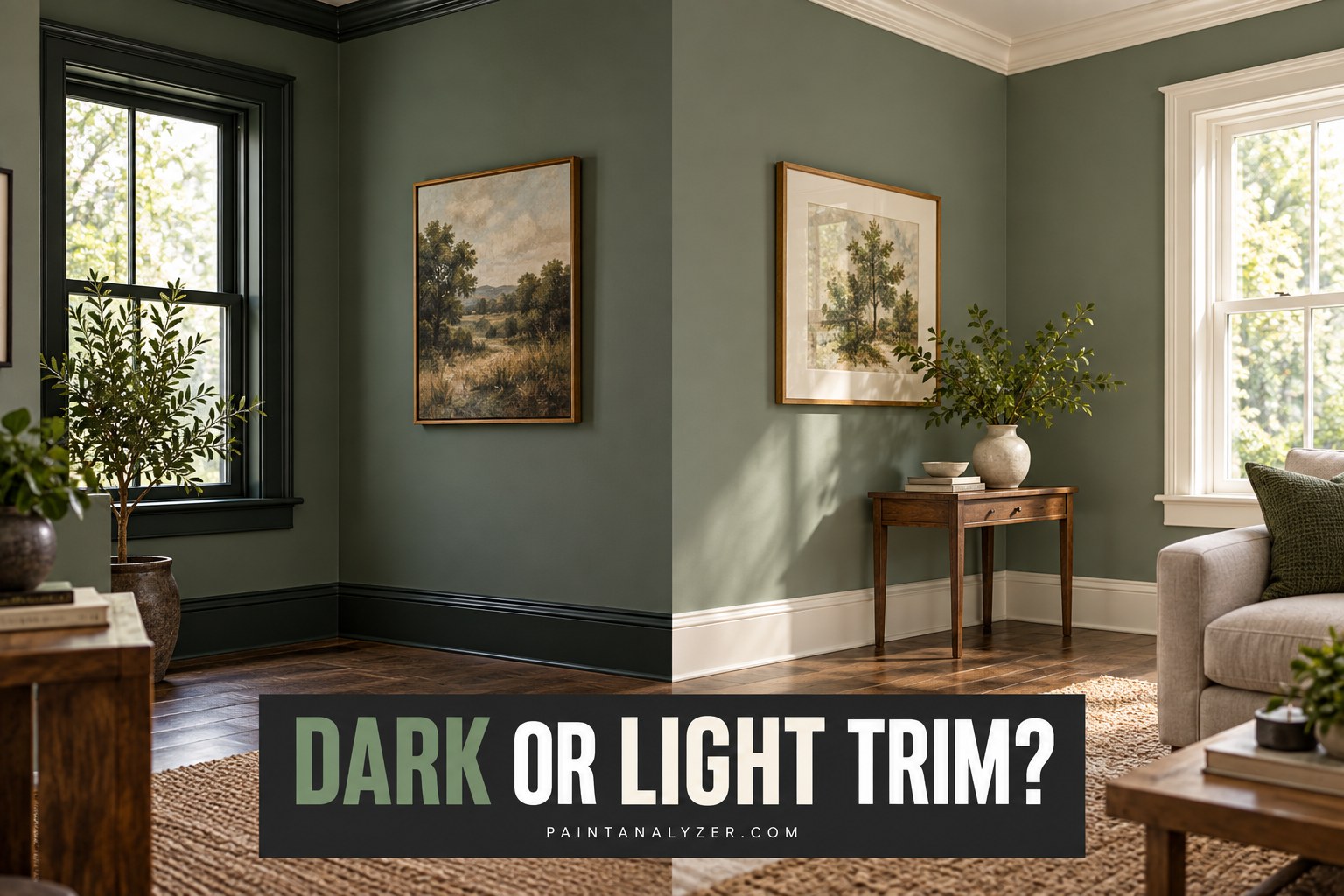
Both lighter and darker trim relative to the wall color are legitimate design choices used throughout professional interior design — the traditional convention favors lighter or white trim, but darker trim has genuinely grown in popularity as a bolder, more dramatic design statement, and the right choice depends on the specific effect wanted.
1. Why lighter/white trim is the traditional default
Lighter trim traditionally frames and highlights architectural details (window and door casings, baseboards, crown molding) by creating visual contrast that draws attention to those features — this is a safer, more broadly flattering choice for most rooms and remains the more common convention for exactly this reason.
2. What darker trim achieves instead
Darker trim (sometimes matching or closely related to the wall color, sometimes a bold contrasting dark tone) creates a different effect — it can make trim details recede rather than pop, or, with a strong contrasting dark color, create a dramatic, sophisticated, more modern look that's become a genuine design trend in recent years.
3. Room size and light affect which choice works better
In a smaller or darker room, very dark trim against light walls can feel visually heavy or make the room feel more closed-in — in a larger, well-lit room, dark trim often reads as intentional and dramatic rather than heavy, similar to the room-size considerations covered for choosing paint sheen and LRV generally.
4. Architectural detail quality matters for the decision
Rooms with genuinely nice architectural trim detail (substantial crown molding, detailed casings) often benefit from lighter trim that highlights that detail — a room with more basic, less ornate trim may benefit more from darker trim that blends in rather than drawing attention to less remarkable millwork.
5. Practical durability consideration, independent of the color choice itself
Regardless of whether trim ends up lighter or darker than the walls, using a paint sheen genuinely suited to trim's handling and cleaning needs (following the general sheen-selection guidance covered elsewhere, typically satin or semi-gloss for trim) matters more for durability than the specific color relationship to the walls.
6. There's no objectively "correct" answer
Both approaches are used successfully by professional designers, and personal taste, the specific room's proportions and lighting, and the overall design style being pursued all reasonably factor into this choice — testing both options with real paint samples on the actual trim and wall, under the room's real lighting, is more reliable than deciding from general guidance alone.
Guides are researched against primary documentation and observable evidence. Archived material is rewritten, checked, and substantially improved before publication.