
Sealing a Travertine Tile Floor: The Pros and Cons
Travertine's naturally porous surface generally benefits from sealing against stains and moisture, though the trade-offs around maintenance and appearance are worth weighing first.
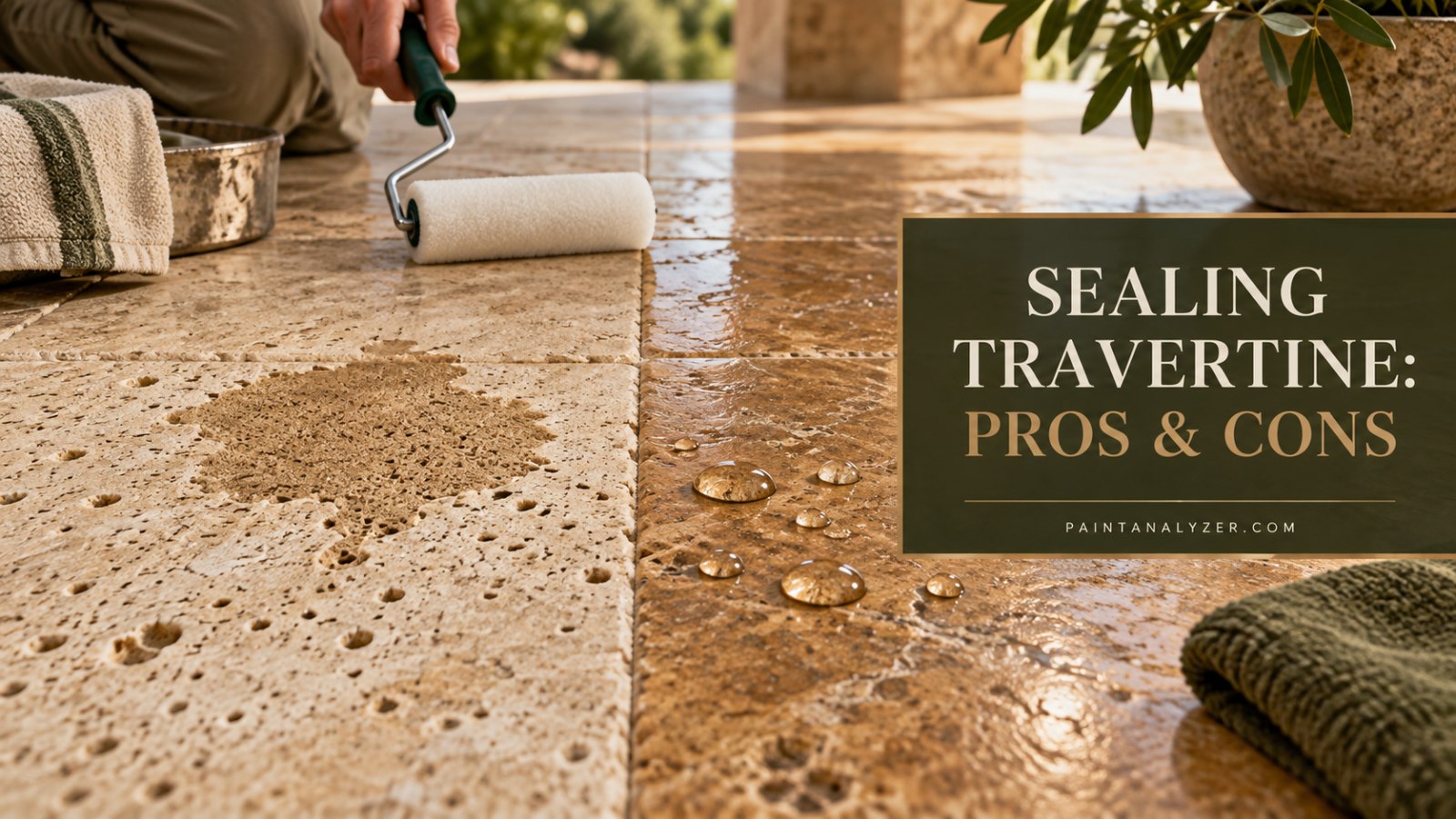
Travertine, a natural porous limestone commonly used for flooring, generally benefits from sealing, though the decision comes with real trade-offs in maintenance requirements and appearance worth understanding before committing.
1. Pro: sealing protects against staining
Travertine's natural porosity makes it considerably more vulnerable to staining from spills (wine, oil, acidic substances) than a sealed, denser tile — a quality sealer significantly reduces this staining risk by filling the stone's natural pores, which is the primary practical reason sealing is generally recommended.
2. Pro: sealing reduces moisture absorption
Unsealed travertine can absorb moisture, which in a bathroom or other wet area can contribute to mildew growth within the porous stone — sealing reduces this moisture absorption, making the floor more hygienic and easier to keep clean in a wet-prone space.
3. Pro: sealing makes routine cleaning easier
A sealed surface is generally easier to wipe clean than raw, porous travertine, since dirt and grime sit more on the surface rather than working into the stone's natural pores — this translates into genuinely easier day-to-day maintenance.
4. Con: sealing needs periodic reapplication
Sealer wears down with foot traffic and cleaning over time, and periodic resealing (following the specific product's recommended maintenance interval, often every 1-3 years depending on traffic) is an ongoing maintenance commitment rather than a one-time task.
5. Con: some sealers can slightly alter the stone's natural appearance
Certain sealer types can add a slight sheen or subtly darken the stone's color — choosing a sealer product specifically designed to preserve travertine's natural matte appearance (many products are formulated this way) avoids an unwanted visual change, but this is worth checking before applying any sealer broadly.
6. Con: sealing can trap existing moisture if applied incorrectly
Sealing travertine that isn't fully dry, or in a location with an underlying moisture problem, can trap that moisture beneath the sealed surface — ensuring the stone is fully dry and any moisture issue is addressed before sealing avoids this specific problem.
7. The practical recommendation
For most travertine flooring installations, particularly in kitchens, bathrooms, or other spill-prone areas, sealing is generally worth the maintenance commitment given the real staining and moisture protection it provides — testing a specific sealer product on a small, inconspicuous area first confirms it achieves the desired protection without an unwanted appearance change.
Guides are researched against primary documentation and observable evidence. Archived material is rewritten, checked, and substantially improved before publication.