
Red Oxide vs. Zinc Chromate Primer: What's the Difference?
Zinc chromate primer contains hexavalent chromium, a recognized carcinogen — it has been phased out or heavily restricted in many consumer and commercial contexts, which matters more than any performance comparison.
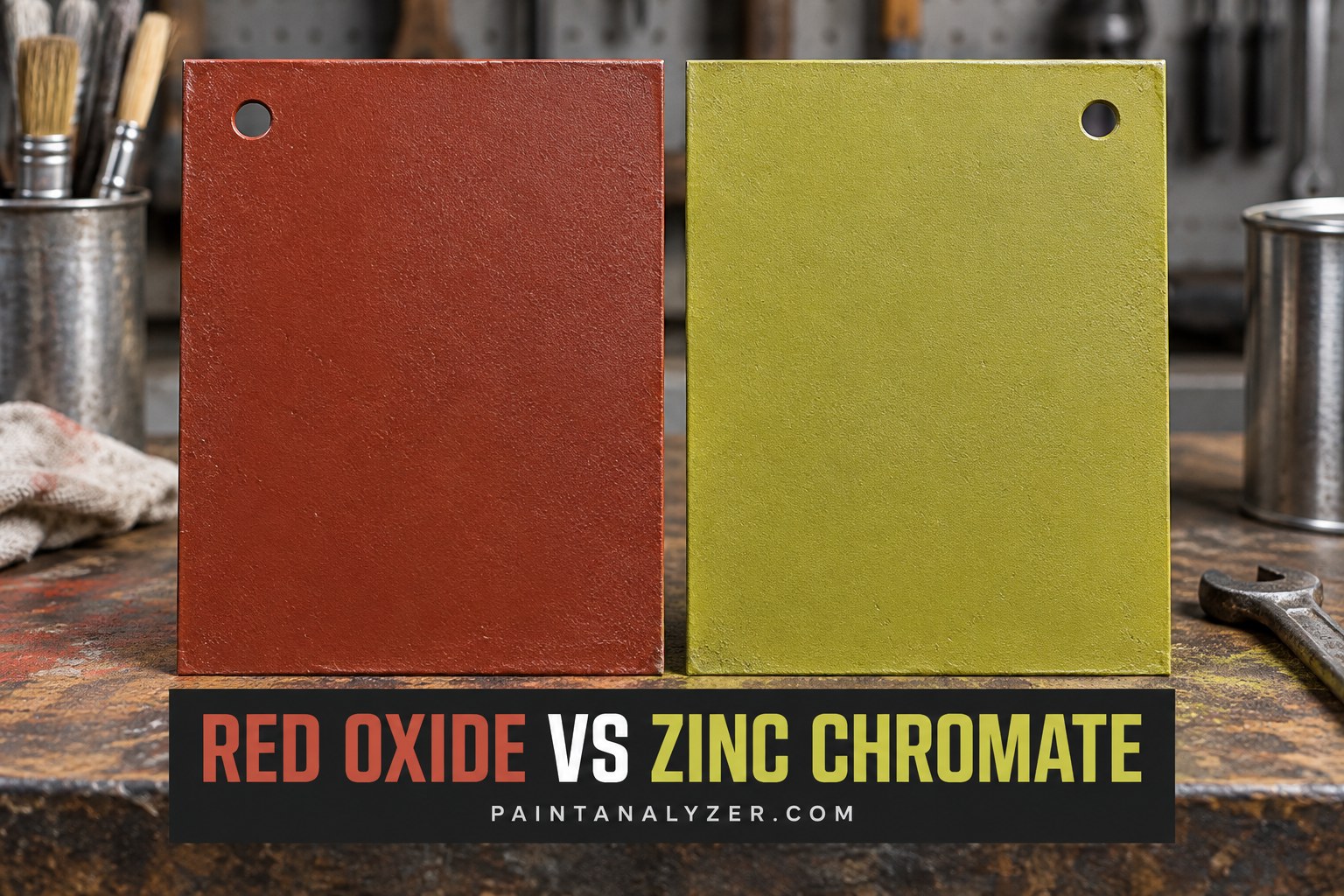
Both are metal primers historically used for corrosion resistance, but the more important difference between them today isn't performance — it's that zinc chromate primer contains hexavalent chromium, a recognized human carcinogen, and its use has been significantly restricted or phased out in many countries and industries as a result.
Red oxide primer
An iron-oxide-based primer, widely used for rust prevention on ferrous metal (steel, iron) surfaces before painting. It remains in common, unrestricted use for general metal priming — automotive, structural steel, tools, and general DIY metalwork.
Zinc chromate primer — the safety issue
Zinc chromate was historically valued for strong corrosion inhibition, especially in aerospace and marine applications. However, it contains hexavalent chromium (Cr(VI)), classified as a human carcinogen by IARC and regulated as an occupational hazard in the US (OSHA) and restricted under REACH regulations in the EU. Many industries and consumer product lines have phased it out in favor of chromium-free alternatives specifically because of this health risk, not primarily for performance reasons.
What this means practically
If you're choosing a primer for a home, automotive, or general DIY project today, zinc chromate is very unlikely to be something you should be reaching for — red oxide, or a modern zinc-phosphate or other chromium-free corrosion-inhibiting primer, are the standard, unrestricted choices for the vast majority of consumer and light-industrial use. Zinc chromate's remaining legitimate use is narrow, specialized industrial/aerospace contexts with proper safety controls (ventilation, PPE, regulated handling) — not a general-purpose DIY product.
If you encounter old zinc chromate primer or coated material
Sanding, grinding, or otherwise disturbing old zinc chromate-primed surfaces (common on some older aircraft, machinery, or industrial equipment) can release hexavalent chromium dust, which is a genuine inhalation hazard — this is a situation that warrants proper respiratory protection and, for anything beyond a small identified spot, professional assessment rather than casual DIY sanding.
The practical takeaway
For virtually all home and general automotive projects, choose red oxide or a modern chromium-free primer — zinc chromate is a specialized, regulated product, not a normal consumer option, and its safety profile is the deciding factor, not just a performance comparison.
Guides are researched against primary documentation and observable evidence. Archived material is rewritten, checked, and substantially improved before publication.