
Is Primer a Paint?
Chemically related, but functionally distinct — primer is engineered to seal, bond, and block, while paint is engineered to provide durable, lasting color and finish; each does its own job better than a combined product does both.
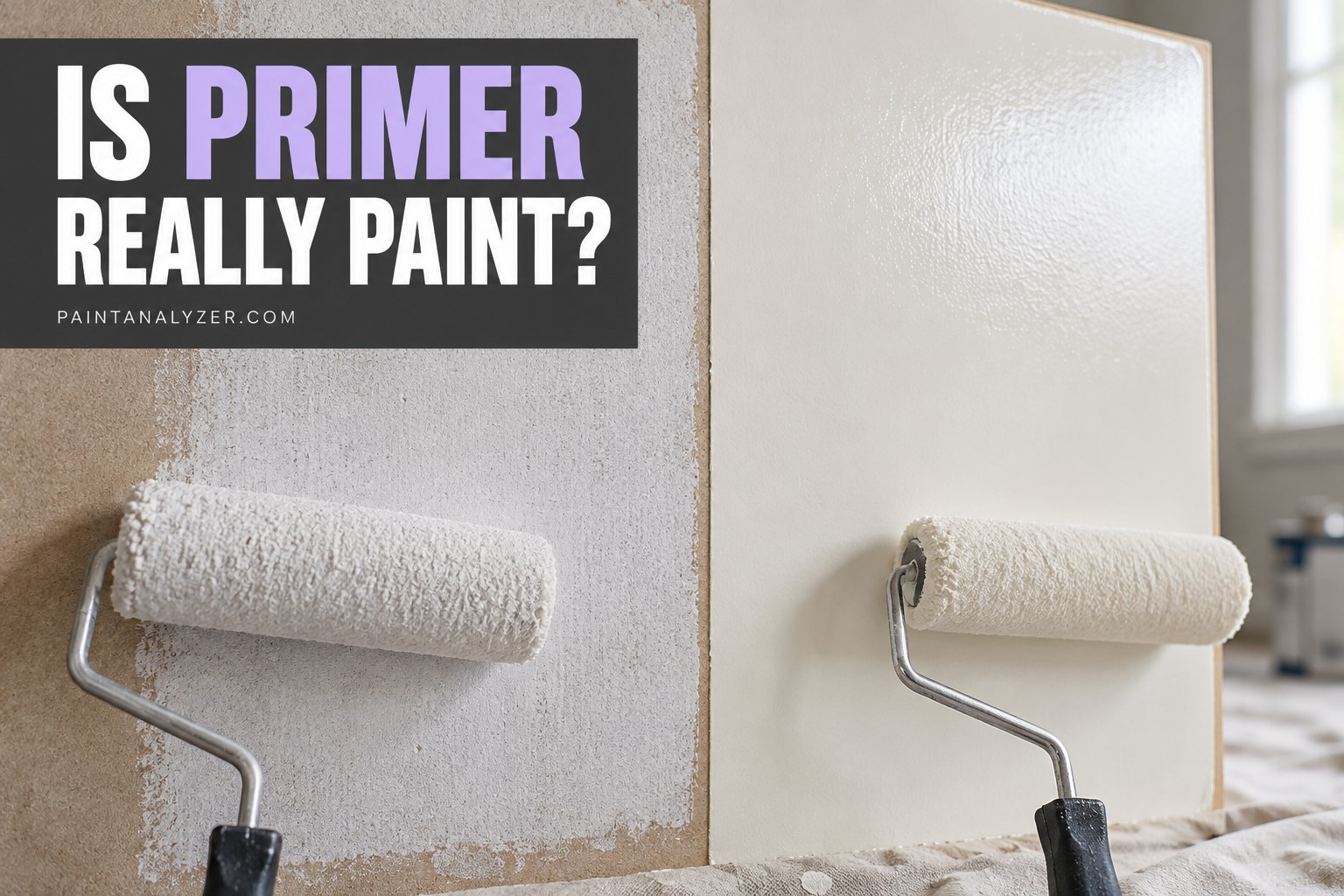
Primer and paint share a similar basic composition — both contain a binder, pigment (though primer typically has less), and a solvent or water carrier — but they're formulated with genuinely different goals, and understanding that distinction is what actually explains why skipping primer for paint (or vice versa) causes problems.
1. What primer is actually formulated to do
Primer's job is preparation: seal a porous surface so it absorbs the topcoat evenly, promote adhesion on a surface the topcoat alone might struggle to bond to, block stains and tannins from bleeding through, and provide a uniform base, especially for color changes. Primer generally has less pigment and less binder durability engineered into it than paint — it's not meant to be the final, durable, weather- or wear-resistant surface layer.
2. What paint (the topcoat) is formulated to do
Paint's job is the final, durable, visible finish — carrying the actual color, providing weather and wear resistance, UV stability (for exterior products), and a specific sheen. It generally contains more pigment for color coverage and is engineered for long-term durability under whatever conditions the surface will face, rather than for adhesion to a challenging bare substrate.
3. So is primer technically "a paint"?
In the broadest technical sense, primer is a paint-like product — same general category of coating, similar core ingredients — but functionally, treating it as interchangeable with paint is the actual mistake worth avoiding. Using primer as a final coat leaves a surface without paint's durability and UV/wear resistance; using paint in place of primer skips the sealing, bonding, and stain-blocking that primer specifically provides.
4. Why "paint and primer in one" products don't erase this distinction
As covered in more detail in paint-and-primer-in-one products specifically, these are a genuine formulation combining some of both functions — but they're a compromise for straightforward refresh jobs, not a product that fully replaces a dedicated primer's stronger stain-blocking or a dedicated topcoat's full durability on more demanding jobs.
5. When skipping primer is actually fine
Repainting an already-painted, sound surface with a similar color doesn't strictly need a fresh primer coat — the existing paint layer is already doing primer's sealing job. Primer earns its place specifically for bare or porous surfaces, stained or tannin-prone surfaces, glossy surfaces needing better adhesion, or a major color change needing full hide.
6. The practical distinction to remember
Primer solves surface problems (porosity, staining, adhesion, hide); paint solves appearance and durability (color, sheen, wear resistance). They're related products working toward the same end result, but each is engineered for a genuinely different part of that job — which is exactly why a properly primed-then-painted surface consistently outperforms either product used alone for both roles.
Guides are researched against primary documentation and observable evidence. Archived material is rewritten, checked, and substantially improved before publication.