
Is It Better to Paint or Stain Kitchen Cabinets?
Staining preserves the wood's natural grain and character with generally less demanding prep, while paint offers unlimited color options and can update a dated cabinet style more completely.
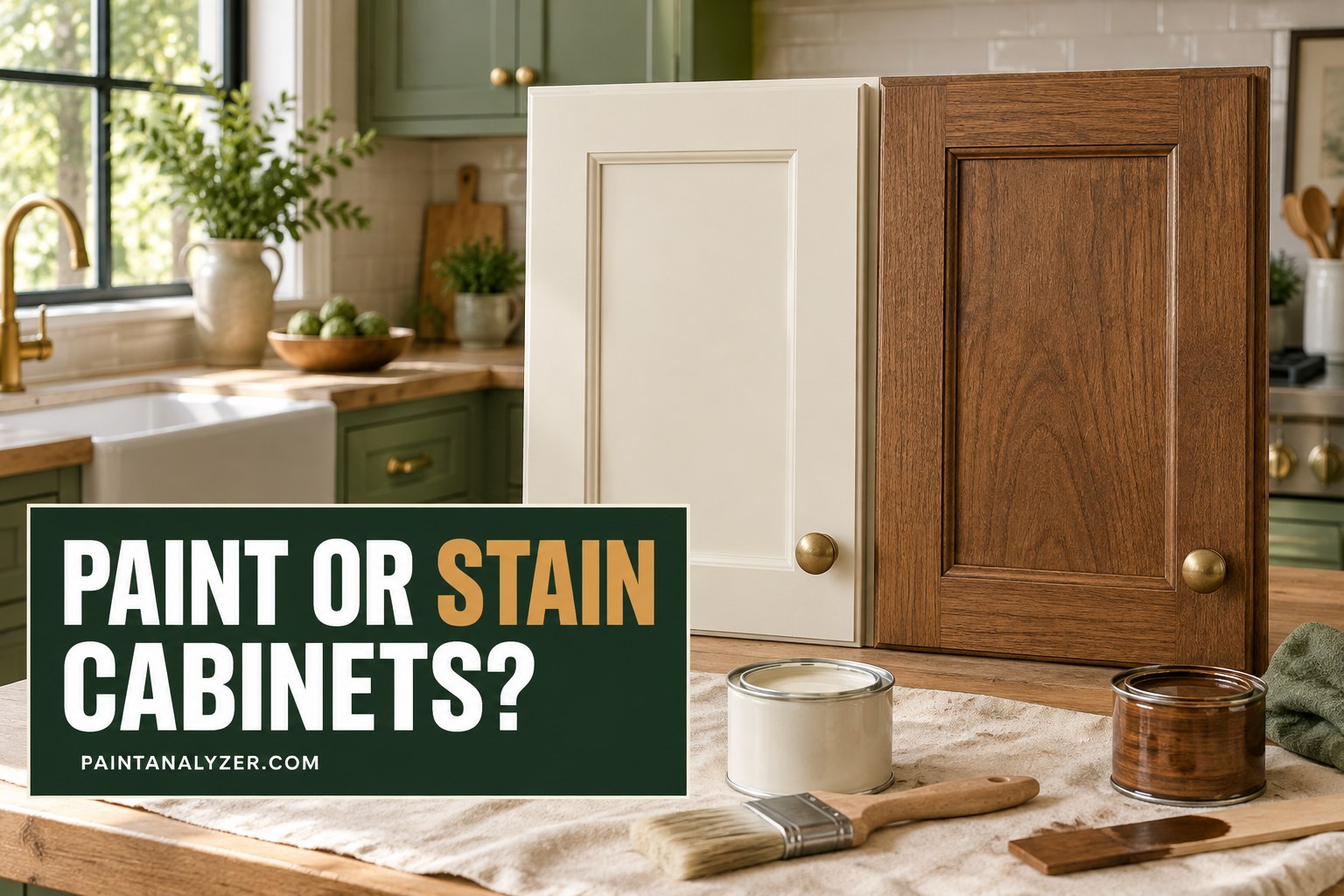
Choosing between painting and staining kitchen cabinets involves a similar set of trade-offs to the general paint-vs-stain decision covered elsewhere on this site, applied specifically to a kitchen's demanding, high-use environment.
1. Staining preserves the wood's natural character
For cabinets made from an attractive hardwood, staining lets that natural wood grain remain visible while still adding color and protection — this is the better choice specifically when the wood itself is a feature worth preserving rather than covering up.
2. Paint offers unlimited color options and covers less attractive wood
Paint can achieve any color, independent of the wood's natural tone, and can effectively hide a less attractive wood grain or an inconsistent color across different cabinet pieces (common when cabinets have been repaired or partially replaced over the years) that staining would only accentuate.
3. Prep requirements differ meaningfully between the two
Painting cabinets typically demands more thorough prep — deglossing, priming, careful attention to durability given the switch from a wood-toned to an opaque finish — while staining, especially over cabinets already stained a similar tone, can sometimes involve less intensive prep, following the general paint-vs-stain prep comparison covered elsewhere.
4. Durability and maintenance in a kitchen's demanding environment
Both paint and stain need a durable topcoat given a kitchen's heavy handling, grease exposure, and moisture — a quality enamel paint or a durable stain-and-poly combination both hold up well when properly applied and maintained, with the choice coming down more to desired appearance than a meaningful durability gap between the two, when both are done properly.
5. Cost considerations
Repainting cabinets is often somewhat less labor-intensive than a full strip-and-restrain process, particularly for cabinets with an existing painted or heavily worn finish — for cabinets already in good stainable condition, staining over the existing finish (where compatible) can also be relatively straightforward and cost-effective.
6. Resale value considerations
Both painted and stained cabinets can appeal to buyers depending on current design trends and the specific execution quality — a well-executed job in either direction generally matters more for resale appeal than the paint-vs-stain choice itself, though checking current local market preferences can help inform the decision for anyone specifically preparing to sell.
7. The practical decision
Choose staining to preserve attractive existing wood grain with generally simpler prep; choose paint for unlimited color options, to update a dated style more completely, or to unify cabinets with inconsistent existing wood tones — both are legitimate, durable choices when done with proper prep and quality products.
Guides are researched against primary documentation and observable evidence. Archived material is rewritten, checked, and substantially improved before publication.