
How to Spray Paint a Popcorn Ceiling Correctly
Popcorn ceiling's fragile, textured surface calls for lighter spray pressure and more passes than a standard flat ceiling, to avoid dislodging the texture itself.
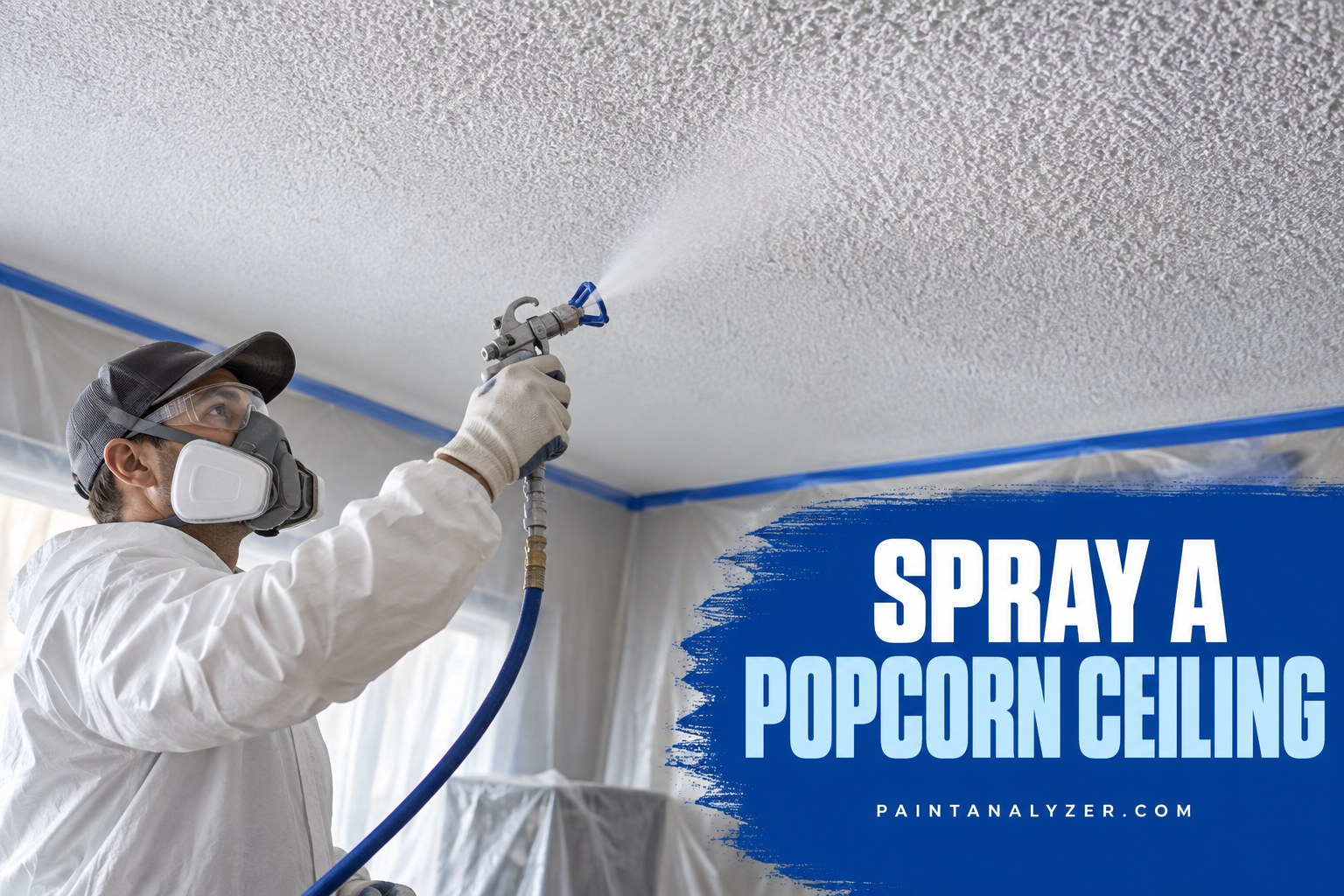
Popcorn (acoustic/textured) ceilings can be refreshed effectively with spray paint, but the textured surface's fragility calls for somewhat different technique than spraying a standard flat, smooth ceiling — the goal is coating the texture evenly without physically dislodging or damaging it in the process.
1. Check for asbestos if the ceiling predates 1980
Popcorn ceiling texture installed before the early 1980s can contain asbestos, and this needs to be checked (via a professional asbestos test) before any work that could disturb the texture, including spraying, which involves some air movement and equipment proximity to the surface — this is a genuine safety step to take seriously, not an optional precaution, given asbestos's serious health risks when its fibers become airborne.
2. Clean gently before painting
Removing dust with a soft brush attachment on a vacuum, held without direct contact against the fragile texture, cleans the surface without physically knocking loose any of the textured material.
3. Use a paint sprayer rather than a roller
A roller applied to popcorn texture risks pulling texture material loose and creating bald spots — a sprayer, following standard spray technique covered elsewhere, coats the texture evenly without the direct physical contact and pressure a roller applies.
4. Use lighter spray pressure and more passes than for a flat surface
Reducing spray pressure somewhat compared to what would be used on a flat wall, and applying more thin passes rather than fewer heavy ones, reduces the force hitting the fragile texture in any single pass while still achieving full, even coverage.
5. Keep the sprayer moving at a consistent distance
Holding the sprayer at a consistent distance and moving continuously (never pausing directly over one spot) avoids concentrating spray pressure and paint volume on any single area of the delicate texture, which could saturate and potentially dislodge it.
6. Mask thoroughly given the overhead spray direction
Overspray from ceiling spraying tends to drift and settle more broadly than spraying a vertical wall — thorough masking of walls, floors, and any furniture in the room protects a wider area than might seem necessary for a ceiling-only project.
7. Allow full drying time before further inspection or touch-up
Waiting for the paint to fully dry before closely inspecting for any missed spots or unevenness (wet, freshly-sprayed popcorn texture can look temporarily uneven simply from wet paint pooling in the texture's crevices) avoids unnecessary touch-up spraying on areas that would have looked fine once dry.
Guides are researched against primary documentation and observable evidence. Archived material is rewritten, checked, and substantially improved before publication.