
How to Seal Your Garage Walls Using a Masonry Waterproofing Sealer
A masonry waterproofing sealer forms a thick, water-blocking film on concrete or block garage walls — proper surface prep and addressing any active water source first are essential for it to actually work.
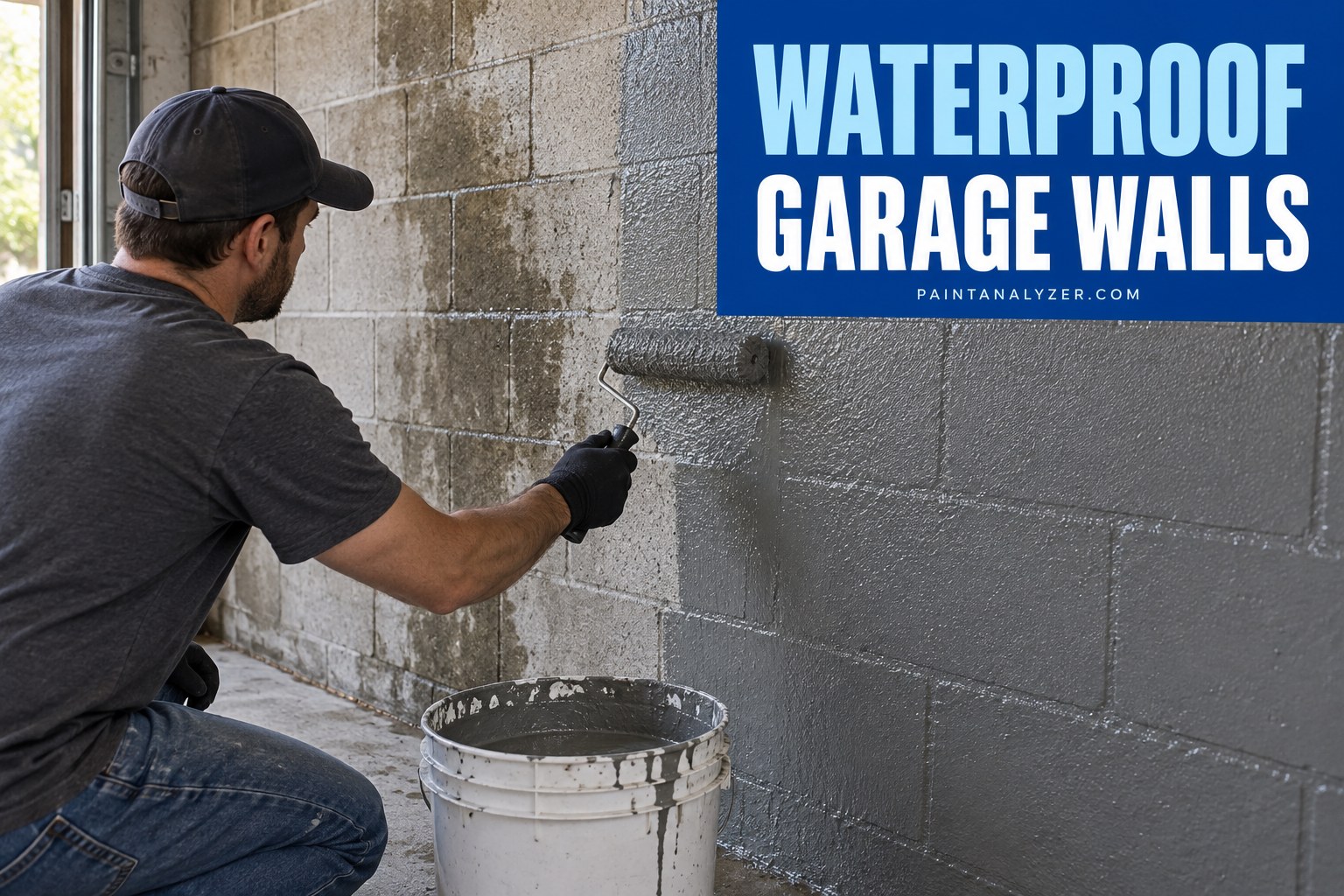
A masonry waterproofing sealer applied to garage walls (typically concrete block or poured concrete) forms a thick, water-blocking coating distinct from a standard paint film, specifically formulated to actively resist water penetration rather than just providing color and a decorative finish.
1. Identify and address any active water source first
A waterproofing sealer works best on walls with minor dampness or seepage, not walls with an active, ongoing water intrusion problem (a failed gutter, poor grading, or significant hydrostatic pressure) — addressing the actual water source first (improving drainage, fixing gutters) gives the sealer a genuinely fair chance to do its job rather than being overwhelmed by an unresolved active leak.
2. Clean the walls thoroughly
Removing dirt, efflorescence, and any loose, flaking material with a wire brush and a masonry cleaner gives the sealer a clean surface to bond to — following the same masonry cleaning fundamentals.
3. Repair any cracks or gaps before sealing
Cracks or gaps in the block or concrete should be filled with an appropriate hydraulic cement or masonry patching product before applying the waterproofing sealer, since the sealer coating alone isn't designed to bridge or fill structural cracks the way a dedicated patching product is.
4. Apply the sealer according to the product's specific coverage rate
Masonry waterproofing sealers are typically applied thicker than standard paint and have a specific stated coverage rate per gallon — following this coverage guidance (rather than spreading it as thin as standard paint) matters for the sealer to actually achieve its water-blocking thickness and effectiveness.
5. Apply a second coat if the first coat's coverage looks thin or uneven
Many waterproofing sealer products recommend or require a second coat for full effectiveness, particularly on porous or previously untreated block — checking the specific product's instructions and applying a second coat where called for gives the intended level of water protection.
6. Allow full cure time before the walls are exposed to water pressure or heavy dampness
Following the sealer's stated cure time before expecting it to perform under real water exposure (heavy rain, seasonal groundwater changes) protects the still-curing coating and gives an accurate sense of how well it's actually working once fully cured.
7. Monitor and reapply as needed over time
Waterproofing sealers can wear or become less effective over years of exposure — periodically checking for any returning dampness or seepage and reapplying per the product's recommended maintenance schedule keeps the walls protected on an ongoing basis rather than assuming one application lasts indefinitely.
Guides are researched against primary documentation and observable evidence. Archived material is rewritten, checked, and substantially improved before publication.