
How to Restain a Deck Without Stripping It First
For a deck whose existing stain is still reasonably sound, a thorough cleaning and light sanding is often enough prep to apply a fresh coat, skipping the more labor-intensive stripping process.
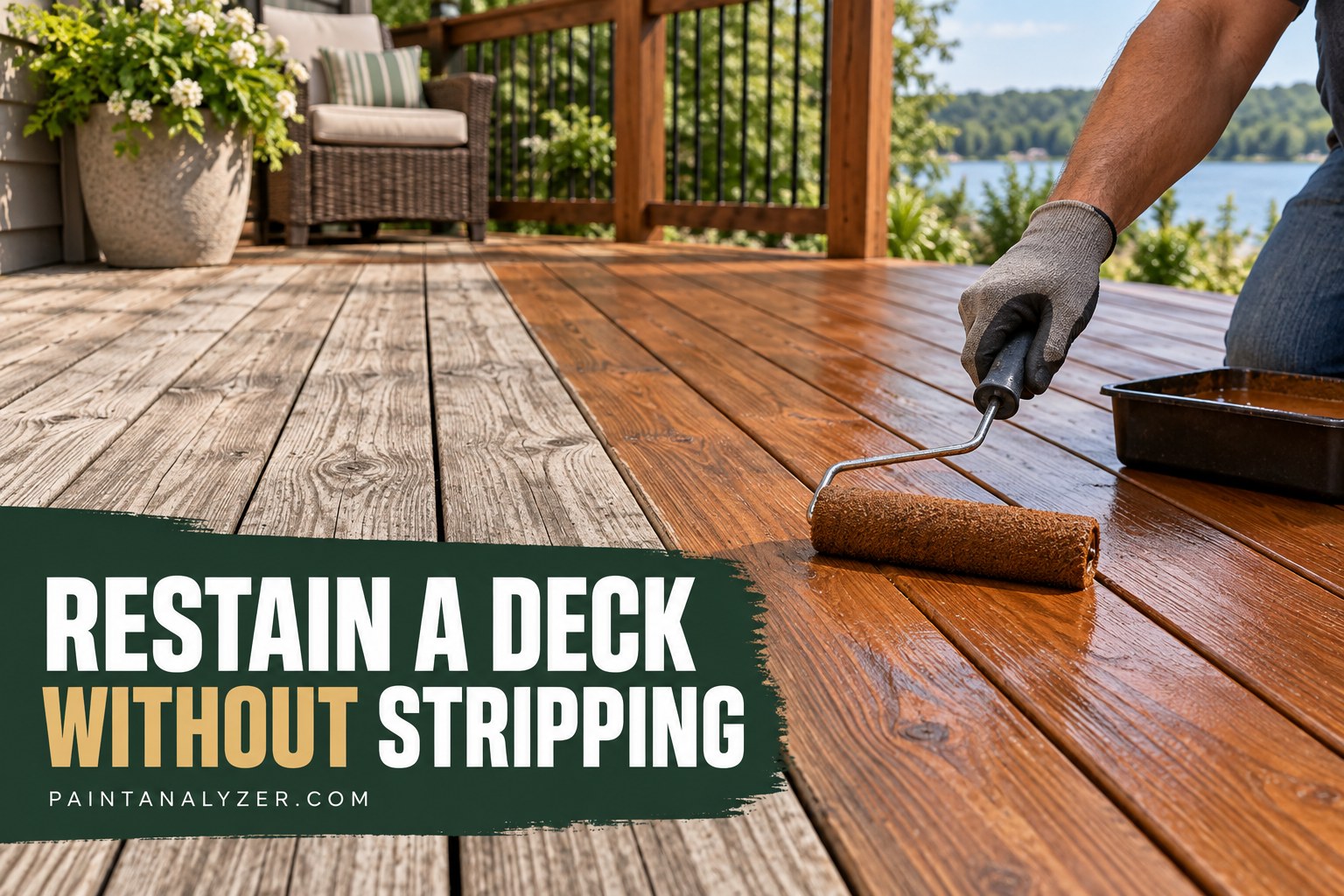
Restaining a deck without fully stripping the old finish first is a genuinely viable approach when the existing stain is still reasonably sound (not significantly peeling or failing) — thorough cleaning and light sanding can be enough prep in that specific situation, saving the more labor-intensive full stripping process for decks that actually need it.
1. Assess whether the existing stain is a good candidate for this approach
A deck with stain that's faded or worn thin, but not actively peeling or flaking, is a reasonable candidate for restaining without full stripping — a deck with significant peeling or an incompatible old finish (like an old solid stain wanting to switch to a transparent one) generally does need more complete removal first for good results.
2. Clean thoroughly with a deck cleaner
A dedicated deck cleaner (rather than just a pressure washer alone, though pressure washing can be part of the process) removes dirt, mildew, and graying wood fiber from UV exposure, giving the wood a genuinely clean surface for the new stain to bond to.
3. Lightly sand any rough or raised areas
A light sanding pass, focused on any rough, raised, or splintering areas rather than the whole deck surface uniformly, smooths out these specific problem spots without the more extensive sanding a full strip-and-refinish would involve.
4. Test stain absorption before committing to the whole deck
Applying water to a small test area and observing whether it beads up or absorbs into the wood indicates whether the wood is ready to accept new stain — water that beads up suggests residual old finish or sealant still present that needs more thorough cleaning before the new stain will absorb properly.
5. Choose a compatible stain type
Applying a new stain of the same general type as what's already on the deck (matching transparent-to-transparent or semi-transparent-to-semi-transparent, for instance) gives more predictable, even results than switching to a significantly different stain type over an existing finish that wasn't fully removed.
6. Apply following standard deck staining technique
Working in the direction of the wood grain, in manageable sections, and following the specific stain product's application and dry-time instructions completes the process once the surface has been properly cleaned and prepped.
7. When to reconsider and do a full strip instead
If test areas show poor stain absorption even after thorough cleaning, or if a different stain type or color is wanted that isn't compatible with layering over the existing finish, a full strip (following the standard deck stripping process) becomes the more reliable path to a good result rather than fighting an incompatible existing finish.
Guides are researched against primary documentation and observable evidence. Archived material is rewritten, checked, and substantially improved before publication.