
How to Remove Paint From Vehicles, Metal Fixtures, and Masonry
Removing paint from a car bumper, a boat hull, brass hardware, or a brick wall each calls for a different method matched to that specific material's sensitivity to solvents and abrasion.
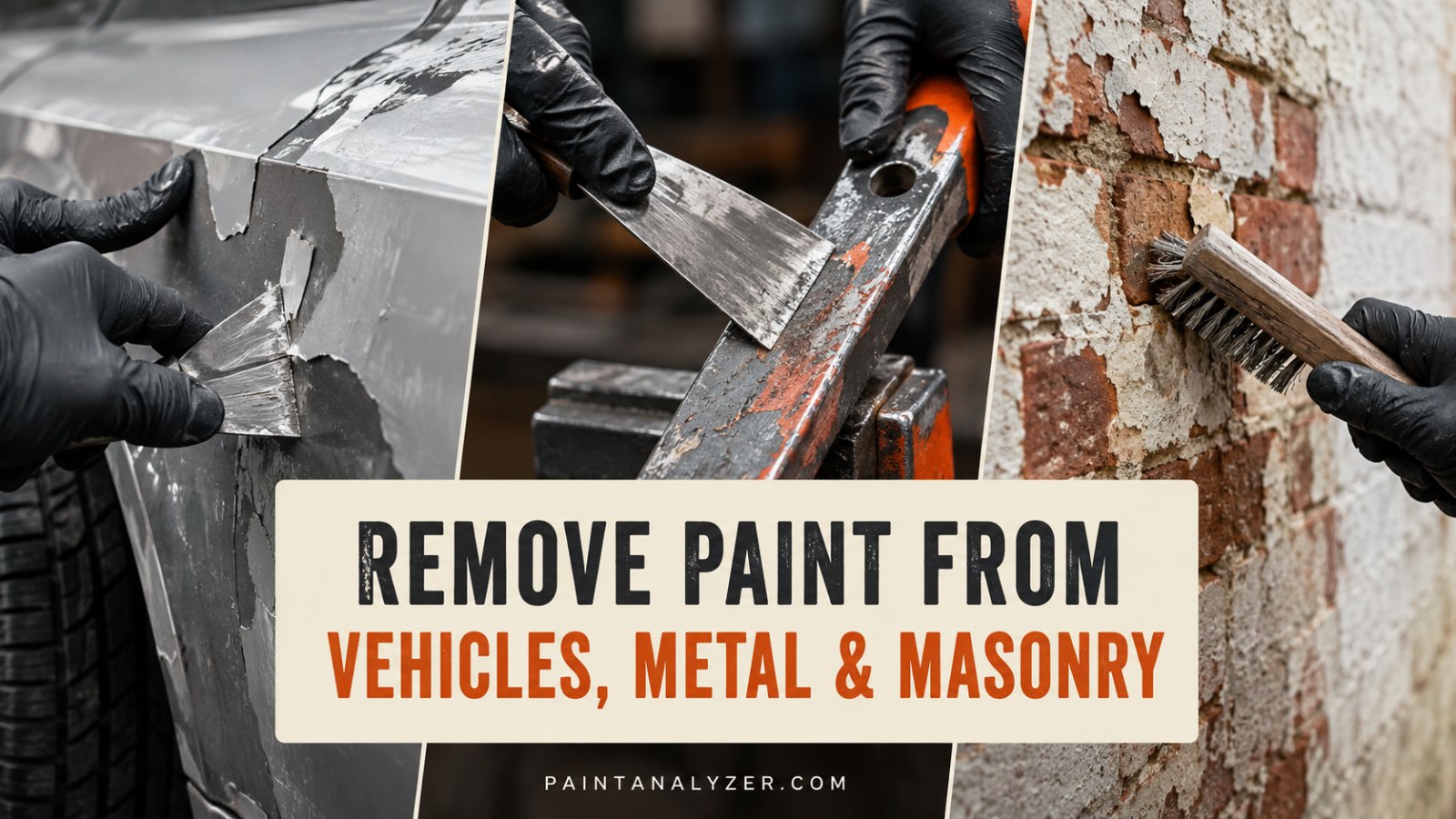
Removing unwanted or old paint from a vehicle, a metal fixture, or masonry requires matching the removal method to that specific material — an approach safe for brick can damage a plastic bumper, and a method fine for aluminum can be too aggressive for delicate brass hardware.
1. Paint from a plastic car bumper
Plastic bumpers need a plastic-safe approach — a plastic razor blade to gently lift loose paint, followed by a plastic-safe adhesive/paint remover product, avoiding strong solvents like acetone that can damage or craze many plastic bumper materials, following the same plastic-sensitivity caution covered for painting plastic generally.
2. Paint from an aluminum boat
Removing paint from an aluminum boat hull is typically done with a chemical paint stripper formulated for use on metal, followed by sanding to remove any remaining residue — working in manageable sections and following the stripper's specific dwell-time instructions prevents the aluminum from being exposed to the stripper longer than necessary.
3. Paint from brass hardware and fixtures
Brass hardware, being a softer, more easily scratched metal, generally responds best to a gentle chemical paint stripper rather than sanding or scraping, which can scratch brass's surface — soaking small, removable hardware pieces in a stripping solution, following the product's instructions, is usually more effective and safer than trying to strip paint from brass in place.
4. Paint from copper gutters and pipes
Copper, like brass, is a relatively soft metal best treated with a chemical stripper rather than aggressive mechanical abrasion — a stripper formulated for metal, applied and given its recommended dwell time, then gently wiped away, protects copper's surface better than sanding would.
5. Paint from rims and wheels
Wheel-specific paint and adhesive removers, formulated to be safe on the specific wheel finish (clear-coated alloy, painted steel, chrome), are the safer choice over a generic automotive stripper — checking the wheel's specific finish and choosing a product rated safe for it avoids damaging a clear coat or specialty finish during paint removal.
6. Powder coating from metal
Powder coating is considerably more durable and heat-resistant than standard paint, generally requiring either a dedicated powder-coat stripping chemical, media blasting, or a heat gun combined with scraping — standard paint stripper alone often isn't strong enough to fully remove cured powder coating, following the durability difference covered for powder coating elsewhere.
7. Paint from brick
As covered for removing paint from brick specifically, a dedicated masonry paint stripper (rather than a generic wood/metal stripper) works with brick's porous surface, followed by thorough rinsing to remove stripper residue from the brick's pores.
8. Paint from stone
Similar to brick, stone's porous or textured surface benefits from a masonry-specific paint stripper rather than mechanical scraping, which can damage a textured or finished stone surface — testing in a hidden area first confirms the stripper doesn't discolor or otherwise affect that specific stone type.
9. Paint from ceramic tile
Ceramic tile's hard, non-porous glazed surface generally tolerates a standard paint stripper or, for smaller spots, careful scraping with a plastic scraper better than more porous masonry does — testing on a hidden or spare tile first still confirms the specific tile's glaze isn't affected.
10. Paint from stained wood, without damaging the stain underneath
Removing paint from wood that has an existing stain finish underneath (rather than bare wood) calls for extra care — a gentler chemical stripper and careful, patient technique, checking frequently to stop as soon as the paint is removed and before the stripper starts affecting the stain layer underneath.
11. Primer from wood
Dried primer on wood where it's not wanted responds to the same removal approach as paint of the same type (water-based primer with a scraper and warm soapy water, oil-based or shellac-based primer with the matching solvent) — treating primer removal the same as removing the equivalent paint type applies directly here.
12. The general principle: match the method to the material's sensitivity
Soft or delicate materials (brass, copper, plastic) call for gentler chemical methods over abrasion; hard, durable materials (ceramic tile, some stone) tolerate more aggressive approaches — checking the specific material's sensitivity before choosing a removal method avoids damaging the underlying surface while trying to remove unwanted paint from it.
Guides are researched against primary documentation and observable evidence. Archived material is rewritten, checked, and substantially improved before publication.