
How to Remove Paint From Metal, Stone, and Other Hard Surfaces
Each hard surface calls for a different balance of chemical stripper, mechanical abrasion, and gentleness — the wrong method risks damaging the material itself, not just failing to remove the paint.
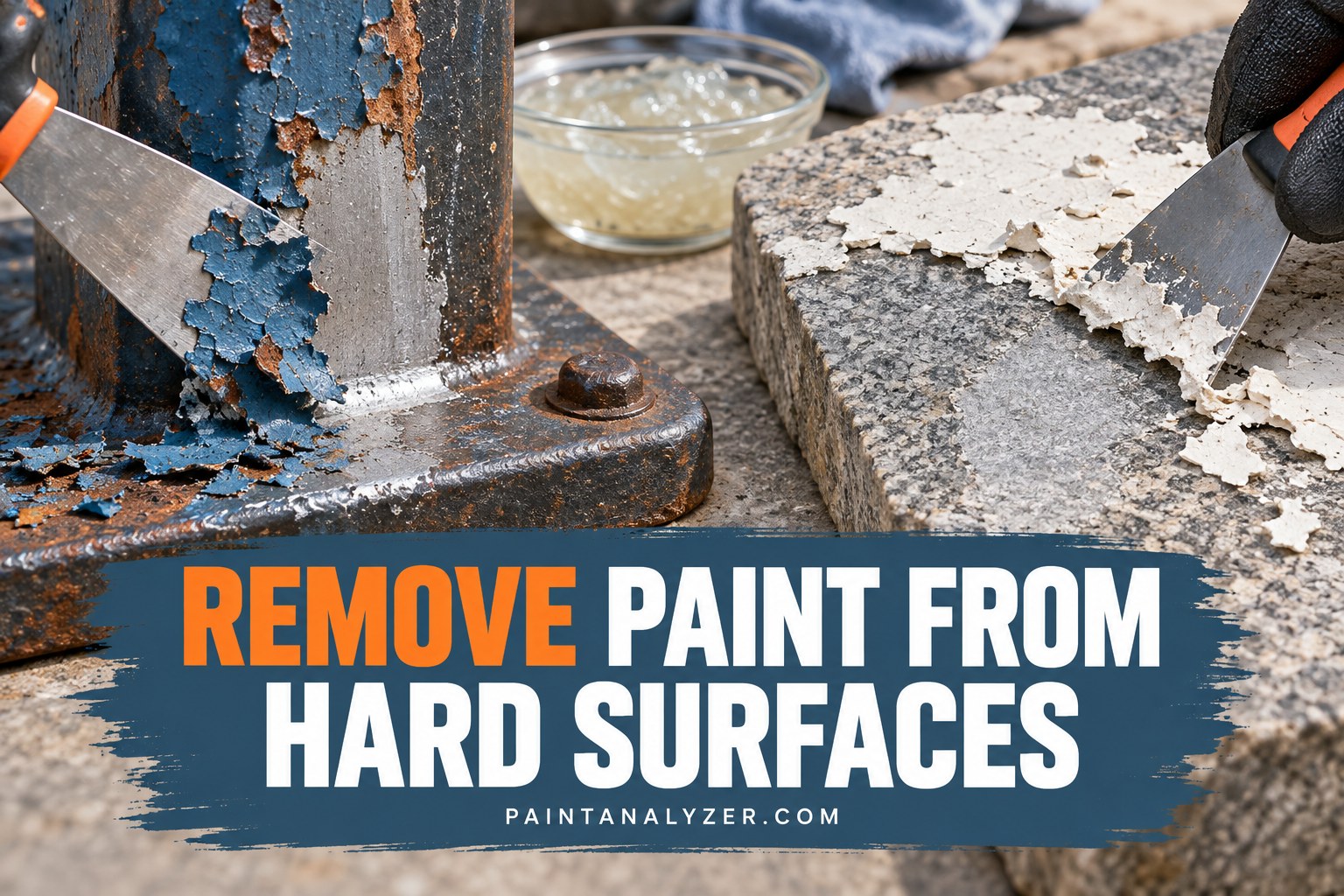
Removing paint from a hard surface — metal, stone, or a specialty coated material — needs a method matched to that specific material's own vulnerabilities, since the wrong approach risks damaging the underlying surface itself, not just failing to fully remove the paint.
1. Brass hardware and fixtures
A citrus-based paint stripper, applied per its instructions and followed by gentle scraping with a plastic tool (never metal, which can scratch brass's relatively soft surface), removes most paint without damaging the underlying brass — for stubborn residue, a very fine synthetic scouring pad used gently can help, but test first since aggressive scrubbing can dull brass's natural shine.
2. Ceramic tile
A plastic scraper combined with a citrus-based stripper or acetone (tile itself tolerates acetone well, unlike some plastics) lifts most paint from tile's hard, glazed surface — avoid metal scrapers, which can scratch the glaze, and take extra care around any grout lines, which are more porous and vulnerable than the tile itself.
3. Rims and wheels
A dedicated wheel-safe paint and adhesive remover, or careful use of a citrus-based stripper, removes paint from wheels without the aggressive solvent exposure that could affect a clear-coated or specially finished wheel surface — following the same wheel-protection caution covered for removing paint overspray from tires nearby.
4. Stone (natural stone surfaces, statuary, masonry accents)
Natural stone is porous and can be damaged by overly aggressive chemical strippers or pressure washing at too high a setting — a gentler approach (a poultice-style paint remover, designed to draw paint out of porous stone gradually, or careful mechanical scraping) is generally safer than a fast, aggressive stripping method for stone specifically.
5. Copper gutters and pipes
Similar to brass, a citrus-based stripper and plastic scraping tool protects copper's relatively soft surface — copper's natural patina (the greenish or brownish coloring that develops over time) is itself a protective layer some people want to preserve, so aggressive stripping that also removes the natural patina, not just the paint, is worth considering before starting.
6. Removing powder coating from metal
Powder coating is considerably more durable and harder to remove than standard paint — a dedicated powder-coat stripper (a stronger chemical product specifically formulated for this), media blasting, or professional stripping are the realistic options, since standard paint strippers often don't fully penetrate powder coating's harder, more chemically resistant film.
7. Aluminum boats and other aluminum surfaces
A marine-specific paint stripper, used per its instructions, removes paint from aluminum without the corrosive reaction some stripping chemicals can cause on this specific metal — checking a stripper's specific aluminum-safety claims before use matters more here than on more chemically inert metals like steel.
8. The universal safety and testing principle
Regardless of the specific hard surface, testing any stripping method on a small, hidden area first — and choosing the gentlest effective method rather than defaulting to the most aggressive option — protects the underlying material from unintended damage while still achieving the actual paint-removal goal.
Guides are researched against primary documentation and observable evidence. Archived material is rewritten, checked, and substantially improved before publication.