
How to Remove Dye, Adhesive, and Old Residue From Carpet, Plastic, and Tile
A handful of common household cleanup problems — dye in carpet, dried paint on plastic, old tile adhesive, dried caulk on hands — each have a specific, straightforward solution.
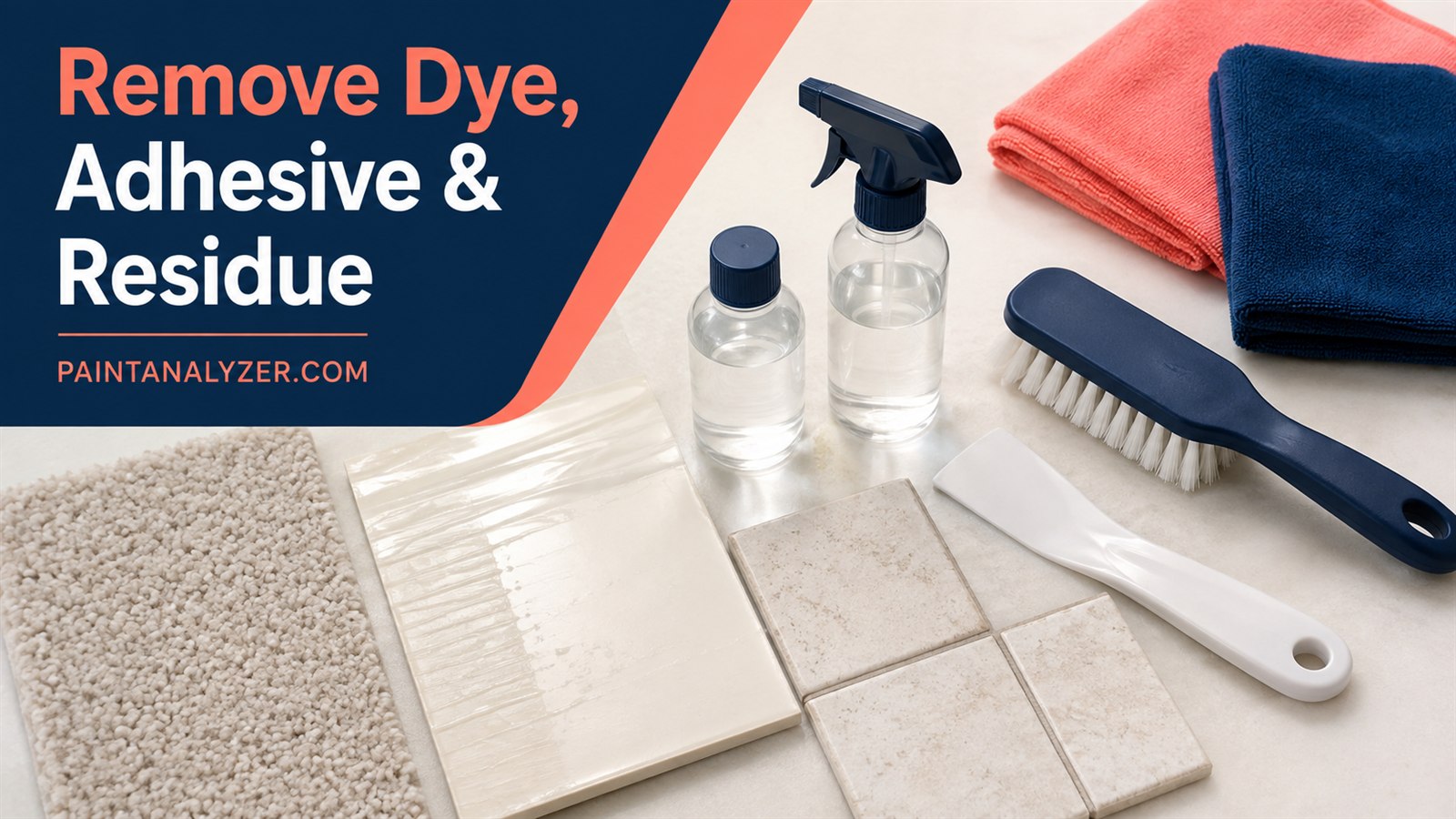
A handful of unrelated but common household cleanup problems — dye stains in carpet, dried paint on plastic, old porcelain tile adhesive, and dried caulk sealant on hands — each have their own specific, established solution worth knowing.
1. Removing dyes from carpet
Fresh dye stains (from hair dye, fabric dye, or similar) respond best to blotting immediately with a clean cloth, followed by a mixture of dish soap and white vinegar worked gently into the stain — for dye that's already set, a carpet-safe oxygen-based stain remover, tested in an inconspicuous area first, addresses more stubborn, dried dye stains.
2. Removing oil-based paint from plastic
Oil-based paint on plastic responds to a small amount of vegetable oil or a citrus-based degreaser worked into the paint, gently loosening it before wiping away — testing on a hidden area first confirms the specific plastic tolerates the chosen solvent without damage, following the same plastic-sensitivity caution covered throughout this site.
3. Removing old porcelain tile adhesive
Dried tile adhesive (mastic or thin-set) on porcelain tile can be softened with a dedicated adhesive remover or, for smaller amounts, carefully scraped with a plastic scraper to avoid scratching the tile's glazed surface — following the manufacturer's specific product instructions for the adhesive type gives the most reliable results.
4. Removing polyurethane caulk sealant from hands
Polyurethane caulk on skin, while still wet, can often be removed with a waterless hand cleaner or a small amount of mineral spirits, followed by thorough soap and water washing — once cured, polyurethane caulk generally needs to wear off gradually with skin exfoliation, similar to the approach covered for cured resin on hands, since it becomes quite tenacious once fully set.
5. The shared principle across all of these: match the method to the material and act early
In every one of these cases, acting while the material is fresh gives considerably better results than waiting until it's fully dried or cured, and choosing a method appropriate to the specific surface (checking plastic type, testing on tile in an inconspicuous spot, treating skin gently rather than reaching for harsh solvents) avoids trading one problem for surface damage.
Guides are researched against primary documentation and observable evidence. Archived material is rewritten, checked, and substantially improved before publication.