
How to Paint an Old Wood Deck
An old deck needs real structural and surface assessment before any paint goes on — rot, previous stain or sealer residue, and the wood's actual condition all determine whether painting is even the right call.
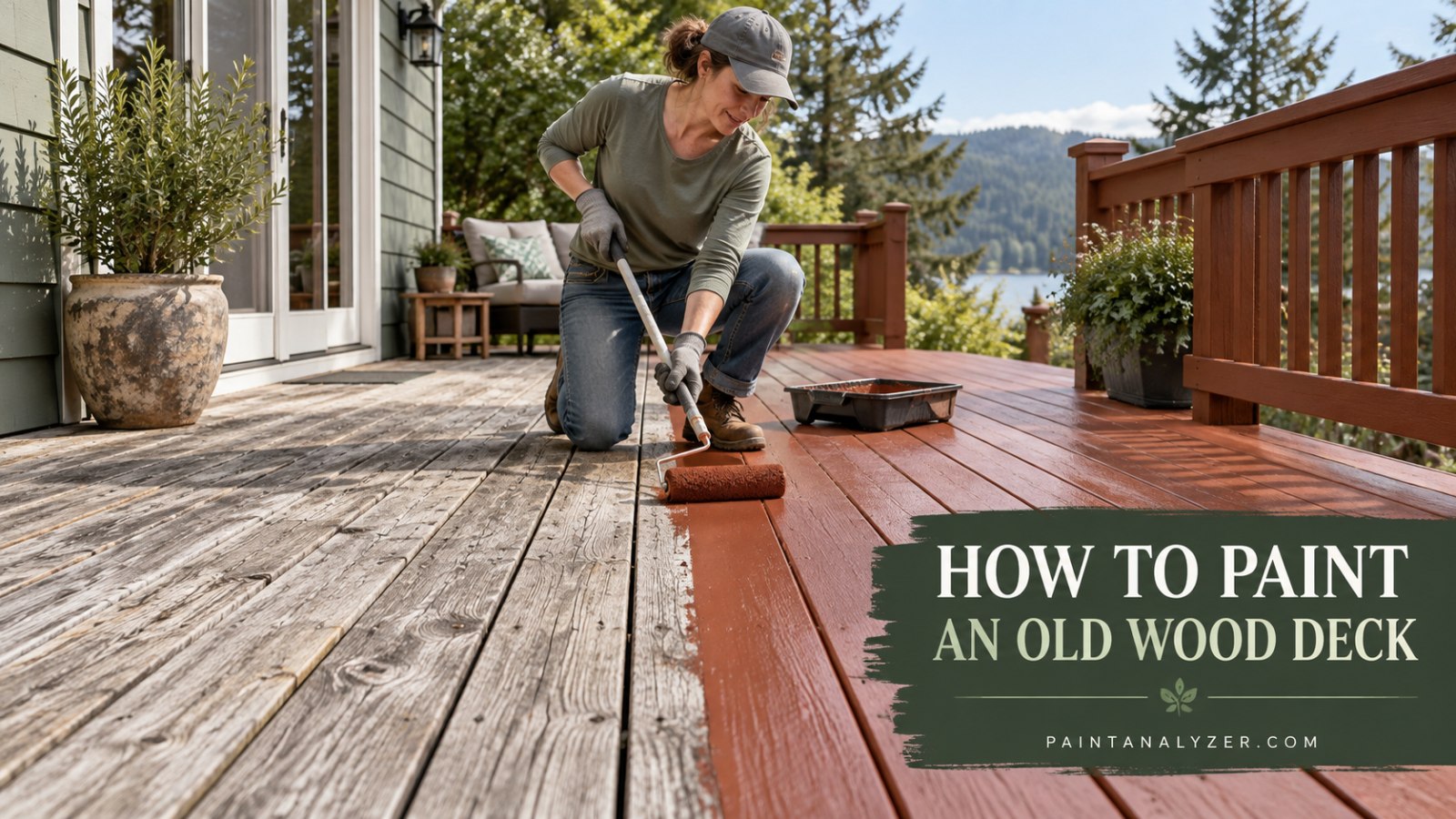
An old wood deck needs a more thorough assessment before painting than a newer deck would — years of weather exposure, previous stain or sealer applications, and potential rot or structural wear all need addressing first, since paint doesn't fix any of these underlying issues, only cosmetic appearance.
1. Assess for rot and structural damage first
Probing boards with a screwdriver (soft, easily penetrated wood indicates rot) identifies any structural problems that need actual repair or board replacement before painting proceeds — painting over rotted wood doesn't stop the rot and wastes effort on a board that needs replacing regardless.
2. Clean thoroughly, addressing years of accumulated grime
1. Sweep away debris
2. Pressure wash (at an appropriate pressure for the wood's condition,
   since aggressive pressure can damage older, softer wood) or scrub
   with a deck cleaner
3. Let dry completely — often several days for an older, more absorbent deck
3. Address any existing stain or sealer
If the deck was previously stained rather than painted, following the same prep covered for painting over a stained deck specifically — stripping as much of the existing stain as practical and sanding to open up the wood surface — matters more on an old deck, where stain may have had years to penetrate deeply.
4. Sand to smooth splinters and open the wood surface
An older deck often has raised grain, splinters, or a weathered gray surface layer — sanding smooths these issues and removes the weathered outer wood layer, giving primer a fresher, more receptive surface to bond to than the aged exterior wood alone would provide.
5. Ensure the deck is fully dry before priming
As covered for how long wood should dry before painting generally, an older deck that's just been cleaned needs genuine drying time (often several days, more in humid conditions) before priming — painting over residual moisture traps it and undermines adhesion.
6. Prime and paint with genuine deck-rated products
A deck-specific primer and paint, formulated for foot traffic and constant weather exposure (not general exterior wall products), following the same product-category distinction covered for driveways and other high-wear exterior surfaces, gives the best realistic durability for this heavily-used, fully weather-exposed surface.
7. Consider whether painting or re-staining is actually the better choice for this specific deck
Given an old deck's accumulated wear, weighing paint's fuller color coverage and hide against a fresh stain's typically lower future maintenance burden (following the general stain-vs-paint trade-off covered for decks elsewhere) is worth doing deliberately, rather than defaulting to paint without considering whether stain might actually be the more practical long-term choice for a deck with this much history.
Guides are researched against primary documentation and observable evidence. Archived material is rewritten, checked, and substantially improved before publication.