
How to Paint a Rusty Metal Roof
A rusted metal roof needs the same rust-treatment fundamentals as any rusted metal surface, scaled up to roof-level safety considerations given the height and pitch involved.
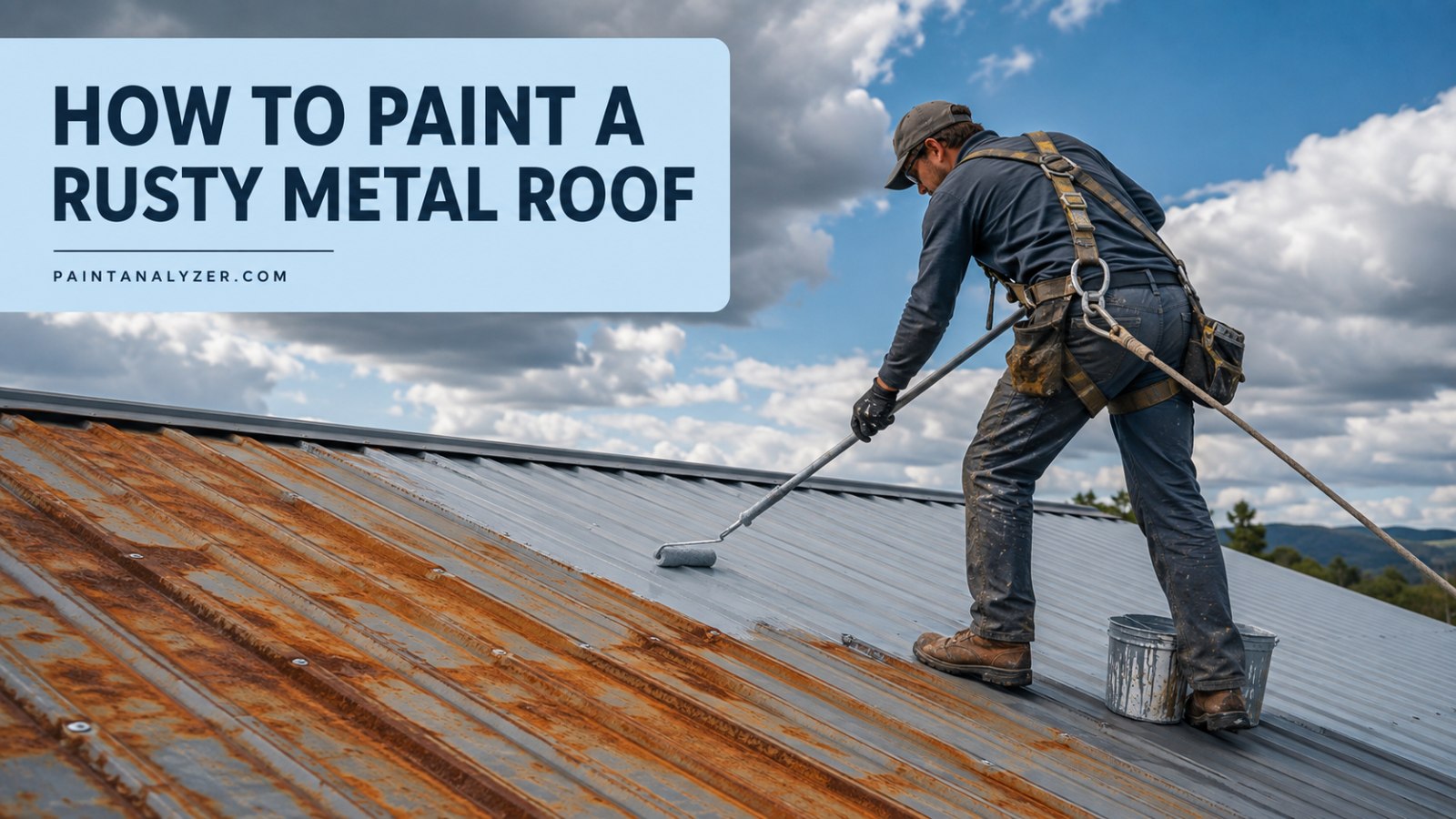
Painting a rusty metal roof combines the standard rust-treatment fundamentals covered throughout this site with the genuine safety considerations that come with working at roof height and pitch — both need proper attention for a project like this to succeed and be done safely.
1. Assess safety and access before starting
As covered for painting dormers on a steep roof, a metal roof's pitch and height are real safety considerations — proper fall protection, roof anchors, and non-slip footwear are baseline requirements, and a professional roofing or painting contractor is a reasonable choice to consider for anything beyond a low-pitch, easily accessible roof.
2. Remove loose rust and any failing existing coating
A wire brush or wire wheel attachment removes loose rust scale and any peeling paint or coating — this needs to happen thoroughly across the whole roof surface before moving to the next step, since painting over loose rust just traps it under new paint.
3. Treat remaining rust with a rust converter
Following the standard rust-treatment approach covered for metal roofs and other rusted metal surfaces on this site, a rust converter applied to any remaining rust chemically stabilizes it into a paintable surface rather than leaving it to continue corroding under the new coating.
4. Prime with a rust-inhibiting metal roof primer
A primer specifically rated for metal roofing, applied evenly across the cleaned and treated surface, provides both proper adhesion and genuine ongoing rust protection appropriate to a roof's constant weather exposure.
5. Apply a paint system specifically rated for metal roofing
A dedicated metal roof coating (often an acrylic or elastomeric roof coating formulated for reflectivity and weather resistance) holds up considerably better under a roof's constant sun and weather exposure than a general-purpose exterior metal paint not designed for roofing use specifically.
6. Consider a reflective, lighter-colored coating for energy benefits
Many metal roof coatings are formulated to be highly reflective, reducing heat absorption into the building below — choosing a reflective coating, where the desired appearance allows, offers a genuine secondary benefit beyond simply refreshing the roof's appearance and stopping the rust.
7. Inspect and maintain periodically going forward
Metal roofs benefit from periodic inspection for any new rust spots or coating wear, addressed promptly with touch-up before they develop into a larger problem — this ongoing maintenance is considerably easier and safer to manage than letting rust re-establish itself extensively before addressing it again.
Guides are researched against primary documentation and observable evidence. Archived material is rewritten, checked, and substantially improved before publication.