
How to Paint a Metal Pole Barn Structure
A durable pole-barn repaint starts with identifying the metal and existing factory finish. Clean and test first, treat rust, use a compatible primer/topcoat, and paint only when the surface stays safely above the dew point.
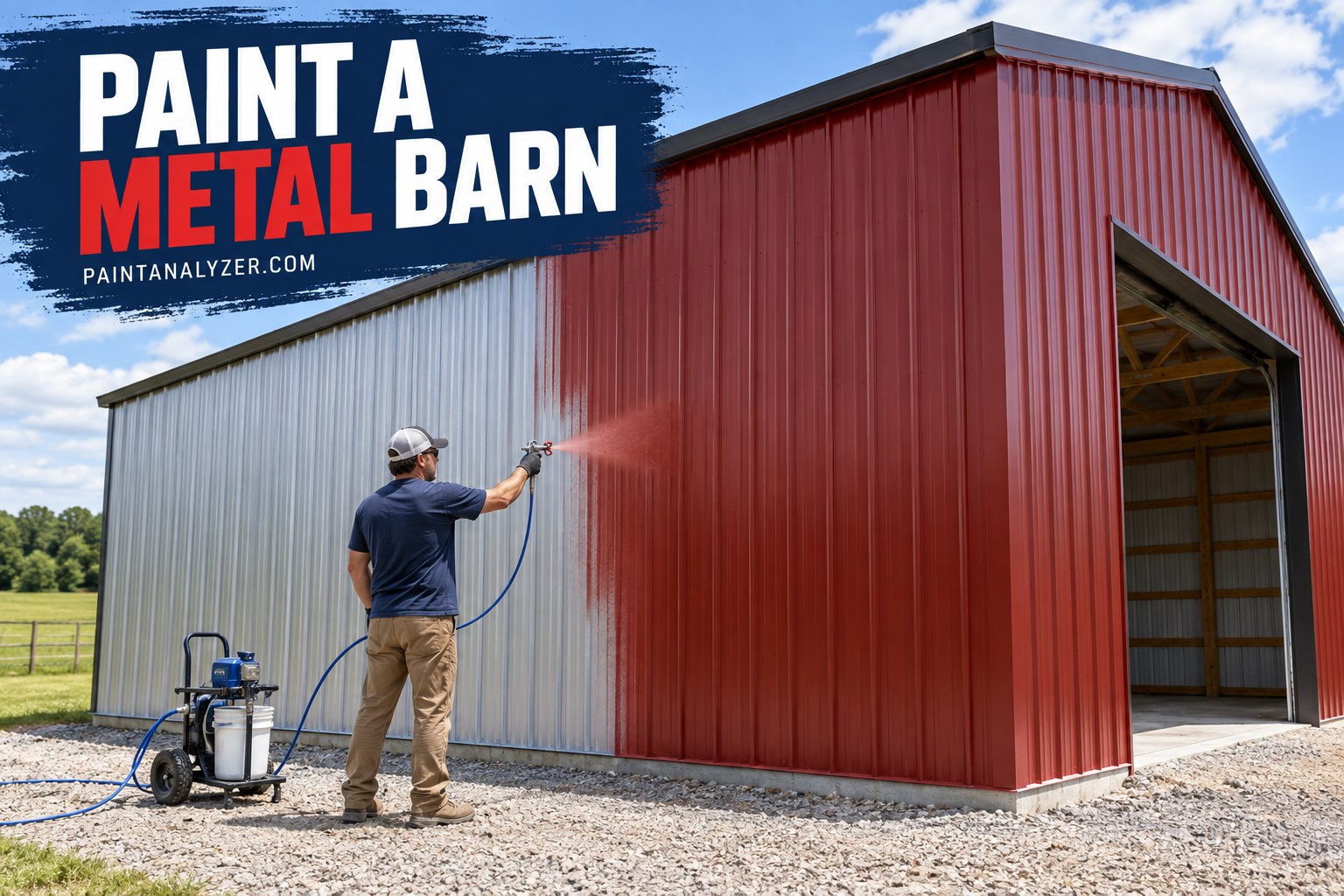
To paint a metal pole barn successfully, identify the panel surface before choosing paint. The building may have bare/weathered galvanized steel, a factory-applied coil coating, a previous field paint, or a mix of these around repairs and fasteners. Those surfaces do not all use the same preparation or primer. Clean the panels, test the existing coating for adhesion, remove corrosion and loose paint, and use a primer/topcoat system whose technical data specifically lists the substrate.
Weather matters as much as prep. Metal can be colder than the air and collect invisible condensation. A common industrial coating rule is to keep the surface at least 5°F (about 3°C) above the dew point, but the selected product's TDS controls. Large-scale spraying also creates overspray and access hazards; near roads, vehicles, livestock, neighboring property, or power lines, professional containment and application may be the safer choice.
Identify the metal and existing finish
- Bare or weathered galvanized steel: zinc-coated steel with its own preparation requirements.
- New galvanized steel: may carry passivation treatments or surface contaminants that interfere with adhesion.
- Factory-painted/coil-coated panels: require cleaning and compatibility/adhesion testing; do not assume a generic galvanized primer belongs over an intact factory finish.
- Previously field-painted panels: the new system must adhere to the old coating as well as protect exposed metal.
Tools and materials
- Detergent/cleaner approved for the coating system
- Soft brushes, hose or controlled-pressure washing equipment
- Scrapers and abrasive tools appropriate to the substrate
- Rust-treatment materials specified by the primer system
- Compatible galvanized/metal primer where required
- Exterior metal topcoat or direct-to-metal system approved for the substrate
- Wet-film gauge if required by the coating specification
- Airless spray equipment or rollers/brushes suitable for the product
- Respiratory, eye, skin, fall, and overspray controls required by the SDS and job conditions
How to prepare a metal pole barn for paint
1. Wash off dirt, chalk, oils, and biological contamination
Coatings need a clean surface. Remove loose dirt, chalking from old finishes, grease, and other contaminants using the cleaning method required by the selected system. Rinse where required and let the panels dry.
2. Test the existing coating
Choose several representative areas—sun-exposed walls, shaded walls, repairs, and different colors or panel ages. Check whether the old finish is firmly bonded. If the new coating manufacturer provides a field adhesion-test method or requires a test patch, follow it before committing to the whole building.
3. Treat rust and failed coating
Remove loose rust and non-adherent paint to the preparation standard required by the primer. Pay special attention to fasteners, cut edges, scratches, laps, and lower wall areas. Do not automatically apply a rust converter under every primer; converters are separate chemistries and should be used only when compatible with the specified coating system.
4. Prepare galvanized areas correctly
Galvanized steel can be coated successfully, but preparation depends on its age and surface treatment. Sherwin-Williams notes that weathering or additional preparation/testing may be needed, particularly when chromate or silicate treatments are present. PPG also publishes systems specifically rated for galvanized steel. Use the exact primer or direct-to-metal coating requirements for your panel condition rather than a one-size-fits-all “rust primer.”
5. Prime only where the system requires it
Bare steel, rust-prepared areas, galvanized patches, and intact factory finishes may have different primer requirements. Some direct-to-metal coatings are designed for certain prepared metals; others require a dedicated primer. Follow the manufacturer's substrate table and required film thickness.
How to apply the finish coat
Plan the weather window
Check air temperature, panel temperature, humidity, wind, rain/dew forecast, and the coating's minimum/maximum conditions. Sherwin-Williams' industrial dew-point guidance uses a minimum 5°F surface-temperature margin above dew point; if your product specifies a larger margin, use that.
Work in sections that keep a wet edge
Large ribbed panels can show lap and spray-pattern differences. Plan breaks at corners, panel ends, trim lines, or other natural boundaries. Maintain consistent application rate and overlap according to the spray tip/roller and coating data.
Control overspray
Airless spraying is efficient on large buildings but can carry paint far beyond the wall in wind. Mask openings and equipment, move vehicles, protect roofs and adjacent property, and stop when wind makes containment unreliable. Follow the coating SDS and sprayer requirements for respiratory protection.
When not to DIY
- The work requires unsafe ladder positioning, roof access, or fall exposure.
- Panels are close to energized power lines.
- Overspray could reach roads, neighboring buildings, vehicles, animals, crops, or waterways.
- There is widespread corrosion, panel perforation, or structural deterioration.
- You cannot identify the existing factory coating or obtain a compatible repaint specification.
Common mistakes
- Painting chalky factory finish without cleaning it.
- Using the same primer over intact coil coating, bare galvanized steel, and rusted steel without checking compatibility.
- Assuming every rust converter can be topcoated with every primer.
- Painting cool metal as dew begins to form even though the air still feels dry.
- Spraying in wind because the job is too large to roll.
Factory-coated metal may need a repaint specification, not generic primer
Many pole barns use prefinished coil-coated steel. If that factory finish is intact, the critical questions are its chemistry, chalking level, adhesion, and compatibility with the proposed topcoat. A primer intended for bare galvanized steel may be unnecessary or incompatible over a sound factory coating. When the panel manufacturer is known, ask for its field-repaint recommendation.
New galvanized steel vs. weathered galvanized steel
Fresh galvanizing can have passivation treatments and a smooth zinc surface that require specific preparation. Sherwin-Williams' surface-preparation guidance calls for cleaning, weathering or treatment-specific testing, and adhesion testing when chromates or silicates may be present. Do not acid-etch, blast, or sand galvanized panels aggressively without knowing the coating specification; excessive abrasion can remove protective zinc.
Check surface temperature, not just air temperature
Large metal panels heat and cool quickly. In the evening they can approach the dew point before the air feels damp; in sun they can be far hotter than the air. Measure panel temperature with an appropriate surface thermometer and compare it with the selected coating's TDS limits. Industrial guidance commonly uses a minimum 5°F (3°C) margin above dew point, but the product specification governs.
Spray safety is a project-design issue
Airless equipment injects coating at high pressure and creates overspray. Follow the sprayer manual and coating SDS for tip-guard, injection-injury, grounding, PPE, and respiratory requirements. Do not spray from an unsafe ladder position while managing a hose. Set up scaffolding, lifts, or other access appropriate to the building height and local safety requirements.
Overhead electrical lines are a hard stop
OSHA accident records include painters electrocuted when extension ladders contacted overhead power lines. If the barn work area, ladder, lift, sprayer pole, or metal panel handling can encroach on energized lines, do not improvise clearance. Have the utility/electrical hazard addressed and use a professional work plan that meets the applicable rules.
Quality-control checks during the job
- Verify the cleaned panel no longer sheds heavy chalk onto a dark cloth.
- Check representative adhesion-test areas before full production.
- Confirm rust-prepared spots are fully coated and edges/fasteners are not missed.
- Use a wet-film gauge when the coating specification calls for a target wet film thickness.
- Inspect laps and panel ribs from oblique light for holidays and thin spray shadowing.
- Respect recoat windows; do not trap dew or contamination between coats.
Bottom line
A metal building repaint is a coating-system job, not just a color change. Identify the panel finish, clean and test it, prepare corrosion to the required standard, use a primer/topcoat approved for each substrate, and respect dew point and overspray limits. That preparation is what separates a durable repaint from a large-scale peeling problem.
Related guides
Sources and further reading
Guides are researched against primary documentation and observable evidence. Archived material is rewritten, checked, and substantially improved before publication.