
How to Paint a Basement Ceiling With Exposed Wires and Joists
Painting an exposed, unfinished basement ceiling in one uniform dark color is a popular way to visually hide the wiring, ducts, and joists without the cost of a drop ceiling or drywall.
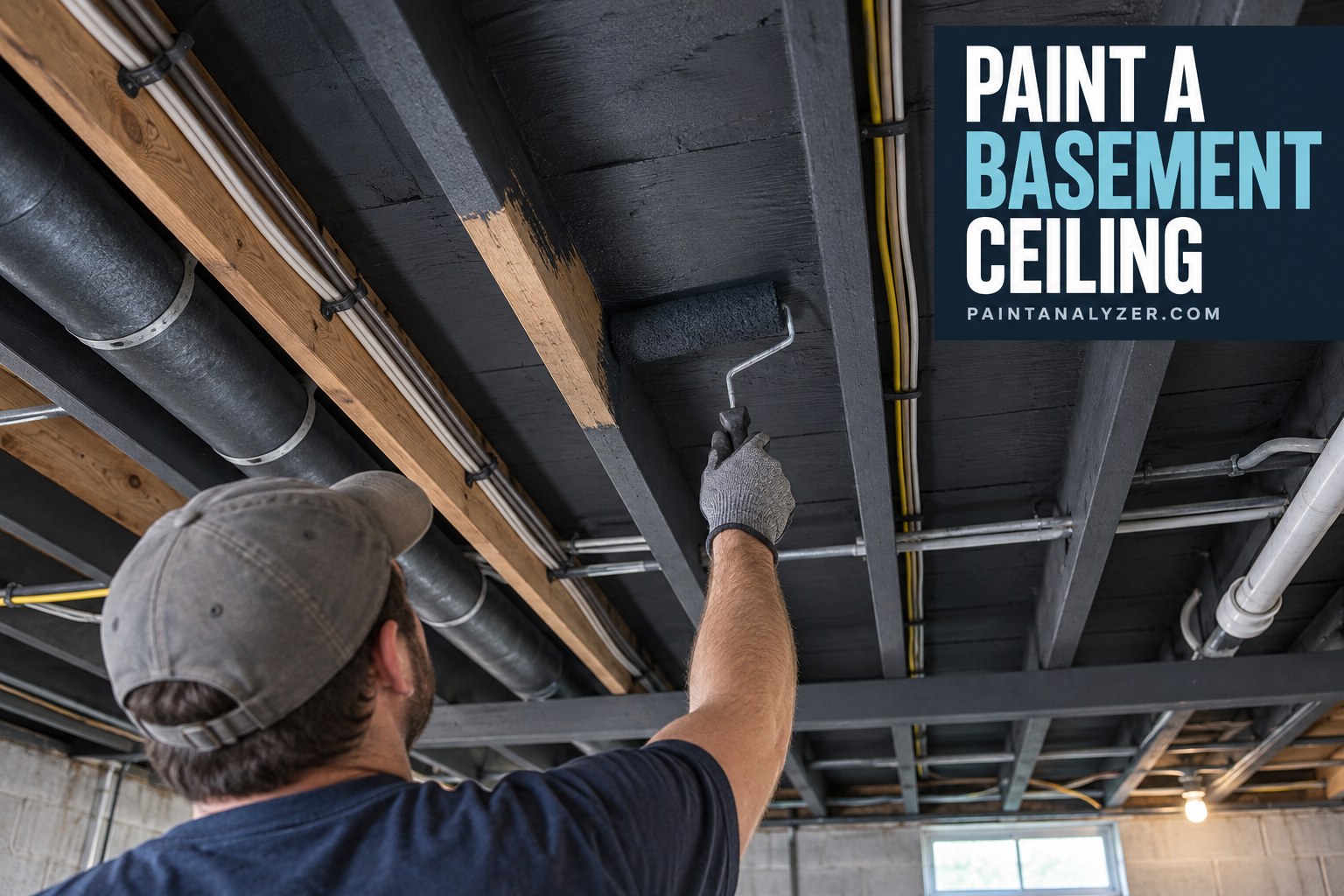
Painting an unfinished basement ceiling — leaving the joists, wiring, ductwork, and pipes exposed but painting everything a uniform color — has become a popular, budget-conscious alternative to installing a full drop ceiling or drywall, and it genuinely does visually simplify the busy look of an exposed structural ceiling.
1. Clear and clean the area before starting
Removing dust, cobwebs, and any debris from the joists, wiring, and ductwork with a shop vacuum or broom gives the paint a clean surface and prevents trapping dust under the new paint film.
2. Choose a single, dark, matte color
A dark, flat/matte black or charcoal is the standard choice for this technique specifically because a dark, low-reflectivity color visually recedes and unifies the many different textures and shapes (wiring, ducts, joists, subfloor) into one cohesive dark mass rather than drawing attention to each separate element.
3. Consider whether wiring should be painted at all
Electrical wiring can generally be safely painted with a light, even coat using a paint appropriate for the wire's jacket material — but avoiding heavy paint buildup on wiring, and checking with an electrician if there's any doubt about a specific wiring situation, is a reasonable precaution given that this involves the home's electrical system directly.
4. Use a sprayer for the most even, efficient coverage
Given the complex geometry of an exposed ceiling (many angles, gaps, and surfaces a roller can't reach evenly), an airless or HVLP sprayer, following the spray technique covered elsewhere on this site, achieves considerably more even coverage across all these surfaces than trying to roll or brush the same area.
5. Mask or protect anything that shouldn't be painted
HVAC vents that need to remain functional, smoke detectors, and any labels or access panels that need to stay legible or accessible should be masked off before spraying, since it's considerably harder to clean paint off these items after the fact than to protect them beforehand.
6. Apply in thin, even coats, allowing proper drying between passes
Multiple thin coats give more even coverage across the ceiling's varied surfaces and textures than trying to achieve full coverage in one heavy pass, which is more likely to produce drips given the ceiling's overhead orientation.
7. Address ventilation and respiratory protection given the overhead, enclosed spraying
Spraying paint overhead in a basement's typically more enclosed space calls for real attention to ventilation and wearing an appropriate respirator, following standard spray-painting safety practice, since overhead spraying in a confined space increases exposure to airborne particles compared to spraying in a well-ventilated, open area.
Guides are researched against primary documentation and observable evidence. Archived material is rewritten, checked, and substantially improved before publication.