
How to Get Paint, Primer, and Adhesive Residue Off Your Skin and Clothes
Wet paint on skin or fabric comes off with simple soap and water almost every time — the real challenges only start once it's dried, and the right remover depends on exactly what dried there.
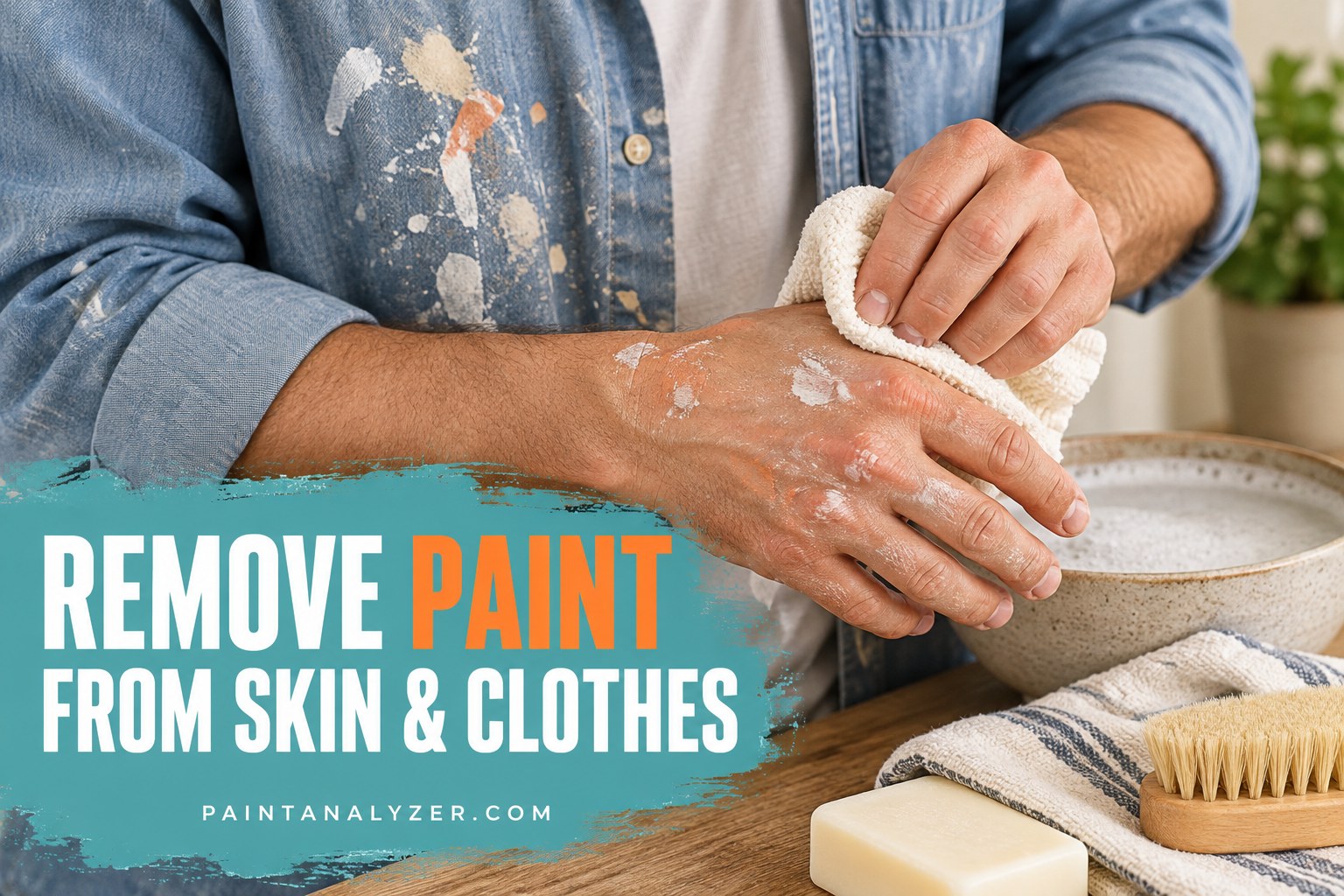
The single most useful piece of advice across every scenario below: act while the paint or residue is still wet, when simple soap and water handles almost anything. The specific techniques that follow are for what to do once something has already dried.
1. Oil-based paint on skin
Baby oil or vegetable oil, worked into the skin, then washed with soap and waterOil dissolves oil-based paint on skin more gently than a genuine solvent — a reasonable, lower-irritation approach for skin specifically, reserving mineral spirits (used briefly and rinsed thoroughly, given it's not meant for prolonged skin contact) for paint that oil alone doesn't fully address.
2. Primer off skin
Following the same approach as paint — soap and water for water-based primer while still wet, and baby oil or a gentle solvent approach for dried oil-based primer, given the similar underlying chemistry.
3. Resin off hands
Isopropyl alcohol, applied to a cloth and worked over the affected skin, breaks down uncured epoxy resin more effectively than soap and water alone — for fully cured resin, gentle mechanical removal (rubbing, rather than scraping with anything sharp) combined with alcohol handles most cases; a dermatologist's input is worth seeking for any resin that's caused genuine skin irritation.
4. Removing polyurethane/caulk sealant from hands
Mineral spirits on a cloth, used briefly and followed by a thorough soap-and-water wash, addresses most dried sealant residue — for cured, hardened sealant, gentle peeling or rolling it off (rather than scrubbing) is often more effective and less irritating to skin than continued solvent exposure.
5. Paint out of hair, natural and chemical methods
Natural: vegetable oil or a hair conditioner worked through the affected hair,
left to sit, then combed out and washed with shampoo

Chemical: rubbing alcohol on a cloth for spot treatment on dried paint,
followed by a thorough shampoo
6. Removing liquid latex out of clothes and hair
Liquid latex, once dried, generally peels away from hair and most fabric more easily than actual paint would, given its rubber-based, film-forming nature — gentle peeling, aided by a little rubbing alcohol to loosen the edges, is usually more effective than trying to dissolve it with a solvent the way paint would need.
7. Dried paint stains on jeans or other fabric
1. Scrape off as much dried paint as possible with a dull knife edge
2. For water-based paint: soak in warm soapy water, then work the stain
   with more soap before washing normally
3. For oil-based paint: treat with a small amount of mineral spirits or
   a dedicated stain remover before washing, checking fabric care
   instructions first
8. Tempera paint out of clothes
Tempera paint is water-based and generally washes out of clothing more readily than acrylic or oil paint, especially if treated before it fully dries — a standard pre-treatment with laundry stain remover, followed by normal washing, handles most tempera stains without needing a stronger solvent approach.
9. General principle for skin and fabric: gentler methods first, always
Across every scenario above, starting with the gentlest effective method (soap and water, then oil, then alcohol, reserving genuine solvents like mineral spirits for skin only briefly and with a thorough rinse afterward) protects skin and fabric from unnecessary irritation or damage while still addressing the actual residue.
Guides are researched against primary documentation and observable evidence. Archived material is rewritten, checked, and substantially improved before publication.