
How to Get Hair Dye Out of Wood Laminate
Acting fast matters more than any specific product — hair dye penetrates laminate's surface faster than most household spills, and a gentle rubbing alcohol treatment is the most reliable starting point.
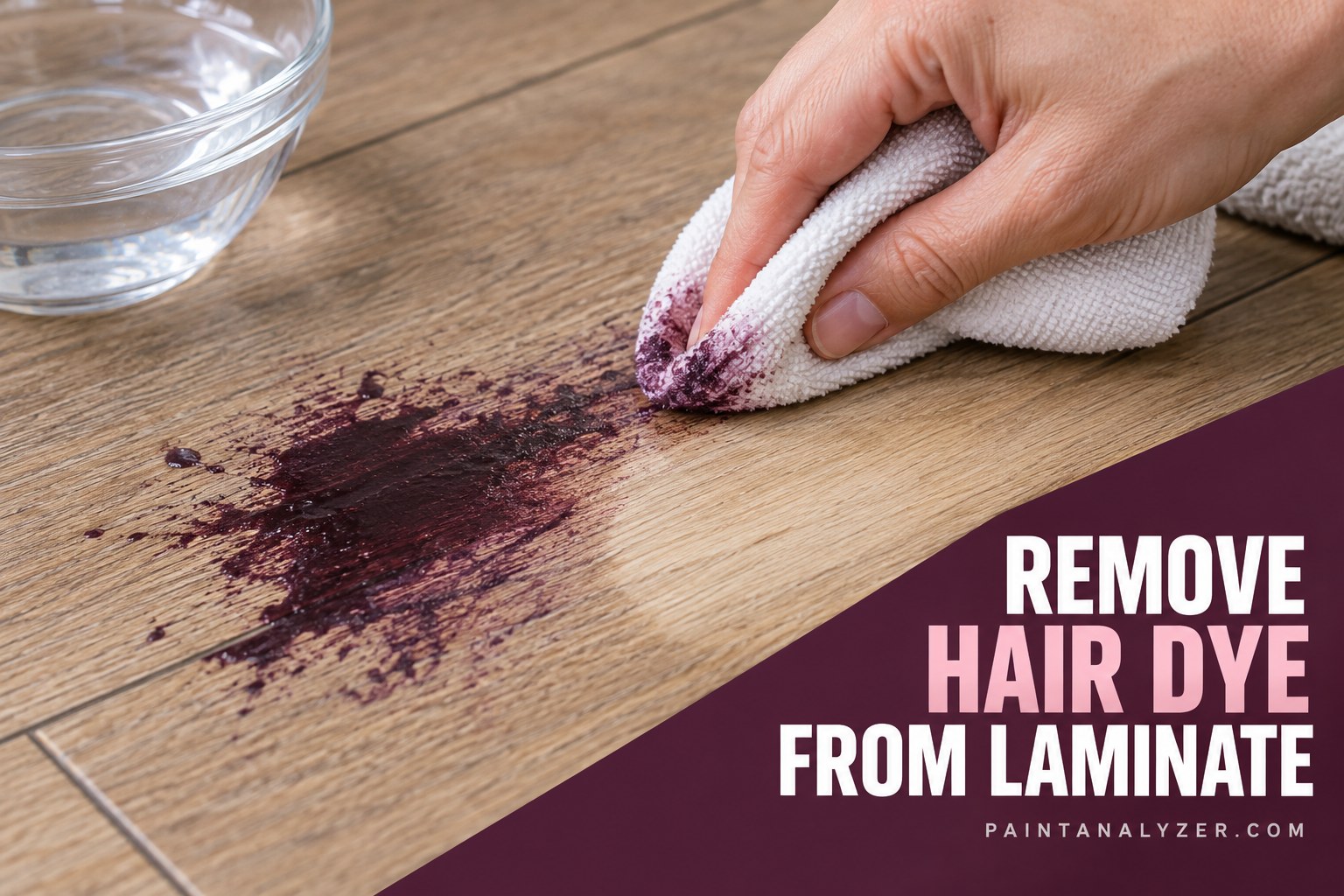
Hair dye stains on laminate surfaces (a bathroom vanity, a laminate countertop) respond best to a fast reaction — the same dyes formulated to penetrate and color hair fibers effectively can also stain a laminate surface's finish faster than many other household spills, making prompt cleanup genuinely more important than any specific product choice.
1. Act immediately if possible
Wiping up a fresh hair dye spill within seconds to minutes, before it has time to set into the laminate's surface finish, dramatically improves the chance of full removal compared to letting it sit even briefly — this matters more here than for most household stains.
2. Rubbing alcohol — the most reliable starting point for a set-in stain
1. Apply isopropyl alcohol to a soft cloth
2. Gently rub the stained area, working from the outside of the stain inward
   to avoid spreading it
3. Rinse with a clean, damp cloth and dry
Alcohol is generally effective at breaking down hair dye residue without being as harsh as a stronger solvent — this is the standard first approach for a hair dye stain that's already had time to set, following the same general "start with a gentler method" principle covered for other stain-removal situations.
3. A baking soda paste for a more stubborn stain
1. Mix baking soda with a small amount of water to form a paste
2. Apply to the stain and let sit for several minutes
3. Gently rub with a soft cloth, then rinse and dry
Baking soda's mild abrasive quality can help lift dye residue that alcohol alone doesn't fully resolve, without being aggressive enough to damage the laminate's finish the way a harsher abrasive cleaner might.
4. Avoid harsh abrasives or bleach directly on laminate
Strong bleach or an abrasive scouring pad risks damaging or dulling laminate's finish — similar to the caution covered for cleaning other finished surfaces gently, the goal is lifting the stain without creating a new, different kind of surface damage in the process.
5. Testing any cleaning method on a hidden area first
As with any stain removal approach on a finished surface, testing on an inconspicuous spot (an edge, an underside) confirms the specific laminate's finish tolerates the chosen method before treating the visible stained area.
6. For an older, already-set stain that resists these methods
A hair dye stain that's had a long time to set, or one that doesn't respond to alcohol or baking soda, may have genuinely and permanently discolored the laminate's surface — at that point, a laminate-safe stain remover product (checking specifically for laminate compatibility) is worth trying, though some deeply set stains on laminate may not be fully removable regardless of method, similar to how some materials simply absorb certain dyes too deeply to fully reverse.
Guides are researched against primary documentation and observable evidence. Archived material is rewritten, checked, and substantially improved before publication.