
How to Clean These Painting Tools and Surfaces
From painted walls to a canvas painting to an HVLP spray gun, each of these needs its own specific cleaning approach to avoid damaging the paint or the tool itself.
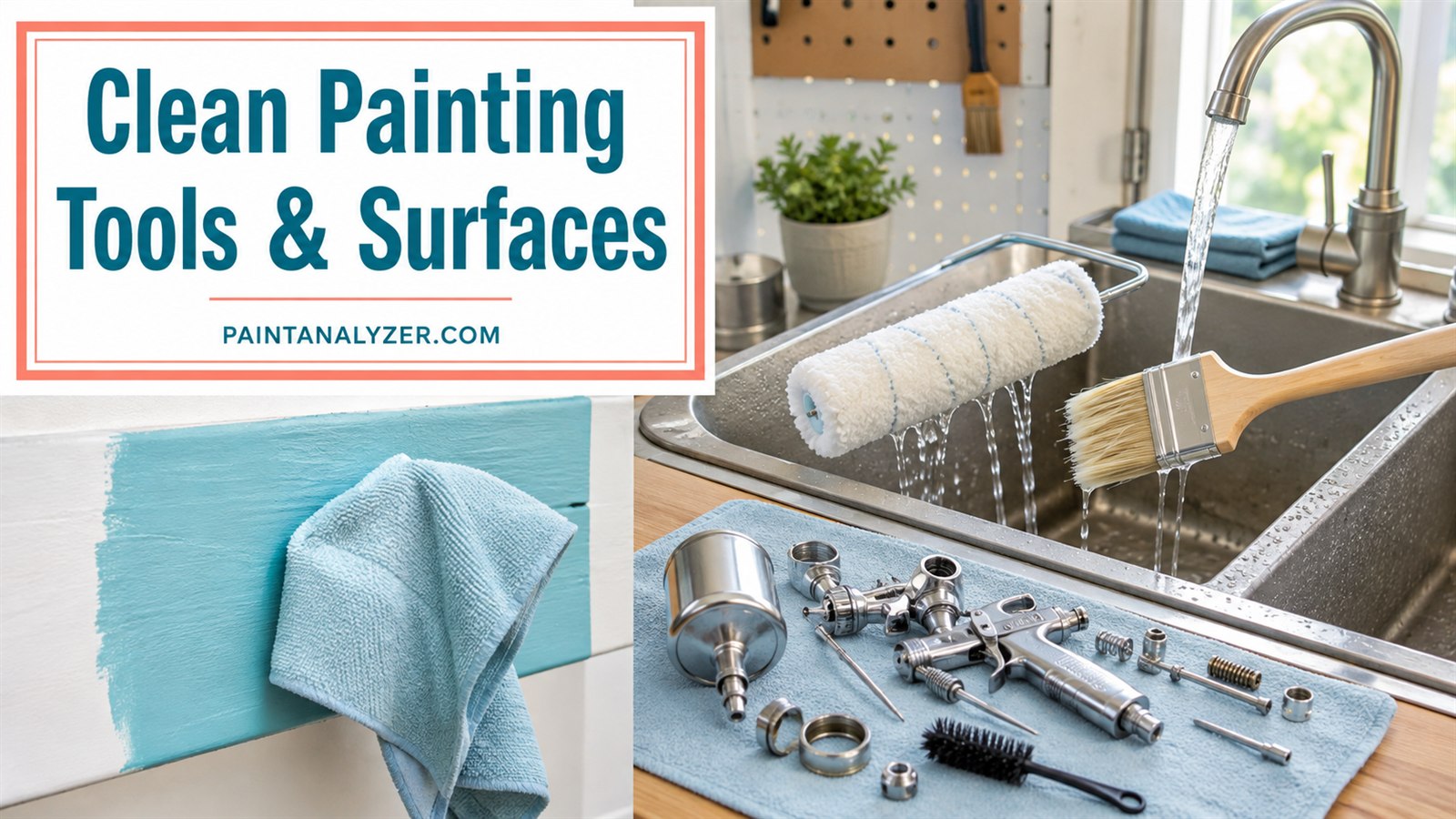
Cleaning painting tools and painted surfaces properly extends their useful life and keeps results looking their best, but each item on this list has its own specific approach — the wrong method can damage a painted wall's finish or ruin an expensive spray gun.
1. Cleaning walls without removing or damaging the paint
A soft cloth or sponge with a mild, diluted all-purpose cleaner (following the Simple Green approach), tested in an inconspicuous area first, cleans most everyday grime without affecting the paint finish underneath.
2. Cleaning walls with flat paint specifically, without ruining them
Flat paint is more susceptible to marking or subtle sheen changes from cleaning than higher sheens — using a very gentle touch, minimal cleaner concentration, and testing first in a hidden spot protects flat paint's more delicate surface during cleaning.
3. Cleaning a paint roller and tray
Following the roller cleaning process covered elsewhere on this site (removing excess paint, then thorough rinsing with water for latex or appropriate solvent for oil-based paint), a tray cleans similarly, or disposable tray liners avoid the cleaning step for the tray specifically.
4. Cleaning and painting wooden Venetian blinds
Following the general approach covered for cleaning and painting other window blinds elsewhere on this site, removing dust thoroughly (wooden blinds accumulate dust readily across many slats) before any painting or refinishing gives the best foundation for either just cleaning or a full repaint.
5. Cleaning acrylic paint brushes
Acrylic paint, being water-based, cleans from brushes with warm water and mild soap, worked through the bristles promptly before the paint dries — acrylic that's dried in a brush is considerably harder to remove and can permanently stiffen the bristles if left too long.
6. Cleaning oil paint brushes without paint thinner
For those preferring to avoid traditional paint thinner, a plant-based solvent alternative or a specific "odorless" mineral spirits product can clean oil paint from brushes with less harsh fumes — following up with soap and water after the solvent step removes any remaining residue.
7. Cleaning a Wagner paint sprayer
Following the manufacturer's specific cleaning instructions (typically running clean water or appropriate solvent through the system immediately after use, disassembling and cleaning the tip and internal components) prevents paint from drying and clogging the sprayer's mechanism between uses.
8. Cleaning an HVLP spray gun
Similar to other spray equipment, an HVLP gun needs prompt cleaning after each use — disassembling per the manufacturer's instructions, cleaning the cup, needle, and nozzle thoroughly with appropriate solvent, and ensuring no paint residue remains in the internal passages prevents clogging and preserves spray pattern quality for future use.
9. Cleaning a canvas painting
Following the gentle care approach covered for protecting acrylic paintings elsewhere on this site, a soft, dry brush to remove dust is generally the safest routine cleaning method — anything more involved risks damaging the paint surface and should be approached cautiously or left to a professional conservator for a valuable piece.
10. The common thread: match the cleaning method to what's actually being cleaned
Across all of these, using a method too aggressive for the specific surface or tool risks damage, while one too gentle may not actually clean effectively — matching cleaning approach and product to the specific material, and testing when uncertain, avoids both problems.
Guides are researched against primary documentation and observable evidence. Archived material is rewritten, checked, and substantially improved before publication.