
How to Clean Painted Walls Without Damaging Them (Including Flat Finish)
Flat paint is the least forgiving sheen to clean — the wrong technique burnishes or removes color rather than just lifting dirt, and the fix is a gentler method, not avoiding cleaning altogether.
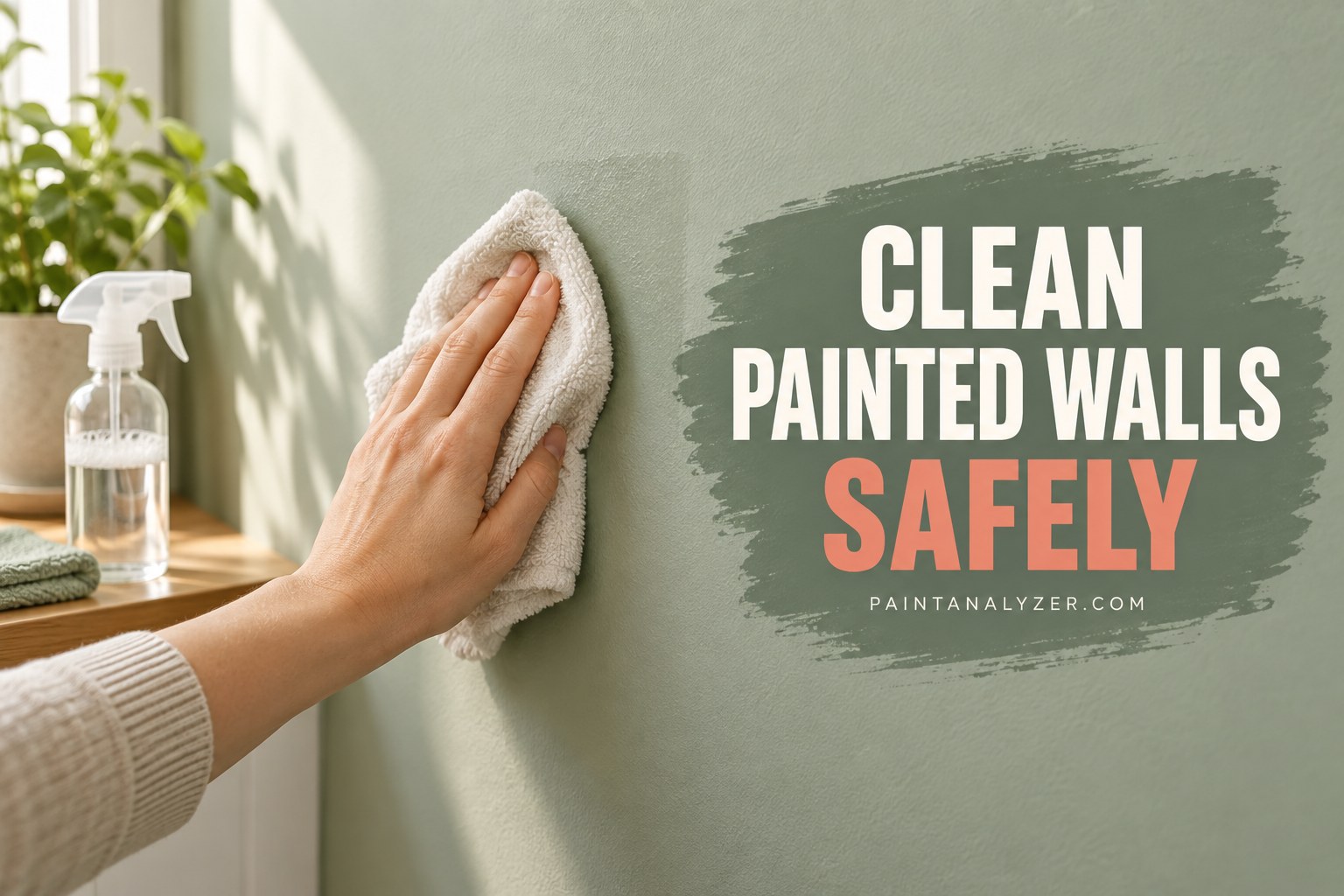
Painted walls, especially in a flat or matte finish, can be damaged by cleaning technique more easily than most people expect — "burnishing" (a shiny or discolored patch left where cleaning was more aggressive than the surrounding area) is a real, common outcome of over-scrubbing flat paint specifically, and the fix is gentler technique, not skipping cleaning altogether.
1. Why flat paint is the most delicate sheen to clean
As covered for flat vs. satin paint generally, flat's complete lack of reflectivity comes with a genuine trade-off in washability — its more porous, less tightly-bound surface burnishes (develops a shinier, visibly different patch) more readily under scrubbing than a higher-sheen paint would.
2. Start with the gentlest method: a dry approach
A soft microfiber cloth or a vacuum with a soft brush attachment, for
general dust removal
For routine dust and light surface grime, a dry approach alone often handles it without introducing any moisture or scrubbing risk at all — worth trying first before reaching for water or any cleaning solution.
3. For actual marks or stains: a barely-damp cloth, minimal pressure
1. Dampen a soft cloth with plain water, wringing out excess so it's just
   barely moist, not wet
2. Blot and gently wipe the mark, using minimal pressure
3. Avoid circular scrubbing motions, which are more likely to burnish
   the surface than a light, straight wiping motion
4. A mild soap solution for tougher marks
A few drops of mild dish soap in warm water, applied with a soft cloth,
using the same gentle, minimal-pressure technique
Reserve this for marks that plain water doesn't address — jumping straight to soap and vigorous scrubbing for light dust is unnecessary and increases burnishing risk without any real benefit over the gentler dry or plain-water approach.
5. Always test on an inconspicuous area first
Testing any cleaning method — even plain water — on a hidden spot (behind furniture, inside a closet) before treating a visible area confirms the wall's specific paint doesn't burnish or discolor with that particular technique, since paint quality and age both affect how forgiving a given wall actually is.
6. What to avoid entirely on flat-painted walls
- Abrasive sponges or scouring pads — these physically damage flat paint's surface texture almost immediately.
- Harsh chemical cleaners — can strip or discolor paint, particularly on a more delicate flat finish.
- Aggressive circular scrubbing — more likely to burnish than a gentle, straight wiping motion.
7. If burnishing has already happened
A burnished spot on flat paint generally can't be un-burnished by further cleaning — the fix is a touch-up with matching paint over the affected area (accepting the same touch-up mismatch considerations covered elsewhere), or, for a very visible spot, a full wall repaint for a genuinely invisible result.
Guides are researched against primary documentation and observable evidence. Archived material is rewritten, checked, and substantially improved before publication.