
How Long Does It Take Different Paints and Coatings to Dry? A Complete Timing Guide
Dry times vary enormously by product type, and confusing surface-dry with full cure is the most common reason a paint or coating project runs into trouble.
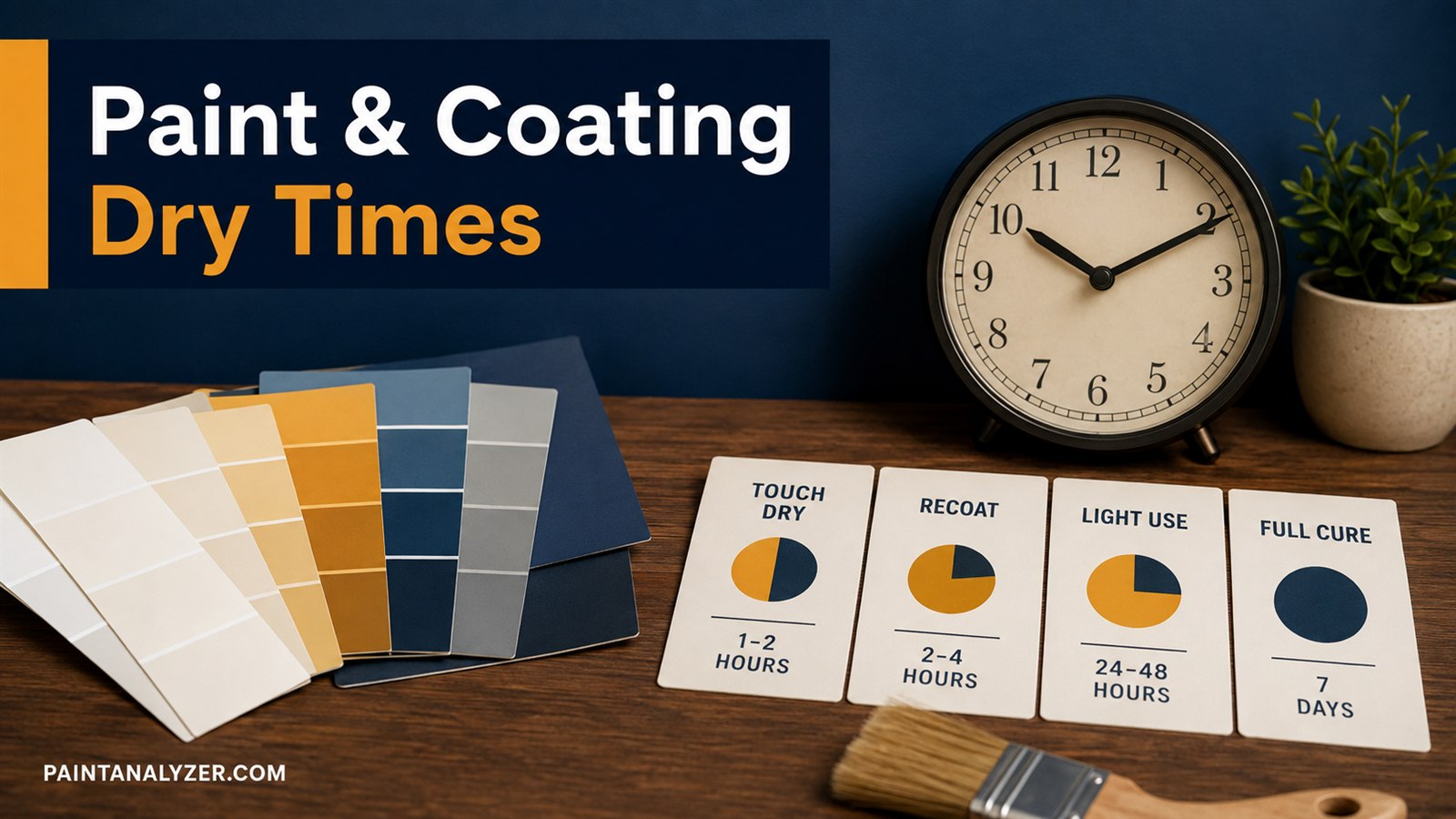
Dry and cure times vary enormously across different paint types and coatings, and confusing "dry to the touch" with "fully cured" is one of the most common and preventable causes of problems throughout this site — this guide gives realistic expectations for several commonly-asked timing questions.
1. How long should a deck dry before painting or staining?
New or recently pressure-washed deck wood typically needs 48-72 hours minimum to dry before staining, following the water-bead test covered elsewhere on this site to confirm actual readiness rather than relying on time alone, since humidity and temperature affect actual drying speed considerably.
2. How long does paint need to dry before applying polyurethane?
Paint generally needs its full stated cure time (often several days to a couple of weeks depending on the product, not just the shorter surface-dry time) before a polyurethane topcoat is applied, since applying too soon risks adhesion problems between the layers.
3. How long does oil painting take to dry?
Oil paint dries considerably slower than acrylic, often taking anywhere from a day to a week to dry to the touch depending on paint thickness and specific pigments used, with full cure taking considerably longer, sometimes many months for a thickly applied piece.
4. How long does epoxy paint take to dry, and how can you speed it up?
Epoxy paint typically takes 24-72 hours to cure to a usable state, with full hardness taking up to a week or more — following the manufacturer's specific ratio and application instructions precisely, and maintaining a warmer ambient temperature (within the product's recommended range) can help epoxy cure at the faster end of its typical range.
5. How long does it take for exterior paint to dry?
Exterior paint is typically dry to the touch within a few hours but needs a longer window (checking the specific product, often 24-48 hours) before it can reliably handle rain or heavy dew, following the rain-after-painting guidance.
6. How long does it take for car paint to dry?
Automotive paint is often dry to the touch within hours but needs considerably longer for full cure — following the automotive painting guidance, waiting for the full cure time before regular driving and weather exposure protects the still-curing finish.
7. How long does chalk paint take to dry?
Chalk paint dries relatively quickly to the touch, often within 30 minutes to an hour, allowing a second coat within a couple of hours — full cure before waxing or sealing typically takes a bit longer, checking the specific product's guidance.
8. How long does acrylic paint take to dry?
Acrylic paint dries to the touch quite quickly, often within 20-30 minutes for a thin coat, though full cure (as covered for waterproofing acrylic paint elsewhere on this site) takes considerably longer, often several weeks for paint to reach its maximum hardness and durability.
9. How long can you wait to paint after priming?
Most primers have both a minimum dry time before topcoating and a maximum recommended window (often around 30 days) beyond which the primed surface may need to be lightly re-sanded or reprimed, since primer can lose some of its optimal adhesion characteristics if left exposed too long before the topcoat.
10. The general principle across all of these: check the specific product, and don't rely on touch-dry alone
"Dry to the touch" and "fully cured" are genuinely different states with different implications for what's safe to do next — checking the specific product's technical data sheet for both dry time and full cure time gives more reliable guidance than assuming either a universal rule or that touch-dry means fully ready for normal use.
Guides are researched against primary documentation and observable evidence. Archived material is rewritten, checked, and substantially improved before publication.