
How Do You Make Paint Darker Without Using Black Paint?
Black paint can quickly turn a color muddy or dull — using a color's complementary tone, or a related deeper hue instead, darkens paint while keeping it vibrant.
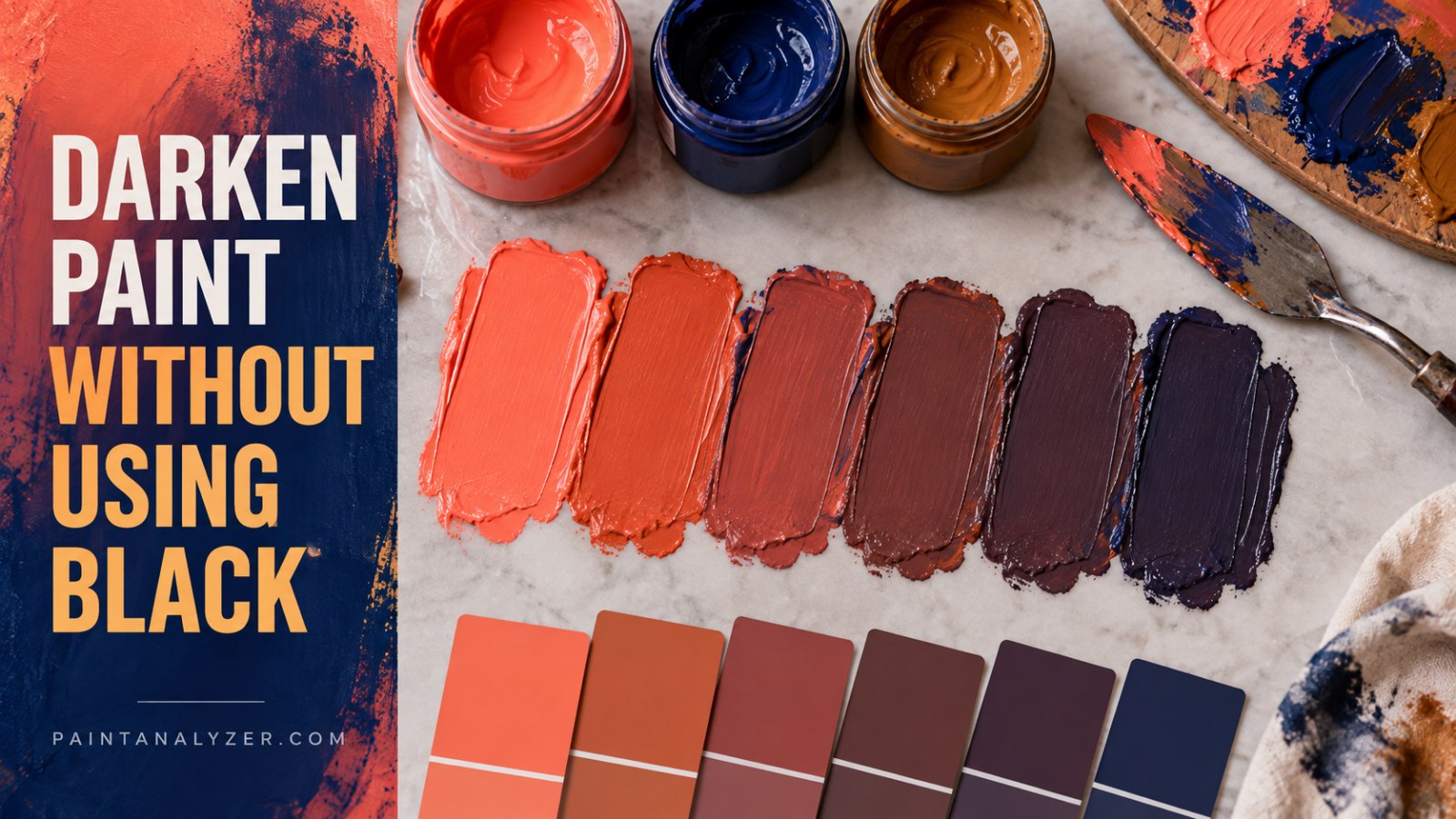
Adding black paint is the most obvious way to darken a color, but it often makes colors look muddy, dull, or noticeably shifted rather than simply darker — several alternative approaches darken a color while preserving more of its original vibrancy and character.
1. Use the color's complementary color in small amounts
Adding a small amount of a color's complement (the color directly opposite it on the color wheel) darkens and neutralizes it somewhat while generally preserving more richness than black would — this is a standard color theory technique for achieving a darker, more sophisticated version of a color without the muddying effect black often introduces.
2. Add a related, deeper hue from the same color family
Mixing in a darker color from the same general family (a deep maroon into red, a deep forest green into a lighter green) darkens the color while staying within its own natural range, generally producing a more harmonious result than introducing black's neutral darkness.
3. Use a small amount of brown or umber
Brown or raw/burnt umber, added gradually, darkens many colors while adding warmth and depth rather than the flat, sometimes cool effect black can introduce — this works particularly well for warming, earthy color adjustments.
4. Use a dark blue instead of black for many colors
A very dark blue (like ultramarine or a similar deep blue) can serve as a substitute for black in many mixes, darkening a color while often preserving more vibrancy and avoiding the flat, sometimes lifeless quality straight black can introduce into a mix.
5. Layer glazes for photographic depth without physically mixing
For a painting technique rather than a pre-mixed color, applying a transparent, darker glaze (following the glaze technique covered elsewhere on this site) over a dried base color builds depth and darkness optically, through layering, rather than through direct pigment mixing.
6. Reduce the amount of white rather than adding a darkening color
If a color already contains some white (making it lighter than the pure pigment), simply using less white — or none at all — in the next batch achieves a darker version without needing to add anything extra, sometimes the simplest solution if white was part of the original mix.
7. Testing and adjusting gradually
Whichever method is chosen, adding small amounts and testing frequently (rather than a large addition all at once) gives better control over the final result — darkening a color too much in one step is harder to correct than gradually building toward the desired depth.
Guides are researched against primary documentation and observable evidence. Archived material is rewritten, checked, and substantially improved before publication.