
Can You Use Base Paint Without Tint?
Technically yes, but the result is usually an off-white or slightly translucent color, not a true white — untinted base paint isn't formulated to be a finished product on its own.
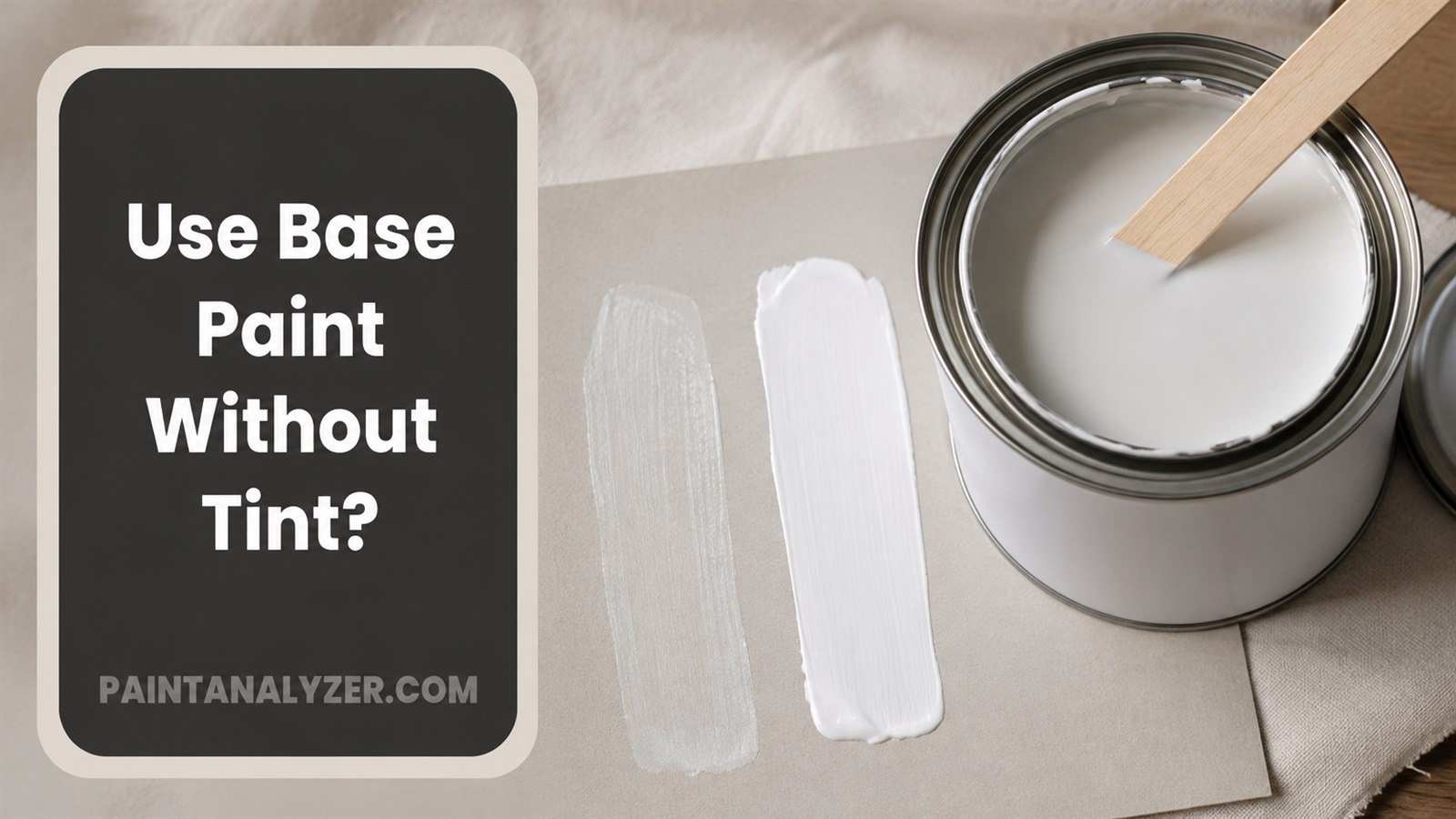
As covered in more depth for base 2 vs. base 3 formulations specifically, paint "base" is an intermediate product — a starting formulation with a specific amount of white pigment already in it, designed to receive added colorant to reach a final, specific color. Using it straight from the can, without tinting, technically works but generally doesn't produce the crisp white result many people expect.
1. What untinted base paint actually looks like
Depending on the specific base number, untinted paint can appear as an off-white, slightly translucent, or unevenly opaque color — bases formulated for deeper colors (a base 3 or 4) contain less white pigment specifically because they're meant to have colorant added, so applied without any tint, they often look thin, streaky, or not fully opaque, requiring more coats than a purpose-formulated white paint would.
2. Why this happens: base paint isn't engineered to be a finished product on its own
Base paint's pigment load is calculated around leaving room for colorant — it isn't formulated with the full opacity and coverage engineering that a dedicated white paint (formulated specifically to be white, with its own optimized pigment load) has. Using it untinted skips the step the whole product was designed around.
3. If a true white is the actual goal, buy white paint specifically
For a genuine, opaque white, a paint formulated and sold specifically as white (not a base paint left untinted) gives a far more reliable, fully opaque result in fewer coats — this is the straightforward fix if untinted base paint's translucent or off-white appearance isn't what was wanted.
4. When using an untinted base intentionally might make sense
Some very pale, subtly off-white or "warm white" looks can genuinely be achieved by using a lighter base (like a base 1 or pastel base) with little to no added tint — this is a deliberate aesthetic choice some people make specifically for a soft, not-stark-white result, rather than a mistake; it's really about understanding what a specific base's untinted appearance actually looks like before committing to it.
5. Checking with the paint store before buying base paint for this purpose
If a specific untinted or minimally-tinted look is genuinely wanted, asking the paint store directly which base would produce that particular result (and possibly requesting a very small amount of a specific white or off-white tint added) is more reliable than guessing — paint store staff can give a specific answer for their particular product line's base formulations.
6. The practical takeaway
Base paint left untinted isn't "broken" or unusable — it's simply not engineered to be the finished product on its own. For a genuine white, buying a dedicated white paint is the more reliable path; for a specific soft, subtly warm or cool off-white look, working with the paint store to find the right base-and-light-tint combination gets a more predictable result than guessing with an untinted base alone.
Guides are researched against primary documentation and observable evidence. Archived material is rewritten, checked, and substantially improved before publication.