
Can You Use Acrylic Paint on These Surfaces? A Complete Guide
Acrylic paint works on a remarkably wide range of materials, but each surface has its own specific prep step — skip it, and even acrylic's famous versatility has limits.
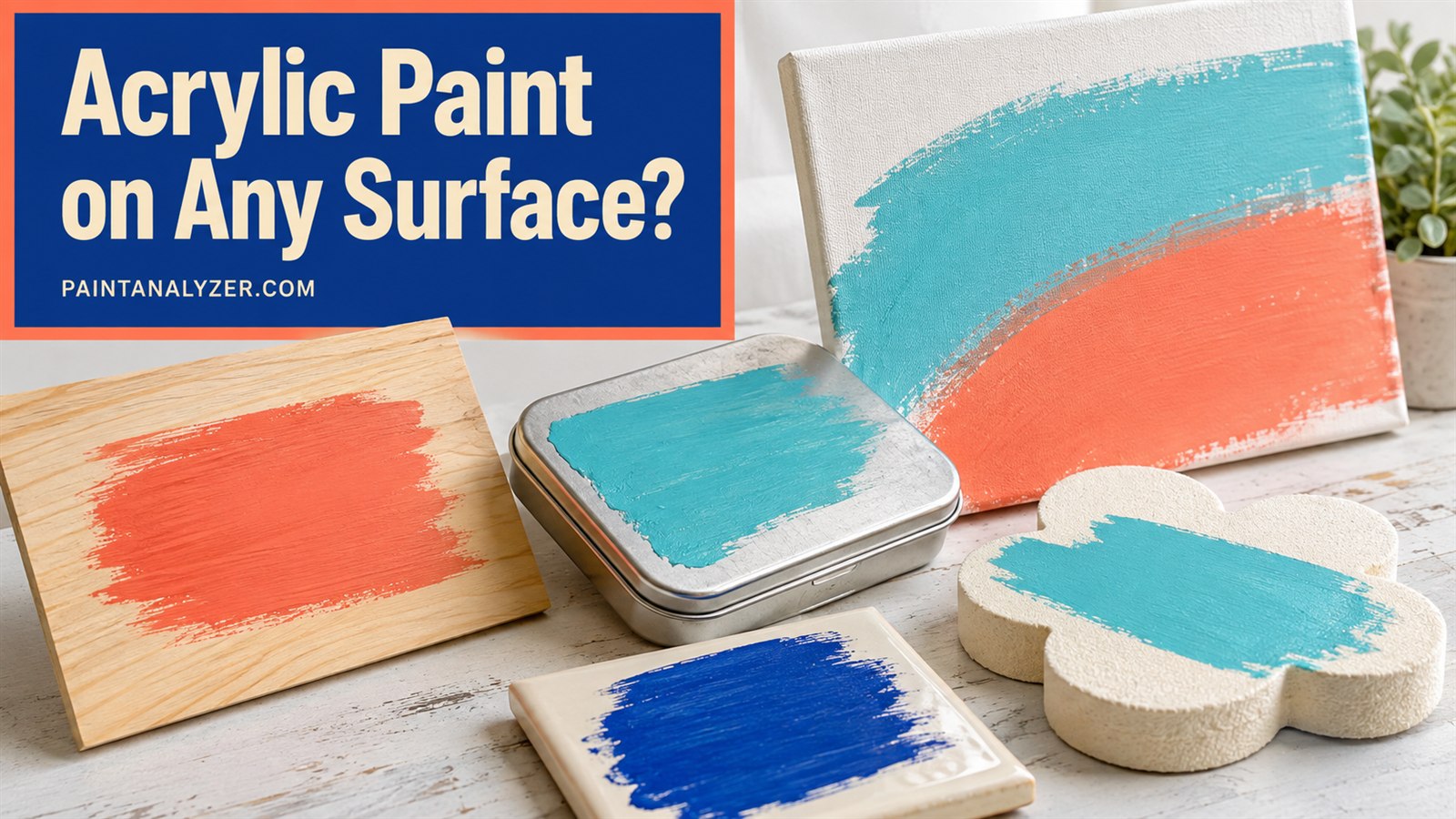
Acrylic paint's versatility is genuinely one of its biggest advantages, working on a remarkably wide range of surfaces beyond canvas — but each material still has its own specific prep consideration, and understanding these individually gives more reliable results than assuming acrylic sticks to absolutely anything without any preparation.
1. Wood
Yes, acrylic paint works excellently on wood — following standard wood prep (cleaning, light sanding, and priming for bare or absorbent wood) covered throughout this site gives durable, long-lasting results on furniture, trim, and craft projects alike.
2. Walls
Yes, though standard interior wall paint (itself typically an acrylic latex formulation) is generally the more practical choice for large wall areas — craft-grade acrylic works fine for smaller decorative wall art or accents but isn't the most cost-effective choice for painting an entire room.
3. Tin cans
Yes, with proper prep — cleaning to remove any oily residue, light sanding to promote adhesion, and ideally a metal primer first, following the metal painting fundamentals, gives acrylic paint on tin cans a durable, long-lasting result for craft and decorative projects.
4. Styrofoam
Yes, though testing first is worthwhile — most acrylic craft paints are compatible with styrofoam, but some solvent content in certain formulations can dissolve the foam's surface, so testing on a small piece or using a water-based formulation specifically confirmed safe for foam avoids an unpleasant surprise.
5. Shoes
Yes, acrylic paint is a popular choice for custom shoe painting — a flexible fabric medium mixed into the paint helps it move with the shoe material without cracking, and a sealant topcoat protects the finished design from wear and moisture.
6. Plaster
Yes, acrylic paint adheres well to plaster, particularly once fully cured and, for new plaster, given adequate time to dry completely — a coat of primer on new or very porous plaster gives more even coverage.
7. Leather
Yes, with a flexible leather-specific acrylic paint or a flexibility medium mixed in — standard rigid acrylic paint can crack on leather as it flexes with wear, making a formulation or additive specifically for flexibility important for this particular material.
8. Nails (fingernails)
This isn't recommended — craft acrylic paint isn't formulated or tested for the kind of prolonged skin and nail contact fingernail application involves, similar to the concern covered for craft acrylic on skin elsewhere on this site; a genuine nail polish or nail art product is the appropriate choice instead.
9. Paper
Yes, acrylic works well on paper, particularly heavier weight or specially prepared paper that can handle the moisture without excessive warping — thinner standard paper may need to be primed or mounted to prevent buckling from the paint's water content.
10. Plastic
Yes, with proper prep — following the plastic-adhesion principles covered throughout this site (cleaning, light sanding, a bonding primer for a challenging plastic type), acrylic paint adheres reasonably well to many plastics, though results vary by the specific plastic type.
11. Metal
Yes, following standard metal prep (cleaning, deglossing, rust treatment if needed, and ideally a metal primer) covered throughout this site — acrylic paint works well on properly prepped metal for craft and decorative projects.
12. Leather shoes specifically
Following the same considerations covered for leather and shoes above, a flexible formulation or additive and a proper sealant give the best results specifically for leather shoes, which combine both the flexing concern of footwear and leather's own flexibility characteristics.
13. Fabric
Yes, with a fabric medium mixed in — this keeps the paint flexible and workable once dry, similar to the approach covered for painting shoes, since standard rigid acrylic paint would otherwise feel stiff and could crack on flexible fabric.
14. A skateboard
Yes, following standard wood prep for the deck (sanding, priming) — a protective clear topcoat afterward is particularly important here given how much wear and impact a skateboard deck experiences during actual use.
15. Bamboo
Yes, following similar prep to other wood surfaces — bamboo's naturally smooth, sometimes waxy surface benefits from thorough cleaning and light sanding to promote adhesion before painting.
16. Glass
Yes, with a paint specifically formulated for glass, or standard acrylic combined with proper surface prep (cleaning thoroughly, sometimes light etching) — following the glass-specific painting approach gives better durability than standard acrylic used without any glass-specific consideration.
17. A phone case
Yes, following similar prep to other plastic surfaces — cleaning and light sanding for adhesion, with a durable clear topcoat to protect the design from the handling and pocket wear a phone case regularly experiences.
18. The common thread across all of these surfaces
Acrylic paint's genuine versatility comes with the same basic requirements repeating across most of these materials — clean the surface, promote adhesion through light sanding or an appropriate primer where needed, and seal the finished result with a protective topcoat for anything that will see regular handling or flexing.
Guides are researched against primary documentation and observable evidence. Archived material is rewritten, checked, and substantially improved before publication.