
Can You Spray Paint Paper Mache?
Yes, once the paper mache is completely dry — moisture from spray paint applied to still-damp paper mache can warp the form or reactivate the glue holding it together.
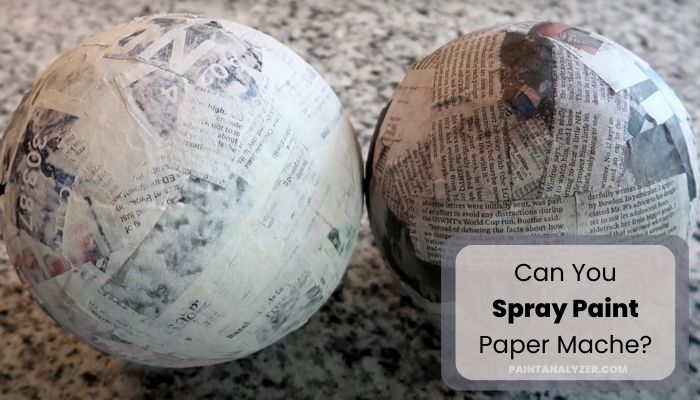
Spray painting a paper mache project works well, but the paper mache needs to be completely, thoroughly dry first — paper mache's paper-and-glue construction is genuinely vulnerable to moisture, and spray paint applied too soon can warp the form or reactivate the underlying glue.
1. Confirm the paper mache is genuinely, fully dry — not just surface-dry
Paper mache, especially a thicker or multi-layered project, can take considerably longer to dry all the way through than it appears from the surface — a project that feels dry to the touch on the outside can still have damp layers underneath, especially in a thicker area or one that hasn't had good air circulation.
2. Sealing before painting improves the result
A thin coat of diluted white glue, or a dedicated sealer product,
applied and dried before painting
Sealing paper mache before painting, following the same logic covered for sealing cardboard, reduces how much paint gets absorbed unevenly into the porous paper surface and provides a more stable base that's less likely to be affected by the paint's own moisture content.
3. Use light, even spray coats
1. Hold the can at the recommended distance (checking the specific
   product's label)
2. Apply thin, even coats, allowing dry time between each
3. Avoid heavy, wet coats that could reintroduce more moisture than
   the sealed surface can handle well
4. Test on a small hidden area or a scrap piece first
Since paper mache projects vary considerably in their exact composition (different papers, different glue types, different construction thickness), testing the spray paint on a small hidden area — or ideally a leftover scrap from the same batch of paper mache — confirms compatibility before committing to spraying the entire visible project.
5. Working in a well-ventilated area
Following standard spray paint safety practice covered elsewhere, adequate ventilation matters here just as much as for any other spray painting project, regardless of the substrate being painted.
6. Sealing the finished, painted piece for durability
A clear sealant over the finished spray-painted surface adds durability and some moisture resistance going forward — useful for a paper mache project that will be handled or displayed for an extended time, given the material's inherent fragility compared to more robust craft substrates.
7. Signs the paper mache wasn't fully dry before painting
Warping, a soft or spongy feel developing after painting, or visible bubbling under the paint are all signs moisture was still present when painting began — at that point, allowing the piece to fully dry out again (which can take considerable additional time) before attempting further work is the only real fix.
Guides are researched against primary documentation and observable evidence. Archived material is rewritten, checked, and substantially improved before publication.